
Gluten-Free Baked Oatmeal (Dairy-Free with Vegan Option)
This post may contain affiliate links from which I will earn a commission. Learn more in our disclosure.

Looking for an easy, healthy breakfast that you can make ahead? This gluten-free baked oatmeal is soft, lightly sweet, and incredibly satisfying. It’s naturally dairy-free and can easily be made vegan or with eggs depending on what you prefer.
Unlike traditional oatmeal, this version bakes up into a tender, sliceable dish—almost like an oatmeal cake—making it perfect for busy mornings, meal prep, or even a wholesome snack.
Whether you’re feeding a family or just want something nourishing ready to go, this baked oatmeal is a simple recipe you’ll come back to again and again.

Breakfast is a tough meal of the day for families on the go who are trying to be healthy. It’s easy to lean on convenience foods so that everyone can grab something fast when they’re headed out the door, and that can mean some not so good decisions, you know?
My Childhood Unhealthy Breakfasts
When I was little, we had a lot of those “not so good for you” type breakfasts.
Some of the breakfast “foods” that I remember us having were:
- Thomas’ English Muffins
- Thomas’ Corn Toast-R-Cakes
- Homemade Cinnamon Toast (made with margarine and white bread and granulated white sugar—yikes!)
- Ka-Boom Cereal (my sister’s favorite)
- Cinnamon Toast Crunch
- Life Cereal
- Cream of Wheat
Yikes.
Now that I’ve woken up to how important it is to have real food, things have changed.
A Healthier Breakfast Option
Breakfast can be one of the hardest meals to get right—especially when life is busy. It’s easy to fall back on convenience foods that don’t keep you full or energized for long.
That’s one of the reasons I love this baked oatmeal. It’s made with simple, whole-food ingredients and keeps well, so you can make it ahead and have a nourishing option ready whenever you need it.
We’ve even been known to enjoy less “traditional” breakfasts around here (like chia pudding or even leftovers or healthy fudge), but this recipe is a great middle ground—it feels familiar, comforting, and just a little special.
Why This Baked Oatmeal Is So Good
This recipe has a slightly unique twist that makes it stand out.
Instead of baking the oats right away, you can soak them first. This does two things:
- Improves digestibility
- Creates a softer, more cake-like texture
If you soak the oats longer (even up to 24 hours), the result is surprisingly light and fluffy—almost like a true oatmeal cake.
If you skip soaking, the texture will be more like classic baked oatmeal: a little denser and more hearty.
Both versions are delicious—it just depends on what you’re in the mood for.
The Origin of this Cake
Our Baked Oatmeal Cake obsession all started when our dear friend, Beckie, shared some baked oatmeal with us at her home one night after a homeschooling family gathering. I’d heard of baked oatmeal, but had never made it nor tried it.
Well, my kids gobbled it up, and when gobbling like that happens, I go on a mission. This time on a quest for the best Baked Oatmeal recipe that I could find.
I came home with Beckie’s recipe in hand and poked around on the internet a bit. I found a few recipes that intrigued me and made a combination of Becky’s and another one that looked great.
The resulting success story is what you see pictured above.
A Kitchen Mistake Gone Right
The funny thing about this recipe is it basically became a “cake” by mistake.
I knew it was important to soak grains (especially oats) so when I set out to try out my version of the cake, I set the oats out to soak overnight.
The next day ended up being a flurry of too many things to do and so I didn’t get around to baking the cake until about 24 hours later. The result? A delicious not-too-sweet-at-all cake that is so light, you won’t believe that it is made from whole rolled oats.
In fact, when I took the 24-hour-soaked version over to Beckie’s house for her to try, she said, “You added flour to this, didn’t you?”
Nope—the oats just turned out that way. See how much soaking your grains can change the grains themselves?
Side note–for another “mistake turned family favorite, see my post on Chaat Masala.)
So you can make this recipe just like a regular baked oatmeal by not soaking, or soak for 24 hours for the oatmeal cake-ish version, or soak overnight only for a dense baked oatmeal bottom and a cake-like top.
Either way it’s baked oatmeal yumminess.

The photos in this post are of the “soaked for 24 hour” option.
Don’t know about soaking grains? I never had heard of this until a few years ago and I didn’t really understand. The basic reason is that grains (and especially oats) contain phytic acid and other anti-nutrients that make digestion difficult. You can read more about this in my post on how and why to soak grains.
We like this recipe both ways, but I personally think the cake version is a bit nicer.
If you try it both ways, I would love to hear what you think!
Either way, this cake tastes special—especially topped with whipped cream, coconut whipped cream, or yogurt–and lots of fruit.

Won’t the Cake Spoil If It’s Left Out Overnight?
I get this question often.
The answer is no, it won’t, if you are using an acidic medium (like cultured milk, whey, or apple cider vinegar or lemon juice).
If you are using regular dairy, then you MUST use an acidic medium to prevent spoilage. If you are not using dairy, you should be able to soak the mixture on the counter overnight with no problem.

Recipe Notes
- Topping Options: I make this regularly with walnuts and dehydrated dried apples, but bananas and walnuts, fresh apples and pecans are other great options. Anything goes. For the cake in these photos we used berries and walnuts. We even once just blended shredded coconut (about 1/3 cup) into the batter and sprinkled both cinnamon sugar and extra coconut on top. Mmmmm…..
- Milk Options: Use any type of milk you prefer. I recommend healthy raw milk if you use dairy. Otherwise, any non-dairy alternative will work great like Almond Milk, Coconut Milk, or Rice Milk, etcetera.
- Bake In Bulk: As with any tried and true recipe, I recommend baking in bulk to save time and money. I typically mix up and soak 4 batches of this cake at time. Make a bunch and freeze for on-the-go breakfasts or snacks anytime you need them.
- Gluten-free Oats: If necessary, use gluten-free oats. Here is a great brand. I’ve heard that the GF Harvest Company’s oats are very reliably gluten-free and they test for glyphosate too.
- Oil / Fat Options: You can use any other healthy fat for the coconut oil, or use applesauce for a fat-free option.
- Sweetener Options: Although xylitol is a good candida-friendly sweetener, organic erythritol is as well. Or sub a liquid sweetener using my guidelines in Substituting Sweeteners. You can use an additional 1/3 cup of a healthy granulated sweetener instead of stevia. If using stevia, here is a great brand of stevia scoops.
- Egg Alternatives: This is the egg substitute we used for years. See my Powdered Egg Substitute for a homemade option. This cake turns out great with either option.
- Baking Powder Option: If you would like to make your own baking powder, or need a corn-free or grain-free option, see this Grain-free Baking Powder.
- Cinnamon Sugar Substitute: See this Healthier Cinnamon Sugar for a homemade cinnamon sugar alternative.
- Soaking Notes – typically an acid medium is recommended for soaking grains, but there are mixed thoughts on this. You may add the apple cider vinegar or lemon juice to the oats before soaking if you like, but you will end up with a slightly acidic taste.

Other Healthy Baked Goods to Try:
If you’re a fan of whole-grain baking, here are some other recipes to try:
- Whole-Grain Doughnuts
- Pumpkin Snickerdoodles
- Super Quick Whole Grain Biscuits
- Soft Pumpkin Cookies
- Frosted Chocolate Mint Cookies
- 3 Ingredient Buckwheat Crepes

Gluten-free Baked Oatmeal
Ingredients
- 4 cups rolled oats
- 4 cups coconut milk (see Recipe Notes for alternatives)
- 6 tablespoons coconut oil (melted)
- 1/3 cup coconut sugar (or other sweetener as desired)
- 3/32 teaspoon stevia extract (or other sweetener as desired–see Recipe Notes)
- 1 tablespoon cinnamon
- 1 teaspoon salt
- 2 teaspoons baking powder
- 4 teaspoons vanilla extract
- 2 egg equivalents (I use this Egg Replacer Powder – you can also use eggs if you like)
- 1 cup nuts (optional)
- 1 cup fresh or dried fruit (optional)
- 1/4 cup apple cider vinegar (or lemon juice; optional for soaking)
- cinnamon "sugar" (optional – for topping–see my post on Healthier Cinnamon "Sugar")
Instructions
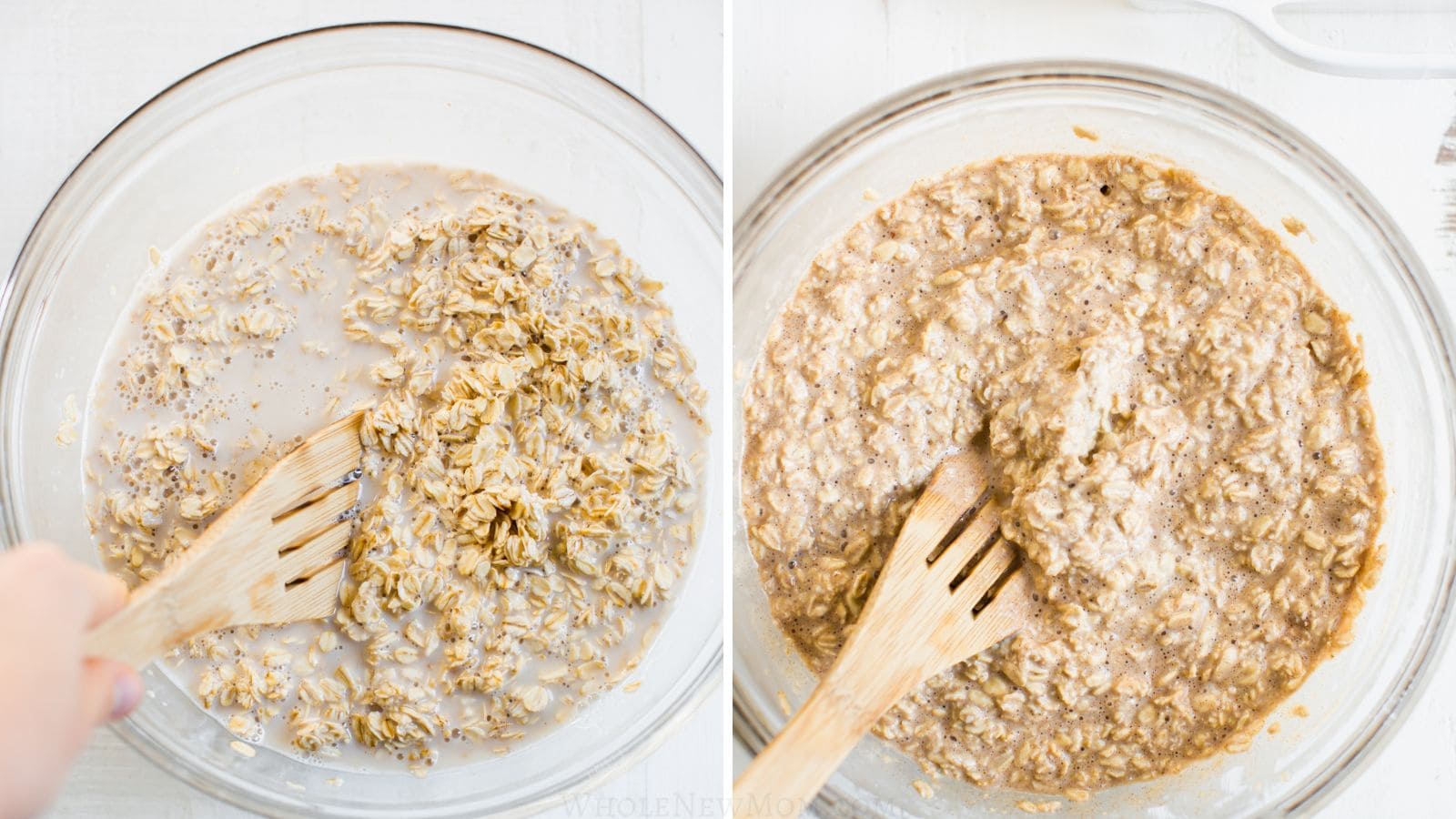
- Mix oats, milk, and sweetener(s) in a large bowl. Combine well.
- If soaking to remove phytates, add acid medium (apple cider vinegar or lemon juice).
- Soak either overnight (for a more baked oatmeal-type dish) or for at least 24 hours (for an Oatmeal Cake) at room temperature. Make sure to read the instructions about How to Soak Grains.
- Add remaining ingredients, saving baking powder and egg substitute (if using) until last.
- Mix well.
- If using nuts and/or dried or fresh fruit, put half of the nuts and fruit in the bottom of a greased 8×8 square baking dish.
- Pour the batter onto the nuts and fruit (or directly into the prepared dish if not using the nuts and fruit).
- Top with the remaining nuts and/or fruit if desired.
- Top with cinnamon sugar if desired.
- Bake in a preheated 375 degree oven for 35-45 minutes, or until the middle of the cake is set.
- Serve either warm, with additional cinnamon sugar, nuts, fruit and milk, whipped cream or yogurt. Alternatively, eat at room temperature like a regular cake.
- Store in the refrigerator in a closed container or freeze for a longer shelf life.
Notes
- Topping Options: Use any combination of fruit and nuts. Try berries and walnuts, apples and pecans, or banana and coconut.
- Milk Options: Any dairy or non-dairy milk works. Almond, coconut, and rice milk are great choices.
- Sweetener Options: Use your preferred sweetener. For stevia, adjust carefully. You can also use honey, maple syrup, or a granulated sweetener.
- Egg Options: Works with eggs or egg replacers. See post for tested options.
- Make Ahead: Prepare and soak overnight, then bake in the morning. You can also freeze baked portions.
- Soaking Tip: Soaking improves texture and digestibility. For best results, soak 12–24 hours.
Nutrition
Nutritional information is provided as a courtesy and is an estimate only. It may vary depending on ingredient brands, substitutions, and preparation methods. Optional ingredients are not included. Net carbs are typically calculated by subtracting fiber and sugar alcohols (such as erythritol) from total carbohydrates. This information should not be relied upon for medical or nutritional purposes.
I’d love to hear how you like this Baked Oatmeal Cake once you’ve tried it!
how many does this recipe serve?
In on 8×8 pan I would say we get 9-12 servings, but it really depends on how much everyone eats :-).
This came out gummy! I let the oats soak over 24 hours. It is not like cake or baked oatmeal I’ve ever had! I have tried it twice with the same results. I believe I followed the recipe exactly. For milk I used rice milk. It smells good, but no one will eat it. And, I quadrupled the recipe. 🙁
Hmmm… The whole thing is gummy? Did you use regular rolled oats and not quick or something like that?
Hello Hun
Thank you for this recipie, I am gonna try it out tomm. I was wondering can I use steel cut oats? Would I have to soak them longer? Would the result be the same? Also, how do I use quinoa seeds? Could they be added to sweet recipies as such? And would it be a bad idea to add fresh apples to this or they are best dehydrated?
Thank you 🙂
Hmmm..I’m not sure about the steel coats. I have never tried it but for sure the texture will be different. I have never used quinoa seeds so I can’t speak to that…I have never heard of those being used in baking…..what have you done with them? I think fresh apples would work just great. One of the recipes I looked at to make this one used fresh fruit. I just found a recipe for baked oatmeal using steel cut oats. I am thinking you should try it….It will probably be a lot more like oatmeal. Check back in and let me know how it goes!
Thank you so much for your thorough reply! I made this today and O.M.G. *drool* It’s almost all gone between me, my DH, my six-year old and my 1.5 year old. (Okay, it’s mostly me, though my older son would have kept up with me had I let him.)
My oldest has fructose malabsorption, so I struggle with what to feed him. I’m hoping to “cure” him by healing his gut, but I’m flailing a bit in how to do that, exactly. Not sure we’re up for GAPS. If he could swallow pills I’d have a lot more options!
I also want to thank you for the work you do. I really enjoy your website. Your compassion comes through in how you respond to your readers. Thank you!
Thanks, Kay. I am so glad you enjoyed it!!! Fructose malabsorption – wow. How do you manage that? No fruit I assume – and what else? I have contemplated GAPS as well and SCD. Not sure what we will do next. I am better than I used to be but I wonder about the next step. I am very happy w the Nutritional Balancing that I am doing but sometimes I wonder as well about that.
You could get a mortar and pestle for your son. That’s what I did w/ mine until he could swallow pills. I should write a post on getting kids to take supplements. If you need help before then, let me know.
I am trying hard to balance everything, but it’s hard. I really appreciate your kind words :-). Hope to see you around again.
I’m a bit confused by the recipe. In step one, you say “Mix oats, milk, (except eggs, if using) and sweeteners in a large bowl.” What do you mean about the eggs? Aren’t you supposed to soak the oats with just the milk & sweeteners?
Also, the title says “sugar-free options,” but in the recipe you list sugar and then stevia. Do you mean JUST sugar or stevia, or both? If it’s both, what’s the sugar-free option?
Thanks! This looks super yum & I’m trying to come up with more ideas for breakfast around here. 🙂
Hi Kay. Sorry for the confusion. I will try to clarify. What I meant is yes, you don’t soak with the eggs. I think I wrote that meaning you don’t need to add the liquid from the egg replacer. You are right – it’s confusing so I’ll change it.
About the sweetener, I have a hard time w/ my recipes b/c I use things like xylitol and erythritol or vegetable glycerine to make my recipes sugar free. Others consider sugar free to be something made with honey. I am going to have to work on this. Some of my readers aren’t ready to go completely free of sweeteners that don’t feed candida or raise their glycemic index. I personally have gone off all of those sweeteners. So….I guess I should say, “ACD friendly” instead of sugar free.
Then, someone could use xylitol or erythritol for an ACD friendly recipe. The only other sweetener that I am at all comfortable w/ that doesn’t feed candida is yacon and it is very expensive.
Thanks for alerting me and I so hope you like it!!! And let me know if it’s still confusing!
I tried this recipe, and my daughter and I loved it. We added some apple cider vinegar to the soaking mixture, which gave it a good buttermilk taste. I let it soak for almost 24 hours, though, and it definitely still came out oatmeal, not cake.
Hi Allison! Love your recipes!! I’m not sure what happened. Mine always comes out like cake – but occasionally the center is a little moist. Maybe try is again w/o the vinegar? I think sometimes I measure wrong and that’s why it ends up a little gooey in the inside.??? The other thing is that adding 1/10 ground buckwheat helps b/c it has phytase in it. But I’ve made it w/o that numerous times w/ no issues. Hope that helps!!
Just wondering, with this recipe, do you soak the oatmeal and coconut milk along with lemon juice. From what I understand, there should be some sort of acid to help break it down to become more easily digested.
Can you please clarify?
There’s a lot of new info coming out about soaking. Really the acid might not be needed at all. I do think subbing in about 1/10 of the oats with buckwheat or wheat is a good idea. I use buckwheat since we are gluten free. I hope to post on the new soaking info soon.
Hi Adrienne, I subscribe to your blog, but just came across this recipe last night. I’m new to soaking grains and have several questions. If not steel cut oats, which ones do you use? I assume it’s the “regular”, not quick cooking oats (we buy the “regular” oats in bulk, organic). I assume you soak the oats in the fridge because of the milk? When I soak (other) grains in water, I usually leave them out on the counter. (Side note: I live in a humid climate, not sure if I should continue to leave them out, even in water in summer…) . Thanks!!
Hi Katja. I used regular oats, actually ones that I’ve flaked myself, but you can use ones you’ve bought. You are supposed to soak at room temp regardless of the milk. I use dairy alternative. There is some new evidence that soaking in dairy actually inhibits the reduction of the phytic acid. So…..you can choose to do what you wish. But I have read numerous recipes calling for soaking grains in milk at room temperature. That being said, my son has a life threatening allergy to dairy so I don’t soak in cow or goat milk here. Enjoy!
Oh, just that I’ve read about the possibility of things going bad if soaked in just water for a long time.
I haven’t read that. I think you’ll have no problem. But if you like soak for just 7 hours / overnight.
I’ll be looking forward to that post. The whole thing is really quite complicated, especially when GF/DF. I’ve already started the soak, so should I add some buckwheat flour to the mix (but then I’d have to grind it, and I was hoping to be done in the kitchen for tonight), or do you think the plain water would be okay? I was making half the recipe to try out the water thing, so I used 2 cups oats and 2 cups water. I had been previously using homemade rice milk, just with water and brown rice. Would it really be that different?
I’d just let it go for tonight – no sense getting stressed out about it. Just do the buckwheat thing next time. I am not clear what you are asking by “Would it really be that different?”