
How to Soak Grains (and Does It Really Work?)
This post may contain affiliate links from which I will earn a commission. Learn more in our disclosure.

Soaking grains is a traditional food preparation method that many people use to improve digestion and reduce compounds like phytates. Here’s how to soak grains, why some people do it, and how to adapt your grain recipes to incorporate soaking into them.
After I'd been trying to eat healthier and had switched from processed foods to a whole grain and more overall whole foods lifestyle, I heard about the importance of soaking grains. I was actually grinding my own grain, and thought I was doing a lot of things, right, but this was a new healthy living topic to investigate.
It turns out that soaking grains is just one of many ways people try to make grains easier to digest and more nourishing.
But does soaking grains really make a difference? And if so, how much?
How to Soak Grains (Quick Method)
To soak grains, combine whole, rolled, or ground grains with warm water and a small amount of an acidic ingredient like lemon juice or vinegar. Let sit at room temperature for 12–24 hours before cooking or baking.
- 1 cup grains
- enough water to cover
- 1 tbsp acid per cup liquid
- soak 12–24 hrs
Why Soak Grains Is Recommended
When you think about it, grains are seeds. You plant them in the ground and they sprout into plants. Other types of seeds that we eat are seeds, nuts, and grains.
All of these have protective coatings that need to be removed for the seeds to germinate. Of course we remove the shells of the nuts and seeds before eating them, but there are naturally occurring compounds in the bran that can make whole grains harder for some people to digest.
In my post about how to soak nuts and seeds I addressed that food group, and in how to de-gas beans, I talked about making beans more digestible. Well, now it's time to work on the grains.
Soaking grains neutralizes enzyme inhibitors in the bran to make grains easier to digest (source). So much easier, in fact, that some people find they don't have a problem (or as much of a problem) with gluten-containing foods when they soak their gluten-containing grains first.
In our experience, soaked grain recipes tend to have a lighter texture and feel gentler on digestion, which makes soaking worthwhile for us.
Is Soaking Grains Necessary?
There’s actually quite a bit of debate about how important soaking grains really is.
Some people believe soaking is an essential traditional preparation method that can improve digestion and help make minerals more available. Others point out that many people eating a balanced diet likely get enough minerals overall, especially if grains are only a small part of their diet.
Personally, I think soaking grains can be a helpful practice—especially for people who eat a lot of grains or who notice digestive issues with them—but I also don’t think it’s something to become stressed or obsessive about.
Like many traditional food practices, it’s probably best viewed as one helpful tool rather than an all-or-nothing rule.
Soaking grains may be more helpful if you:
- eat a diet high in grains and legumes
- follow a vegetarian or vegan diet
- notice digestive discomfort with grains
It may matter less if you:
- eat a varied diet with mineral-rich foods
- consume animal proteins regularly
- don’t notice digestive issues with grains
Some Grains Need More Than Just Soaking
Soaking grains using the above method works fine for grains that are high in phytase (buckwheat, wheat, or rye), but for grains that are low in phytase (oats, rice, millet, corn, etc.) you need to add a high-phytase grain to the low-phytase grain in order to have the soaking be beneficial (source).
It appears that substituting approximately 10% of the low-phytase grain / flour with a high-phytase grain source is sufficient (source). For example, if you are making a cake that calls for 3 cups of flour, then you would remove approximately 1/3 of a cup of the flour and replace it with wheat or rye, or you can use buckwheat as an option if you are gluten-free.
Oats and Phytates
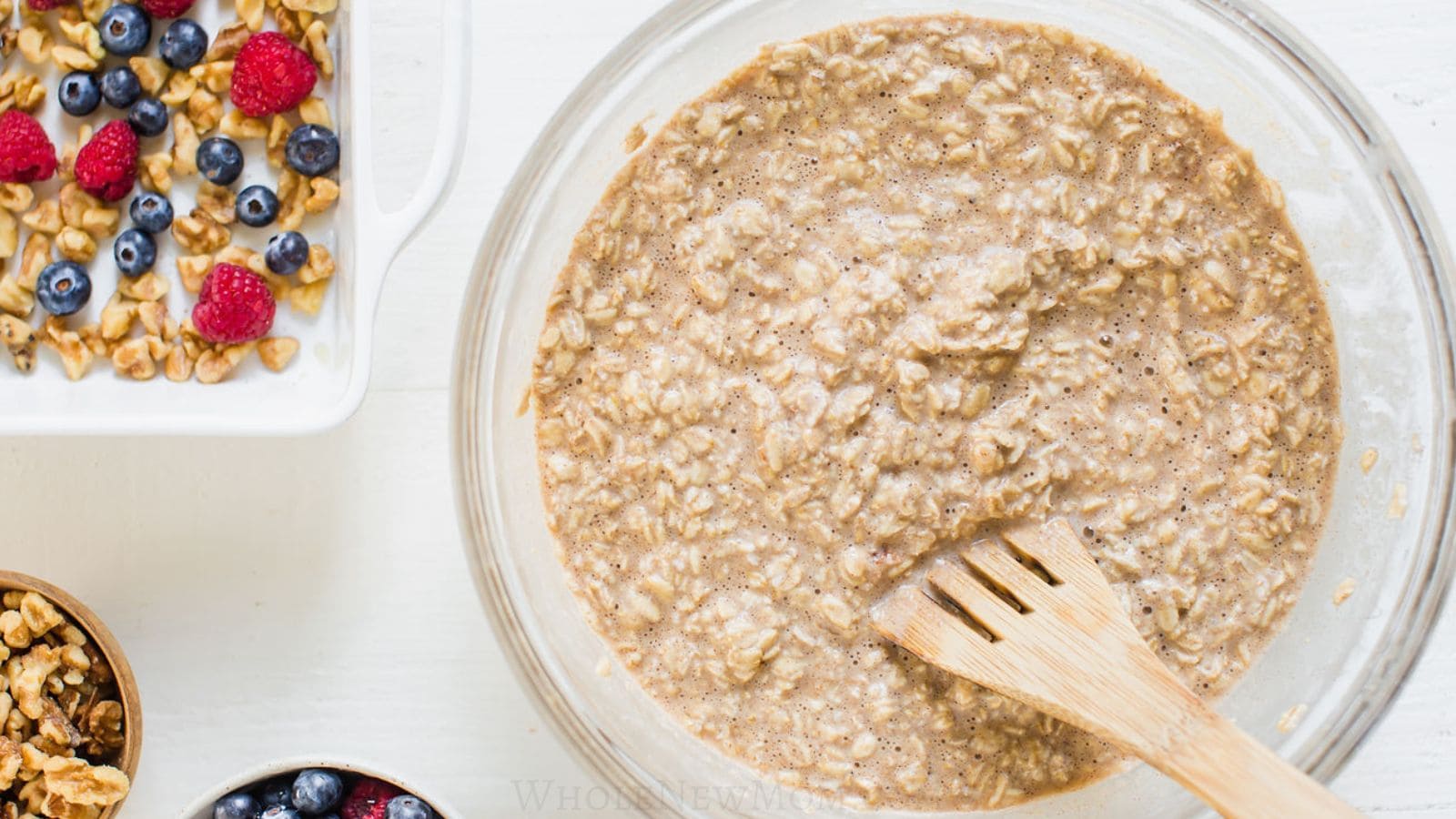
One other thing to note is that oats are particularly high in phytates so soaking oats is something that I definitely recommend (source). This recipe for Baked Oatmeal is a great one with the soaking built right in to the recipe.
Soaking Grains Time Chart
Here's information about the time needed, plus extra tips for soaking some common grains.
| Grain | Soak Time | Acid Needed? | Notes |
|---|---|---|---|
| Oats | 12–24 hrs | Recommended | Add high-phytase grain |
| Brown rice | 12–24 hrs | Recommended | Warm soak helpful |
| Wheat | 12–24 hrs | Optional | Naturally higher phytase |
| Millet | 10–12 hrs | Recommended | Low phytase |
| Quinoa | 4–8 hrs | Optional | Rinse well |
Best Acidic Mediums for Soaking Grains
Here are some options for acids to add to your grains.
- lemon juice
- apple cider vinegar
- whey
- yogurt
- kefir
Some people prefer fermented acidic mediums like kefir, yogurt, kombucha, or sourdough starter because they contain active cultures that may help support fermentation during soaking. Some prefer to use whey, kombucha or water kefir to cut down on the sour taste. I like using lemon juice or apple cider vinegar because they’re simple and easy to keep on hand.
How to Adapt Your Favorite Recipes With Soaking
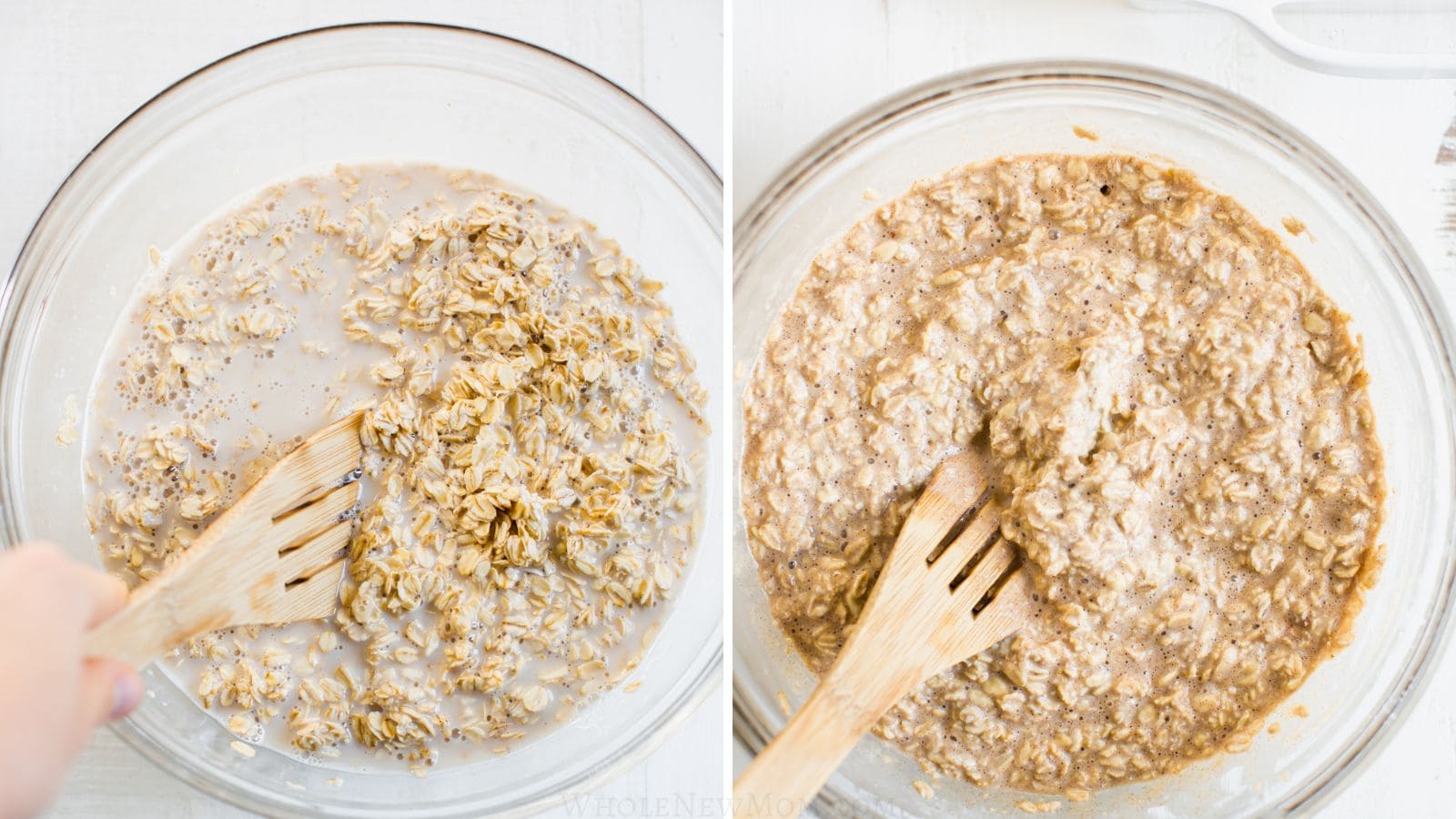
- Combine grains (either whole or in cut, flaked, or flour form) with liquids, sweeteners and fats.
- Replace 1 tablespoon of your liquid with an acidic medium (vinegar, lemon juice, or whey). If the liquid is already acidic or cultured, then you can simply skip this step.
- Allow your mixture to sit at room temperature for at least 12 and for up to 24 hours. When I'm in a rush, I soak for 7 hours and call it good enough.
- Add the remaining ingredients for your recipe and proceed as close as possible to the original instructions.
With some recipes that have a more stiff dough (like pie crust, bars, or these delicious whole grain doughnuts), the dough will definitely be hard to mix at this point.
However, if you're willing to put in a little elbow grease and make sure that all of the ingredients get mixed in well, you can use this soaking technique for any grain-based recipe to make the food more digestible.
How To Soak Grains
Ingredients
- grain of choice
- water
- acidic medium of choice 1 tablespoon per 1 cup grain (such as Kombucha, raw apple cider vinegar, lemon juice, buttermilk, kefir, whey, yogurt, etc.)
- traditional fat 1/2 tablespoon per 1 cup grain (such as grass-fed butter, olive oil, coconut oil, etc.)
- salt
Instructions
- Combine grains, water, and acid in pot or bowl the day before you need to cook them. If making a baked good, you can add the sweetener and fat as well.
- Cover the pot or bowl and let sit out on counter for at least 7 to 8 hours, up to 24 hours.
- Proceed with your recipe as written.
Final Thoughts on Soaking Grains
Soaking grains is one of many traditional food preparation methods that people use to improve digestibility and reduce compounds like phytates. While there’s debate about how necessary soaking really is, many people—including me—find that soaked grains have a lighter texture and are easier on digestion.
Fortunately, soaking grains is simple to do and easy to experiment with. Whether you soak occasionally or make it a regular part of your routine, it can be a helpful tool for preparing grain-based foods.
How about you?
Did you know about why you should soak grains or do you already do it?
how does soaking oatmeal work when its called for added to a recipe dry? Also is rinsing necessary after soaking?
Hi Jodie – Great questions! If a recipe calls for dry oats or other grains, there are generally two options:
Adapt the recipe by soaking the grains with the liquid called for in the recipe (plus the acidic medium) before adding the remaining ingredients. That’s the method I use for recipes like baked oatmeal and many baked goods.
Dry the grains after soaking if you want to use them later as “dry” ingredients again. This takes quite a bit more time, so I don’t usually do it unless I’m preparing grains in advance.
As for rinsing, it depends on the grain and the recipe. Whole grains that you’re cooking on their own (like brown rice or quinoa) are commonly rinsed after soaking. But if you’re soaking grains as part of a baking recipe, you generally don’t rinse—the soaking liquid becomes part of the recipe.
I just added this information to the post to make that clearer! Thanks again.
I appreciate this article. I recently have been wrestling with the need to soak grains and I like your approach. Not to obsess over it, but to get it in as much as I can especially with oatmeal, which I eat about 3 mornings a week now.
Hi Jennifer – thank you so much. I agree so many things can become stressful. Do what you can. Oatmeal is a simple one to do so that’s a help at least! I’d love to know how you’re eating your oatmeal because I know you’re careful about eating and the effect on blood sugars.
So if you soaked with keifer or yogurt you would still leave out at room temperature?
Yes, that’s the recommendation actually – hope it works well for you!