
Amazingly Delicious AIP Paleo Pizza Crust
This post may contain affiliate links from which I will earn a commission. Learn more in our disclosure.
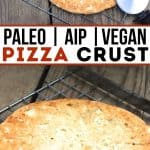
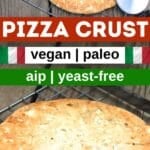
This AIP and Paleo Pizza Crust is made with a main ingredient you likely haven't used before, but one that you're definitely going to want to get to know.
It's super versatile, and super yummy. So yummy that whenever I make this crust I need to make a LOT of extra for snacking. It's so good it disappears even without the toppings!
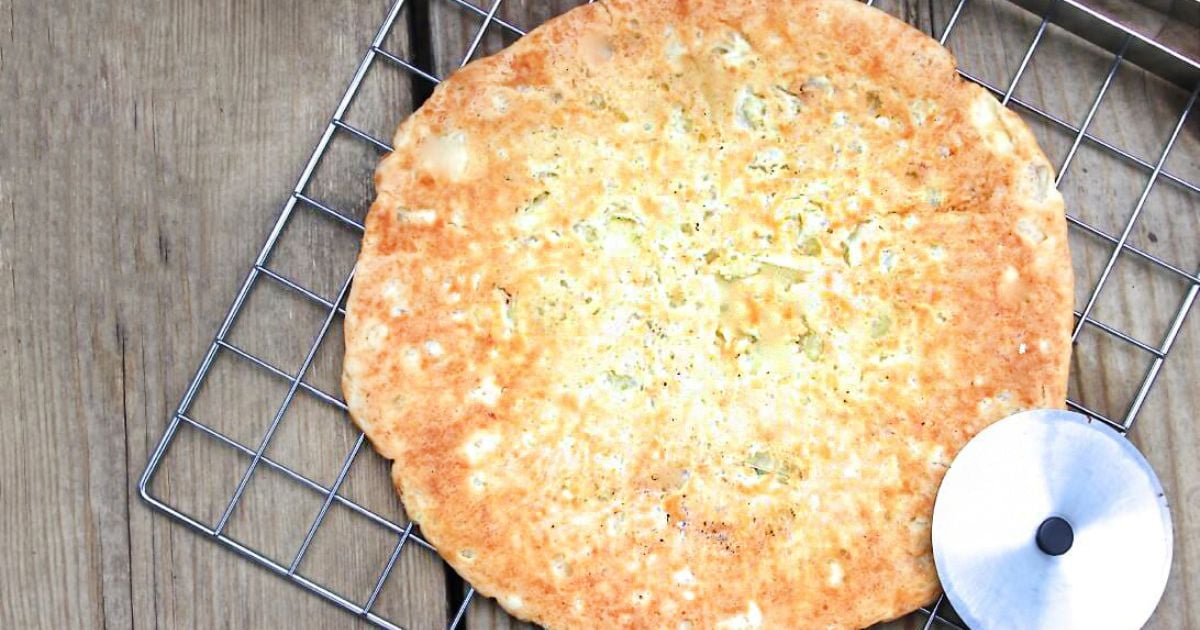
And just so you know, this pizza crust is naturally gluten and grain-free, plus dairy and egg-free as well.
Even though modern pizza originated in Italy, it's considered to be a real American staple.
And boy do we love it in our home as I'm sure you do as well.
But if you're on a special diet that goes beyond being gluten-free, you know how hard it is to find pizza that can work for you.
Finding a gluten-free crust that doesn't have egg is hard enough if you're avoiding egg, but if you're grain-free, just forget about it.
Why You'll Love This Crust
This crust is not only gluten-free and grain-free, but it's also egg and dairy-free and cauliflower-free.
AND it tastes ahmaaazing! My youngest says it tastes cheesy and he's right. Even though there's no cheese in it.
Here he is about to sink his teeth into the crust (which was basically GONE right after I made it the first time. I didn't even get to put toppings on it!
Anyhow, this delectable crust is made with yuca, the same ingredient that's the star of the show in these Paleo Taco Shells and Paleo Tortillas. You'll love those too!

And here are both of my boys–thrilled at what deliciousness we can create in the kitchen even on uber special diets!
I'm telling you, you are going to LOVE this.

Seriously, just several hours after this post went live, the whole crust was GONE (basically demolished by the youngest and myself) and Little Brother was running around trying to find the one yuca I couldn't find when I made this batch so I could make another. It's that good!

Recipe Notes
- Both sides should be crisped and browned. Keep sauce and any other “wet” ingredients to a bare minimum (or consider dipping instead of making a typical pizza) as yuca dough can become soggy easily when overloaded with moisture. A crispy crust will help prevent this to a degree, but still keep this in mind.
- For dried herbs, oregano, basil, and even onion would be great choices.
Special Diet Options/Substitutions
- You can substitute another flour for the coconut flour, but you likely will need more of it and less liquid. Typically, you will need about 4 times the amount of another flour compared to coconut flour, and less liquid. However, there's no liquid in this recipe aside from the oil, so I recommend adding a 2 tablespoons of the other flour to the recipe and gradually increase it until you get a workable dough.
- This is a crossover if you are on the Trim Healthy Mama plan.

Amazing Paleo Pizza Crust – vegan, autoimmune paleo & cauliflower free
Ingredients
- 2 cups mashed yuca (peeled, cut into large pieces, boiled until fork tender, drained)
- 1 teaspoon avocado oil (or coconut oil)
- 2 heaping tablespoons palm shortening
- 2 tablespoons coconut flour (See Special Diet / Substitution Notes for alternatives)
- 1/2 teaspoon salt
- dried herbs (to taste)
Instructions
- Preheat oven to 375 degrees F.
- Place all ingredients (except for coconut flour) in a food processor or Vitamix (or other high speed blender).
- Process until a dough is formed.
- Empty dough onto a piece of parchment paper.
- Add in coconut flour.
- Allow dough to cool completely then divide into 2 pieces (for two crusts) or keep as one large crust.
- Roll out dough to create a crust (or 2) that is about ½ inch thick or less.
- Bake for 15-20 on a parchment-lined baking sheet (or until nicely browned).
- Remove from oven and turn crust(s) over and continue baking until the reverse side is browned.
Notes
-
- Both sides of the crust should be crisped and browned. Keep sauce and any other “wet” ingredients to a bare minimum (or consider dipping instead of making a typical pizza) as yuca dough can become soggy easily when overloaded with moisture. A crispy crust will help prevent this to a degree, but still keep this in mind.
-
- For dried herbs, oregano, basil, and even onion would be great choices.
Nutrition
Nutritional information is provided as a courtesy and is an estimate only. It may vary depending on ingredient brands, substitutions, and preparation methods. Optional ingredients are not included. Net carbs are typically calculated by subtracting fiber and sugar alcohols (such as erythritol) from total carbohydrates. This information should not be relied upon for medical or nutritional purposes.
Jennifer has just loads of great recipes that you will for sure want to check out.
I don't know about YOU, but I am off to the store to get MORE YUCA! Which, in case you were wondering, is in the ethnic section of the produce department.
What do you think? Have you tried a grain-free pizza crust before?
Photo Credits – Jennifer Robins
Do you think this could be made with celery root instead of yuca?
No, I don’t. I don’t think it has enough starch in it.
Is there a substitute for the palm oil that could work?
I think any solid oil would work. Try coconut?
Just an FYI to anyone who can’t have coconut. I left the coconut flour out and it worked beautifully! I also used all avocado oil and frozen cassava (boiled first) and it was great. My cook time was longer but worth it! I also had no issues with the sauce making the crust soggy.
yea!!!
Oooooo. Love the flavor of yucca. Will give this one a whirl!! Thank you!
Hope you like it, Lexie! We think it’s amazing!!
Awesome recipe I love yuca and I will definitely try it. Thanks for sharing!
I just bought some today :).
This looks wonderful! Do you have any recommendations on a substitute for the yucca. I’m a diabetic and yucca is pretty glycemic. Do you think a combination of other less starchy vegetables would work. Would love to hear your thoughts. Thank you.
I don’t think so but I can ask the author to comment – thanks! I watch my starches too so I just limit my portions. You should look at my flax bread maybe – it’s very low carb and makes a nice crust. https://wholenewmom.com/recipes/focaccia-flax-bread/
There is not an exact sub for yuca – its closest competitors include potatoes which are also starchy in nature. Perhaps a cauliflower crust is better suited if you are cautious to avoid too much starch?
I’m wondering why not use tapioca flour, instead of going to the trouble of peeling, cooking and mashing the yucca root, since it’s basicly the same ingredient? Seems much simpler. The finished crust would probably not get soggy as easily and should have similar taste. Any thoughts on this?
HI there! Tapioca is the starch from the yuca/cassava root so it is from the same source but the actual texture and cooking properties are much different. There is another pizza crust recipe that uses tapioca starch (from The Domestic Man) if you are interested. This one made of the whole root also has a great texture and has lots of positive feedback as well. Hope that helps!
Doyou think these can be made ahead of time and placed in the freezer?
Yes, they should freeze well – hope you enjoy them!
I react to yucca , wondering if I could replace with taro root.Thanks
Taro may not have the same properties even though it is a root veggie. You could always try but it might need a binder of some sort like egg or another flour.
So: yucca, plantain and cassava root are all the SAME?
Yuca and cassava are the same but plantains look like large bananas. They aren’t as sweet.
I was all set to go in search of yucca, but then found this on wikipedia (yes, I know they are having issues regarding accuracy)…
“LIKE OTHER ROOTS AND TUBERS, BOTH BITTER AND SWEET VARIETIES OF CASSAVA CONTAIN ANTINUTRITIONAL FACTORS AND TOXINS.[5] IT MUST BE PROPERLY PREPARED BEFORE CONSUMPTION. IMPROPER PREPARATION OF CASSAVA CAN LEAVE ENOUGH RESIDUAL CYANIDE TO CAUSE ACUTE CYANIDE INTOXICATION AND GOITERS, AND MAY EVEN CAUSE ATAXIA OR PARTIAL PARALYSIS.[6] THE MORE TOXIC VARIETIES OF CASSAVA ARE A FALL-BACK RESOURCE (A “FOOD SECURITY CROP”) IN TIMES OF FAMINE IN SOME PLACES.[7]”
So, if not prepared correctly, I could poison myself with cyanide???
Actually, I did try to find it here in Oregon, but even my local health food store doesn’t have it…..Is there anything like it that I could substitute? Or can you find it canned, or frozen in “regular” stores or what about a brand name…?
I have seen a few recipes using yucca, but since I can’ find it, I’m “doomed” to have great looking recipes I can’t make!!! ;-(
(PS: when you send me an email in response, I can’t reply using the reply button. Any suggestions? I have tried to reply to one you sent me days ago, but every one has been returned as “delivery status notification: failure”)
The response email isn’t sent from my email so you have to come to the blog to respond. I’ll see if I can get you an answer :).
Hi there. I talked to Jennifer (the author of the recipe) and she had a few things to say.
1. The type of yuca in the US isn’t as problematic as other types.
2. As long as you peel it you are OK (that’s where the toxins are).
3. Some say you need to soak it to get rid of the cyanide-like compounds, but she never does and has made a TON of yuca foods. Her Panamanian neighbor said that no one really soaks it.
4. You might find this quote to be interesting from a Yahoo Q&A site:
As for where to get it, check out this post where several folks were talking about it. I know you can get it frozen in some places.https://wholenewmom.com/recipes/mexican-food-taco-shells-tacos-paleo-grain-free/
hope that helps!
I don’t know how I missed this. I’m glad you shared with Real Food Forager.. Is it yucca, eddoes or both that can be poisonous if not prepared and cooked properly? –> Thanks for the answer above!
My city has such a wide range of immigrants that many ‘ethnic’ foods are available if you know where to look. Even chain supermarkets have a wide variety of ‘ethnic’ fruits and vegetables depending on the neighbourhood.
What is eddoes? Am I reading that correctly?
Glad you found it :).