
Amazingly Delicious AIP Paleo Pizza Crust
This post may contain affiliate links from which I will earn a commission. Learn more in our disclosure.
This AIP and Paleo Pizza Crust is made with a main ingredient you likely haven't used before, but one that you're definitely going to want to get to know.
It's super versatile, and super yummy. So yummy that whenever I make this crust I need to make a LOT of extra for snacking. It's so good it disappears even without the toppings!
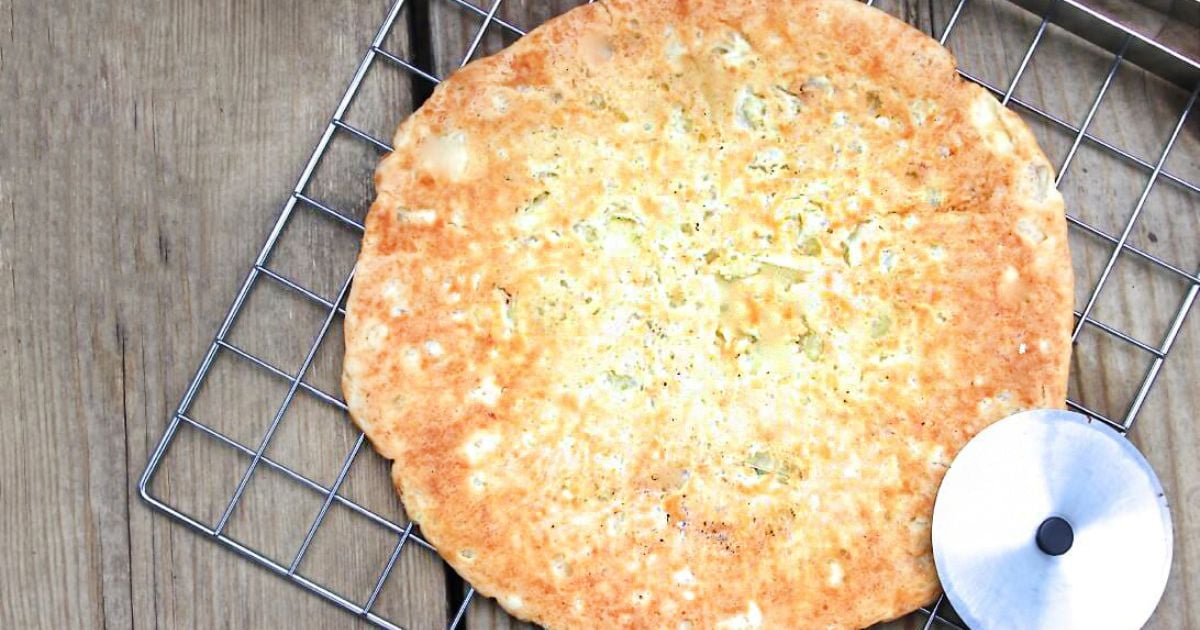
And just so you know, this pizza crust is naturally gluten and grain-free, plus dairy and egg-free as well.
Even though modern pizza originated in Italy, it's considered to be a real American staple.
And boy do we love it in our home as I'm sure you do as well.
But if you're on a special diet that goes beyond being gluten-free, you know how hard it is to find pizza that can work for you.
Finding a gluten-free crust that doesn't have egg is hard enough if you're avoiding egg, but if you're grain-free, just forget about it.
Why You'll Love This Crust
This crust is not only gluten-free and grain-free, but it's also egg and dairy-free and cauliflower-free.
AND it tastes ahmaaazing! My youngest says it tastes cheesy and he's right. Even though there's no cheese in it.
Here he is about to sink his teeth into the crust (which was basically GONE right after I made it the first time. I didn't even get to put toppings on it!
Anyhow, this delectable crust is made with yuca, the same ingredient that's the star of the show in these Paleo Taco Shells and Paleo Tortillas. You'll love those too!

And here are both of my boys–thrilled at what deliciousness we can create in the kitchen even on uber special diets!
I'm telling you, you are going to LOVE this.

Seriously, just several hours after this post went live, the whole crust was GONE (basically demolished by the youngest and myself) and Little Brother was running around trying to find the one yuca I couldn't find when I made this batch so I could make another. It's that good!

Recipe Notes
- Both sides should be crisped and browned. Keep sauce and any other “wet” ingredients to a bare minimum (or consider dipping instead of making a typical pizza) as yuca dough can become soggy easily when overloaded with moisture. A crispy crust will help prevent this to a degree, but still keep this in mind.
- For dried herbs, oregano, basil, and even onion would be great choices.
Special Diet Options/Substitutions
- You can substitute another flour for the coconut flour, but you likely will need more of it and less liquid. Typically, you will need about 4 times the amount of another flour compared to coconut flour, and less liquid. However, there's no liquid in this recipe aside from the oil, so I recommend adding a 2 tablespoons of the other flour to the recipe and gradually increase it until you get a workable dough.
- This is a crossover if you are on the Trim Healthy Mama plan.

Amazing Paleo Pizza Crust – vegan, autoimmune paleo & cauliflower free
Ingredients
- 2 cups mashed yuca (peeled, cut into large pieces, boiled until fork tender, drained)
- 1 teaspoon avocado oil (or coconut oil)
- 2 heaping tablespoons palm shortening
- 2 tablespoons coconut flour (See Special Diet / Substitution Notes for alternatives)
- 1/2 teaspoon salt
- dried herbs (to taste)
Instructions
- Preheat oven to 375 degrees F.
- Place all ingredients (except for coconut flour) in a food processor or Vitamix (or other high speed blender).
- Process until a dough is formed.
- Empty dough onto a piece of parchment paper.
- Add in coconut flour.
- Allow dough to cool completely then divide into 2 pieces (for two crusts) or keep as one large crust.
- Roll out dough to create a crust (or 2) that is about ½ inch thick or less.
- Bake for 15-20 on a parchment-lined baking sheet (or until nicely browned).
- Remove from oven and turn crust(s) over and continue baking until the reverse side is browned.
Notes
-
- Both sides of the crust should be crisped and browned. Keep sauce and any other “wet” ingredients to a bare minimum (or consider dipping instead of making a typical pizza) as yuca dough can become soggy easily when overloaded with moisture. A crispy crust will help prevent this to a degree, but still keep this in mind.
-
- For dried herbs, oregano, basil, and even onion would be great choices.
Nutrition
Nutritional information is provided as a courtesy and is an estimate only. It may vary depending on ingredient brands, substitutions, and preparation methods. Optional ingredients are not included. Net carbs are typically calculated by subtracting fiber and sugar alcohols (such as erythritol) from total carbohydrates. This information should not be relied upon for medical or nutritional purposes.
Jennifer has just loads of great recipes that you will for sure want to check out.
I don't know about YOU, but I am off to the store to get MORE YUCA! Which, in case you were wondering, is in the ethnic section of the produce department.
What do you think? Have you tried a grain-free pizza crust before?
Photo Credits – Jennifer Robins
Hi we don’t have yuca in this part of the world,
would sweet potato work instead?
Sweet potato isn’t as sticky but you could try. Yuca is also called cassava if that helps.
I’m so sad. This would be awesome for my husband who is craving pizza but can’t have the grains, nightshades, or dairy. However, he is sensitive to tapioca, which means this is out to. Maybe someday, I will be able to figure out a way to make “pizza” for him.
Here’s another option–not quite the same but he might like it: https://wholenewmom.com/focaccia-flax-bread/. We’ve made pizza with it and enjoyed it!
Thank you! The plantain crust will work for his diet.
Yea!!
Google nomato sauce made with onions carrots and beet. We’re vegan so we also use vegan mozzarella cheese.
I am in some SERIOUS NEED of some YUCCA!!!
Me toooo!!! My son is basically demanding I go and get some more!
Way cool! Can’t wait to try this!
Thanks as always Audrey!
This is a fantastic recipe. I am wondering what toppings you use in place of cheese?
I didn’t put anything on top – didn’t have time! The crust was gone. Typically we would do a tomato sauce and then black olives for sure. I’ll put almost any kind of veggies – broccoli sliced thinly, onions…those would be some of my personal favorites. But occasionally I’ve done BBQ chicken w/ the SF BBQ sauce in this post (sorry about the bad photo). https://wholenewmom.com/recipes/oven-barbecued-chicken/
I have been fascinated by yuca because it is still so new to me and it sounds like a great ingredient to cook with. I am not eating grain free, but I am at the stage where I am starting to eliminate certain foods that see have this amino acid in it, like many other food items I tend to lose my taste and urge to eat many items once I read what is in them like with gluten. I eat low carb now, which means a lot of salads with avocado for me. (Mix of kale and lettuce with a bunch of other things) I try to have one carb up meal a week and will keep this recipe in mind. Pizza crust reminds me of how hard it is to find pizza/pasta sauce that doesn’t add any sugar, that is quite annoying. Thanks for recipe, my fiance’ does the cooking and is excited to give it a try.
Adrienne, I am from Brazil and we eat yuca (also known as cassava root) all the time, it’s our potato there. 🙂
I watched Jennifer’s video on how to prepare the yuca and I probably need to make one too, because there’s an easier way to peel and prepare the yuca. 🙂 I appreciate her sharing this amazing tuber with America. 🙂
Also, it’s important to note that the tapioca flour, or starch is derived from the yuca. The raw yuca is grated and pressed to express its juice. You let that juice sit and on the bottom of the pan, you will have the white starch accumulated and on the top the juice. That juice is fermented and used in foods (native indigenous food in Brazil) and the tapioca is then dried to use in baked goods. If you wet the tapioca flour, you buy at the store, until just moisten, you can actually make a tortilla like pancake that we like to fill with sweet coconut goodness, or cheese or other savory toppings like ground or dried meat. Tapioca has a very elastic, gooey consistency. That’s why sometimes you can use it when baking wheat free to act like gluten and keep your dough together (elastic).
The grated yuca is then toasted and ground finer and it’s used as a savory side dish in meals. You can sautee onions, garlic (even slices of banana) in butter and mix the yuca flour (a.k.a. farinha) and toast it some more until it gets a golden color. I love it on top of rice and beans, on scrambled eggs, to dip grilled sausage in it. Again it’s a staple in Brazil. Yuca is extremely versatile and full of nutrition. The leaves of the yuca plant are ground and cooked for many days with dried meats and sausages to make a stew. It’s served over rice with the farinha on top. Another indigenous dish in the North part of Brazil. It’s delicious! It doesn’t look appetizing tough. 😛
Please be aware that if you have problems with raised blood sugar, yuca or tapioca starch might be a problem for you. My husband does not have diabetes but he has to watch his blood sugar closely. When we went wheat free we found out that certain grains and tubers/ roots raised his blood sugar. Wheat no matter what kind would spike his blood sugar. Potato and corn were fine. But tapioca flour and yuca served sweet (like in cakes, dessert) were also bad for him. He loves his yuca fried like french fries but he has to limit his amount.
Unfortunately, I live in a small town in Alabama and I have a hard time finding it here. Last year, I met a lady from Indonesia (they also eat it there as a staple of their diet) and she was able to get me a box of yuca. You can imagine the party we had here at my house! 🙂 We made cassava cake. Mashed yucca (like mashed potatoes), fried yuca, I used it to cover some meat pies.
Like Jennifer said, if you come around to lots of yuca, you can peel it, cut in pieces and freeze it in bags. The wax on the outside of the peel is put there by the industry to preserve the root and keep it from molding and rotting. When you are ready to use the frozen yuca just put it into a pot with COLD water and let it boil. When it comes to a boil, add 2 cups of cold water and let it come to a boil again. This will ensure that the yucca tenderizes a lot more. You can then just remove from the water, cut it in half and remove the tough “stem” on the middle of the yuca, drizzle some olive oil and salt and eat it. Yumm-O.
Now, I got to go find me some yuca! 🙂
thanks!!!! Great info! I love the freezing idea. that’s super helpful!
So if I can’t find yuca, but have tapioca flour I could use that?
This pizza crust uses tapioca flour instead of the mashed yuca: https://thecuriouscoconut.com/blog/bbq-chicken-flatbread-pizza-autoimmune-paleo
I am constantly amazed by how much knowledge is shared by commenters on my favourite blog posts! And I have not even read all of them!
:). Fascinating, eh?
Thanks for all these great tips. Love your tip of adding more cold water and bringing to a boil again.
I sorry but what is yucca?
Here you go :). https://latinfood.about.com/od/plantains-roots-tubers/p/Cassava.htm
This is awesome!! SO pumped to make this! Great job!
You are so welcome. I need to go back to the store!!!
I’ve never baked with yuca before, but I’ll admit, I’m glad to see a grain-free crust that doesn’t have cauliflower and loads of cheese in it. 🙂 Your youngest’s facial expressions are hilarious. 🙂
I love it too!!!! (the crust I mean. Well, I love his expressions too. He has a “rubber face”. Kind of like his mom but it’s not so becoming on me :).).
Haha! 🙂