
Homemade Chili Powder Recipe (Easy + No Special Ingredients)
This post may contain affiliate links from which I will earn a commission. Learn more in our disclosure.
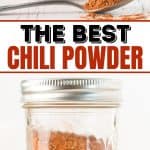
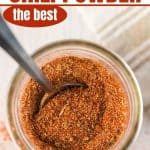
Homemade chili powder is easy to make, and the freshness can't be beat, but not all blends are created equal. My family taste-tested a lot of blends in our kitchen, and this recipe came out on top. So that's why I'm calling it the BEST Homemade Chili Powder.
It’s rich, aromatic, and easy to make using affordable pantry spices—no specialty chiles needed.

Not all homemade chili powder recipes require dried chiles and extra steps. This version is made with simple pantry spices you likely already have—and it tastes fresher and more customizable than store-bought blends.
Why This Is the Best Chili Powder
I get it. People say that their recipe is the best all the time. I've done it myself. But in this case, we did a bunch of taste testing of homemade chili powders, and this blend was actually the best out of all of the ones we tested.
I've made chili powder for a long time, but I decided to experiment with a bunch of recipes so I could recommend the best one for my family and for you as well.
Our testing was quite a sight to see. We tested chili powder:
- straight
- on popcorn
- on salad
- on beef
- and on pasta.
There were little bowls of chili powder-tasting dishes all over the kitchen, so it was messy, but totally worth it. Because we now have a winner, and not only does it taste great, but it's inexpensive to make, and you likely have all the ingredients needed in your pantry.
Fun Fact
Chili powder is very similar to other seasoning blends, like taco seasoning and quesadilla seasoning, but these blends have obvious differences.
Chili powder is typically made of chilis, while taco seasoning and quesadilla seasoning often have chili powder as one of their ingredients. They are interchangeable to a point, but each has its special flavor.

Why Make Your Own Seasoning Blends
There are loads of reasons to make your own spice mixes.
- Save Money — It's a lot cheaper to make your own seasoning blends; you're basically paying “the other guy” to do the measuring and blending.
- Adaptable for Taste — You can play around with the ingredients to find a mixture that you like best.
- Adaptable for Special Diets — You can adapt to special diets easily. (Some spice mixes have gluten, dairy, or other ingredients in them that folks with those allergies need to avoid.
- Avoid Toxins — Many spice blends have chemical nasties in them (like silicon dioxide) to make them free-flowing. Personally, I'd rather break up a few lumps in my spices than eat silicon dioxide, thank you very much.
- Enjoyment — It's simply fun to experiment in the kitchen!

How to Use this Homemade Chili Powder
- Chili — Of course, use it in chili. Pretty clever, huh? Use about 1-2 tablespoons for each pound of meat or chicken.
- Sides — Sprinkle it on rice and beans, or even on veggies.
- Salads — Sprinkle on salads with a drizzle of olive oil and salt for a makeshift salad dressing.
- Eggs — Sprinkle on eggs.
- Pepper Substitute — As a substitute for pepper in a recipe. Just add a bit more chili powder than the amount of pepper that's called for.
- Desserts — Yes, it's true. Try some on chocolate ice cream, in brownies, on chocolate bark, etc.
- On Fruit — Sprinkling chili powder on fruit is really a thing. Try it and you'll see!

Recipe Notes
- I recommend toasting cumin seeds first and then adding the ground seeds to this recipe. This makes the recipe extra special!
- You can substitute ancho pepper for the paprika if you'd like. I love ancho peppers, but I made this recipe with paprika to keep the cost down since that's oh so important, especially these days.
Other Homemade Seasoning Blends
Here are some more homemade seasonings that I think you'll like as well.
- The “Best” Cinnamon Sugar – Made Healthier – we tested a bunch and we were surprised about the one that won!
- Mild Curry Powder – just enough heat, but you can turn it up or down as you like.
- Vegetable Broth Powder – makes everything taste better, including popcorn!
- Celery Salt
- Pumpkin Pie Spice
- Quesadilla Seasoning – great for so many more things than just quesadillas

Homemade Chili Powder Recipe (Easy Pantry Spice Blend)
Ingredients
- 2 tablespoons paprika
- 2 teaspoons oregano
- 1 1/2 teaspoons cumin
- 1 1/2 teaspoons garlic powder
- 3/4 teaspoon onion powder
- 1/2 teaspoon cayenne pepper (omit or increase to taste)
Instructions
- Place all ingredients in a bowl.
- Blend thoroughly.
- Store in an airtight container in the refrigerator. Paprika is a pepper and should be refrigerated for maximum shelf life and potency.
Notes
- Use 1-2 tablespoons of chili powder per pound of meat, or to taste.
- Toasting the cumin seeds first before grinding will make this chili powder extra special!
Nutrition
Nutritional information is provided as a courtesy and is an estimate only. It may vary depending on ingredient brands, substitutions, and preparation methods. Optional ingredients are not included. Net carbs are typically calculated by subtracting fiber and sugar alcohols (such as erythritol) from total carbohydrates. This information should not be relied upon for medical or nutritional purposes.
The images in this post were updated in 2020. Following is one of the earlier images for your reference.

Do you make your own seasonings? Which ones?
Thank you so much for this simple and practical recipe 🙂 Our family is really enjoying the homemade chili powder! I love your site and look forward to trying lots of other recipes. Keep up the good work and thank you again.
God bless you,
Sofia
Thank you so much – I’m so glad you enjoy it!
Blessings to you as well.
– Adrienne
Seems like a stupid recipe to me – a chili powder without chilis. A non-chili chili powder? It’s like saying, chocolate is too expensive so I’ll just eat sugar. If you are indeed the creator of this nonsense recipe you have unfortunately confused many other people and websites because this recipe seems to be all over the web – UNFORTUNATELY. In the interest of edification, before publishing such nonsense, it would seem you should have published a REAL recipe for chili powder. All you have done here is propagate confusion and misinformation despite any disclaimer.
Sorry but your analogy is not accurate. Paprika is actually a chili – it’s just a less expensive and more readily available one. Paprika is a spice made from the air dried fruit of the chili pepper called capsicum annum. I hope that clarifies things.
Well, you’re half right. Paprika is made from pimientos, which are thick-walled, mild, and often bell-shaped peppers of the capsicum annum grossum family. These are not chilis (or chiles).
Chili peppers are members of the capsicum annum longum family — longish, tapered, thin-walled peppers with elevated levels of capsicum (providing their characteristic heat).
Your recipe does include chili peppers by way of the powdered cayenne, so you’re still good. 🙂 Besides, if it’s a powder meant to be used in chili (the dish), it’s perfectly acceptable to call it chili powder, whether it contains chili peppers or not.
What’s worse than a grammar Nazi? A grammar Nazi that doesn’t understand grammar.
Thanks for the encouragement :). You’re totally right on the cayenne issue.
Typo: chilis have elevated levels of *capsaicin* — not capsicum.
Bob, you got a fan in me
Mickey Maus, you’re an angry elf. You must be from the South Pole!! Adrienne, keep up the great work. You’re helping a lot people cope with a restricted diet. Thanks; I’ll be making my first salt-free chili tomorrow.
Enjoy it! Thanks for reading!
Adrienne, keep up the great work. You’re helping a lot people cope with a restricted diet. Thanks; I’ll be making my first salt-free chili tomorrow.
I have a chili recipe coming soon – stay tuned!
thanks for this recipe! we buy spices in bulk at a co-op and they rarely have any spice blends, just the basics. it’s so much cheaper/more flavorful to make your own than to buy pre-jarred anyway! i have found that most store-bought ‘chili powders’ have quite a similar list of ingredients as this, for all the folks saying that this is missing ingredients. recipes calling for chili powder assume that there’s no salt or black pepper and have ingredients listed accordingly. this is my fave recipe that i’ve tried so far — thanks again!
Thank you so much! Glad you like it!
No salt and pepper?
Hi there. Salt isn’t typically included in a chili pepper. You would simply add it to the dish. There are loads of peppers – just not black pepper. Hope you like it!
Hi: My daughter has become highly allergic to garlic in any form. It has become almost impossible to eat at restaurants because garlic is almost in everything and at times difficult to even cook at home because it is because it is not listed as an ingredient. For example, we cannot use chili powder because most likely it contains garlic. Can grinded red pepper flakes be used in place of bought chili powder? Also, what can be substituted in place of garlic in seasoning mixes? All recommendations very appreciated!
Chili powder is a blend of many spices and not just ground pepper. Red pepper flakes are chili peppers so if you grind them you can use them as one component of your chili powder. Onion would be the best sub for garlic. How did you know she was allergic? I know how terrible that is!
Hi!
Onions may not be your best substitute for garlic. Someone allergic to garlic may be allergic to anything in the allium genus of plants. Allergy testing will be able to tell you if you are allergic to the whole family of plants or just sensitive to some.
We use a spice from India called asafoetida to replace garlic and onions. Asafoetida is a resin that has a very pungent smell that when used in cooking gives the dish a flavor like onions and garlic. You can purchase asafoetida, often called Hing, in powdered form. The resin is very expensive so it is often combined with flour made from rice, garbanzo bean or wheat. We can’t have gluten so we check all labels for fillers. I buy Nature ‘n’ Me brand organic pure Hing powder from my local Indian grocery. You can also buy it on Amazon. It is expensive, but a small bottle will last a long time. A pinch or less will flavor a whole dish!
Yes, I am familiar with asafoetida and have used it before. Thanks for sharing! I should get some more.
You just saved dinner for me. This will work! I forgot to buy a new jar of chili powder when I went grocery shopping last week, and the nearest grocery store to where I live is a 20 minute walk down the road… and I’m too busy today to bother. Thanks!
Yay!!! Hope it was delish!
Hey! Is this recipe enough to flavour a pound of ground meat? Is it a single serving or multiple use?
Hi Cath.
I just updated the recipe to show using 1 – 2 T of chili powder for a pound of meat. Thanks for asking!
I have trying to make this recipe and didn’t turn out correct… Have two pounds of meat 4 cans of kidney beans two cans of tomato sauce and it still taste like just meat and beans? I even double your recipe! How much do I need to increase all the ingredients for the amount I’m making?
Hi there. You need 1 – 2 T per pound of meat and then more for the beans. You can see in this post about beans that it’s about 1 pound dry beans for each pound of beef. Hope that helps! https://wholenewmom.com/whole-new-budget/all-about-beans-frugal-tips-recipes-and-cooking-tips/ (I think you could need up to 7T or more for your recipe).
LOL.
Ummm. I think your “chili powder” recipe is missing a key ingredient.
You know…CHILIS
Hi Brad. Thanks for reading and for commenting. Yes, you are right. That was the point of the post – to offer a less expensive option that would also make it easier for folks to obtain the ingredients. It’s good as well :). Hope to see you around again.
OMGUSH Thank you so much for replying fast 😀 your website is definitely a life saver, i had run out of my store bought ones 😉
You are so welcome!! Loads more spice mixes here: https://wholenewmom.com/recipes/homemade-spice-mixes/ That should keep you busy :).
Hai:) Idk if ur still active in replying comments but i hope you still do D: How much should i times the recipe for a whole bottle like in the picture above?:D thanks – spices lover((^^
Hi there. It all depends on the size of your container. Just measure it and then adjust the recipe accordingly. Enjoy!
Hi, SpiceLover. If you haven’t figured it out, yet, this recipe will make about 2 fluid ounces of mix. So, if you have a pint-sized (16 ounces) jar you want to fill, just multiply all the ingredients by eight. If you use a LOT of chili powder and want to make a quart (32 ounces) just multiply all by 16. Just remember that 3 teaspoons = 1 tablespoon, 2 tablespoons = 1 ounce, and 8 ounces = 1 cup = 16 tablespoons = 48 teaspoons. (Therefore, 1/8 c = 1 oz, 1/4 c = 2 oz, 1/2 c = 4 oz, 1/3 c = 16 teaspoons (or 2 oz + 1 Tbsp + 1 tsp)… Who said math isn’t fun? 🙂 )
If you are careful with your math and measurements but find that the jar isn’t as full as you expected after you mix them thoroughly, don’t fret. The finer powders in the mix will take up space between larger particles of other powders, causing the blend to settle into a smaller space.
Make sure you’re using fresh spices; if *any* of them start losing a substantial amount of flavor before you use the whole jar, you might not be happy with what remains.