
Homemade Natural Blue Food Coloring
This post may contain affiliate links from which I will earn a commission. Learn more in our disclosure.
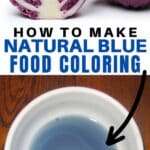

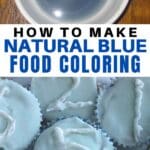
Today I am sharing something that I never thought I would make: a Homemade Natural Blue Food Coloring Recipe.
Natural blue food coloring is one of the hardest colors to make naturally—but there are a few options that actually work and one of them costs very little to make.

Most of the time I try to keep things simple in the kitchen since my life is really busy, but sometimes I like to have a little extra fun with food to make our whole food/allergy-friendly kitchen more interesting, especially true when our kids were little.
But artificial food coloring is just a no go for me.
There are a few ways to make natural blue food coloring. Some work better than others depending on what you need it for.
- Red cabbage – the best DIY method (explained below)
- Blue spirulina – the most vibrant blue, great for frosting and smoothies
- Butterfly pea flower – a bright blue that changes color depending on acidity
Below, I’ll show you how to make blue food coloring at home using red cabbage, plus tips for getting the best color.
Why I Made This Blue Food Coloring
Our boys skated in a local charity hockey league and for their season finale, the team members were going to receive a cupcake decorated with frosting to match their uniforms.
It would have been simple if they’d been on a green, red, or yellow team, but blue?!
I had a good Carob Muffin recipe that I could use for healthy cupcakes and then the green source from these Mint Fat Bombs would work, and turmeric is great for yellow and beets work for pink. But blue?
I initially told my boys not to get their hopes up, but I was so happy when I found a healthy solution to make their day more festive!
Reasons to Avoid Artificial Food Colors
We all know that those artificial food colors are not healthy. I mean, who thinks that eating something fake is good for you?
Here are some things to consider. Artificial food colorings:
- are suspected of having links to behavioral and health problems.
- can have aluminum in them. When you see, “FD & C Yellow Aluminum Lake” on an ingredient label, you can know that you will be eating aluminum. There is discussion about this form not being as toxic as other forms, but I would prefer to take no chances here.
- can contain barium or zirconium.
How to Use This Natural Blue Color
You could use this natural blue food coloring for any of the following:
- dying frosting (like this sugar-free buttercream frosting) of course
- dying Easter eggs
- paper mache projects
- crafts
- fun creative food ideas (blue mashed potatoes, anyone?)

How to Make Natural Blue Food Coloring (Red Cabbage Method)
Here are the basic instructions with some process images. For the complete information, scroll to the printable recipe card.
- Boil cabbage
- Reserve water
- Add baking soda to the water
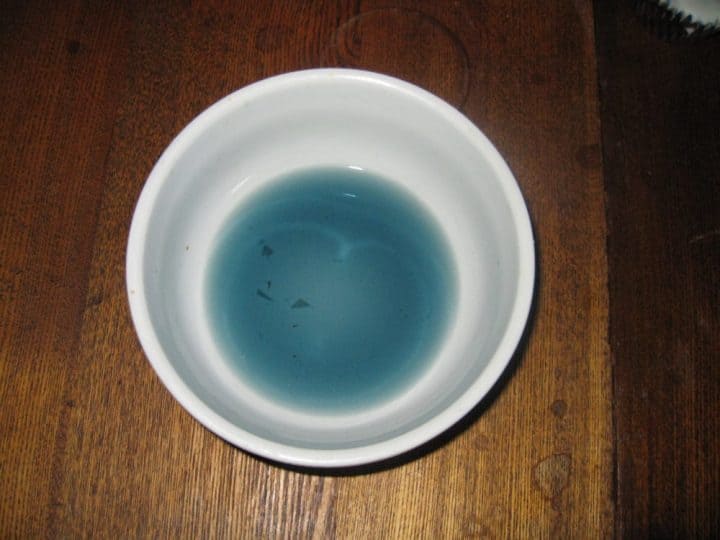
Photo 1: Reserved cabbage water.

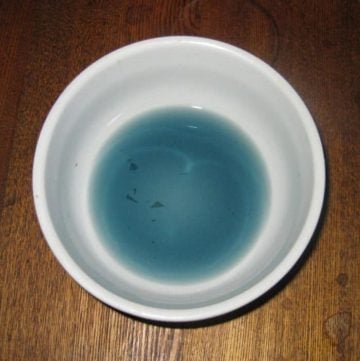
Photo 2: The final result: homemade natural blue food coloring.
Money Saving Tip: Use filtered water for cooking the cabbage and then, though it is pretty well boiled, you can still eat the leftover veggies for dinner. Try topping them with Moroccan Vinaigrette and Chaat Masala.
Recipe Notes
- Natural food coloring is prone to fading quickly. If your color isn’t that deep to begin with, you won’t have much margin for fading.
- Don’t try to make this blue too dark by adding a bunch of baking soda to the water if you’re using it for food, or you’ll end up with baking soda-flavored food.
- The color in the cabbage juice itself is not particularly sensitive to temperature, but the mixture of the baking soda with the juice is. So you will want to add the color after the food item has cooled, or else only add it to food items that will not be heated.
- If you’re making frosting, note that this method creates a softer, more muted blue—blue spirulina typically will create a brighter result.
When Natural Blue Food Coloring Won’t Work Well
Natural blue food coloring is very sensitive to pH:
- Acidic ingredients in your recipe (like lemon juice or yogurt) will turn it purple
- Using too much baking soda can push it toward green
- Heat can dull the color
For best results, add the coloring after cooking and use it in neutral or slightly alkaline foods.
Homemade Natural Blue Food Coloring
Ingredients
- Half-head red cabbage (yes, I said “red cabbage!”)
- Water
- Baking Soda
Instructions
- Wash the cabbage and cut out the stem.
- Chop into small pieces.
- Place cabbage pieces in a pot and add water until the cabbage is covered.
- Simmer for 10 minutes and then drain.
- The resulting liquid will be purplish (see photo #1 above).
- Gradually add baking soda, ½ teaspoon at a time, until you get a nice blue hue (see photo #2, above). Be careful, because the baking soda will add flavor to the coloring. If you are using the color for something you will be eating then you need to be especially careful how much you add. Since it is the alkaline quality of the baking soda that causes the red cabbage juice to turn blue, you can also add spinach juice, green tea, or another alkaline ingredient.
Notes
- The color in the cabbage juice itself is not particularly sensitive to temperature, but the mixture of the baking soda with the juice is. So you will want to add the color after the food item has cooled, or else only add it to food items that will not be heated.
- Natural food coloring is prone to fading quickly. And the if your color isn’t that deep to begin with, you won’t have much margin for fading.
- Don’t try to make this blue too dark by adding a bunch of baking soda to the water if you’re using it for food, or you’ll end up with baking soda-flavored foo
Nutritional information is provided as a courtesy and is an estimate only. It may vary depending on ingredient brands, substitutions, and preparation methods. Optional ingredients are not included. Net carbs are typically calculated by subtracting fiber and sugar alcohols (such as erythritol) from total carbohydrates. This information should not be relied upon for medical or nutritional purposes.
Don’t Feel Like DIYing?
If you’d rather not have to make your own natural blue food coloring or would like an option that will work for an acidic recipe, here is a link to a set of good natural food coloring including blue.
What will YOU use this Natural Blue Food Coloring for?
Wouldn’t this be too liquid? You don’t really have anything to make it a little stiff like icing, except the 1/4 Xylitol, which I assume is in powder form…Kelly
The coconut oil is solid at temps under 74 or so. In the summer this will be an issue – you could use a more solid fat like cocoa butter if you like. This is one of the challenges of baking with whole foods. I would for sure powder the xylitol. Were you thinking that the coconut oil was liquid?
The other fat that would work is palm shortening – I think that would work well also.
What was your icing recipe? I tried this with a butter cream recipe of 1 C of butter, 2 1/2 C powdered sugar, 2 tsp. vanilla and up to 4 T milk (although I used my blue food coloring in place of the vanilla and milk, but I had already sweetened the food coloring with honey and put vanilla and a drop or two of peppermint oil to it). The problem is that the icing came out a very pale green, not blue…Kelly
It was a botched inside of a healthy mint pattie. Maybe yours changed green b/c of the yellow color of the honey and the butter?
What do you mean a botched inside of a healthy mint pattie? Can you be more specific and do you have an actual recipe? I ask because my son is going to vacation bible school and they are having cake pops with blue icing and I don’t want him to feel left out, even if it is a lighter blue…thanks, Kelly
I tried
½ cup coconut oil
¼ cup sweetener (I think I used xylitol but I’m not sure–sorry!)
½ teaspoon peppermint extract
I hope it works!!
Thought I’d pass on my experience with trying to add green tea to the red cabbage dye – it didn’t work . I was concerned about tasting the baking soda and so opted to try several different green teas including a powdered matcha and green tea concentrate as well as basic green tea and all turned the dye a muddy shade of purple:( Luckily I tried the baking soda and with very little it managed to turn the red cabbage the perfect shade of blue for my frosting and with no noticeable taste! Just go easy on the baking soda and you’ll do fine! Thanks for the recipe
Thanks for coming back to share! And so glad it worked for you!!!
:):):):):):):):):):):):):):):):)
Ok – that’s weird that you get blue colouring from red cabbage!! Great discovery though!!
Thanks for linking to a Round Tuit!
Hope you have a fabulous week!
Jill @ Creating my way to Success
https://www.jembellish.blogspot.com/
I am sharing it on FB and Pinning it! 🙂
Thanks so much!
Wow. Now that I didn’t know.. Thanks for linking up at friday fun party!
I do love chocolate and mint together! Oh, and what a great blue you have achieved with the red cabbage in your recipe. Your cupcakes look wonderful!
I love learning how to color foods with natural colors – this is very creative. Thanks for sharing with Healthy 2Day Wednesday, and come back Wednesday to see if you were featured!
I honestly never really thought about food coloring being bad! Thanks so much for enlightening info.