
How to Make Rose Water (DIY Toner, Face Mist, or Spray)
This post may contain affiliate links from which I will earn a commission. Learn more in our disclosure.
This homemade rose water spray is one of the first DIY personal care recipes I ever made—and it’s still one I come back to.
It’s simple, affordable, and a really nice way to refresh your skin throughout the day. I especially loved using it when I was dealing with rosacea and needed something gentle that didn’t make things worse.
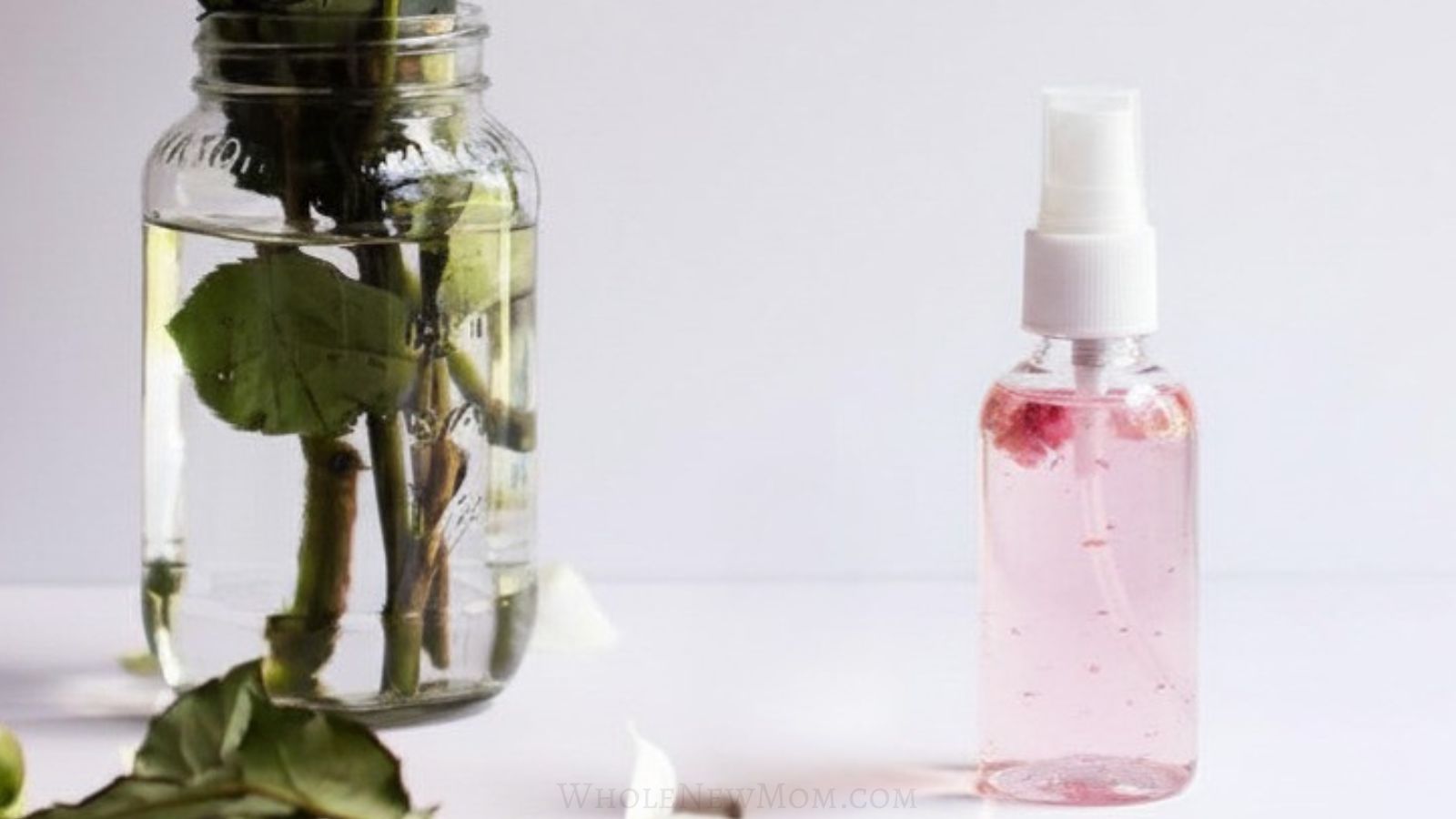
That said, there’s a lot of confusion online about what “rose water” actually is. Some recipes use real rose petals, while others use essential oils—they’re not the same thing and it’s crucial to know the difference.
I’ll show you both options below so you can choose what works best for your skin.
Awhile ago I mentioned rose water spray in my post about how to make a Facial Oil Cleanser.
Well, today I am going to show you how to make the rose water spray yourself.
Rose water sprays are used for skin hydration on either your face or your whole body. You can use them anytime for a refreshing, skin nourishing spray, or you can use them as I do in my facial care routine.
Some of them can be quite expensive, especially when you are looking at organic sprays.
Truth be told, I once bought that expensive version out of desperation to rid myself of rosacea that was making me embarrassed to go out in public. That spray, together with a simple skin cleansing routine, helped a lot, but soon I had to find a less costly way to keep my skin healthy.
Now you can benefit from this cost-saving method too.
How to Make Rose Water (2 Simple Methods)
Rose Water With Petals
Add rose petals to distilled or filtered water and heat gently until just simmering. Strain the petals from the water. Bottle and store.
Rose Water From Essential Oils
Add rose essential oil to distilled or purified water.
Shake well before each use, or use a solubilizer for better mixing.
How to Use Rose Water as a Toner, Face Mist, or Spray
Once you’ve made your rose water, you can use it in several simple ways depending on your preference.
As a facial toner
Rose water is most commonly used as a gentle, natural facial toner.
- Use it as-is, or
- dilute with distilled water for a lighter formula:
Basic toner ratio:
- 1 part rose water
- 2–4 parts distilled water
Optional additions:
- a few drops glycerin (for hydration)
- aloe vera juice (soothing)
Apply with a cotton pad or mist onto clean skin after cleansing. If adding additional ingredients, shake before using.
As a face mist or spray
For a refreshing facial mist, simply pour rose water into a clean glass spray bottle.
- Store in the refrigerator if desired
- Mist onto face throughout the day
This works well as a quick skin refresher or even a light body spray.
Optional: Adding Essential Oils
While some recipes include essential oils for fragrance, they don’t naturally mix with water. See the notes above for important safety considerations before using this method.
A Quick Note About DIY Rose Water
You can basically see two main types of “rose water” recipes online:
Traditional rose water (best option)
This is made by steeping or gently simmering real rose petals in water. It’s the most natural and typically the best choice for sensitive skin.
Rose water sprays (quick DIY version)
Most of these use water and rose essential oil. While easy to make, essential oils don’t naturally mix with water.
This means the oil can sit on top of the liquid and be applied unevenly to your skin—which may be irritating, especially if your skin is sensitive (like mine was with rosacea).
If you choose this method, you’ll need to either:
- shake well before each use, or
- use a natural solubilizer for a more stable mixture (learn more about emulsifiers and how oils mix with water here)
Since oil and water don’t mix, shaking will only temporarily disperse the oil. This can lead to uneven application on the skin which can sadly lead to sensitization. I know a number of people whom this has happened to and it’s becoming more common these days.
For a more consistent and gentle result—especially for sensitive skin—using a solubilizer or choosing the petal-based method is a better option.
I’ll walk you through both methods below.
Should You Leave Rose Petals in the Bottle?
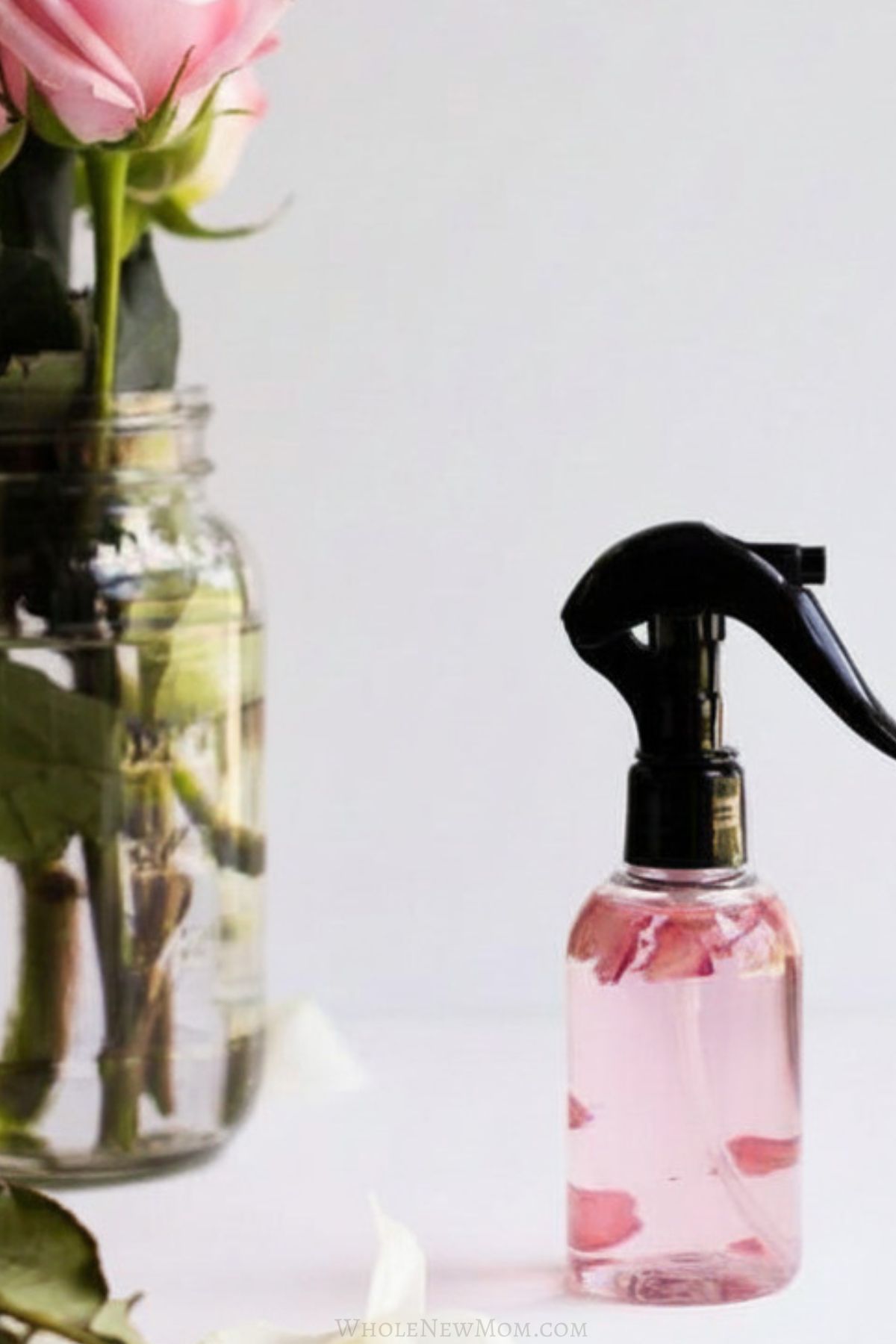
You may notice some rose water sprays have petals inside the bottle. While this looks beautiful, adding plant material to water-based products can shorten shelf life and increase the risk of spoilage.
For best results, strain the petals out before storing your rose water—especially if you’re using it on your face.
If you prefer the look, you can add a few petals for short-term use, but be sure to store the spray in the refrigerator and use it quickly.
How to Store Rose Water
Because this is a natural, preservative-free recipe, proper storage is important.
- Store in a clean glass container
- Keep refrigerated for best freshness
- Use within about 1 week (up to 2 weeks max)
If the smell or appearance changes, discard and make a fresh batch.
Frequently Asked Questions
Is DIY rose water safe for your face?
Yes, when made properly, rose water is generally gentle and suitable for most skin types. The petal-based version is typically best for sensitive skin since it doesn’t contain concentrated essential oils.
Can you make rose water with essential oils?
You can, but it’s not the same as traditional rose water and caution is needed. Essential oils don’t mix with water and can separate, leading to uneven application. For best results and safest application, use a solubilizer or choose the petal-based method.
How long does homemade rose water last?
Because it doesn’t contain preservatives, homemade rose water should be stored in the refrigerator and used within about 1 week (possibly up to 2 weeks at the most).
Should you dilute rose water for toner?
Not necessarily. Many people use pure rose water as a toner. However, if your skin is very sensitive, you can dilute it with distilled water to make a lighter formula.
Can I leave rose petals in my spray bottle?
While the petals are pretty, leaving petals in the bottle can shorten shelf life and increase the risk of spoilage. It’s best to strain them out before storing.
DIY Rose Water (Natural Toner, Face Mist, or Spray)
Ingredients
- 1-2 cups rose petals
- distilled water
Instructions
- Add rose petals to a small saucepan.
- Pour in enough distilled water to just cover the petals.
- Heat gently until the water begins to simmer, then turn off heat.
- Let the mixture cool completely.
- Strain out the petals.
- Pour the rose water into a clean glass container or spray bottle.
Notes
Have you made anything with essential oils that you particularly like?
In order to help the rose Otto blend better I recommend adding a little bit of Witch hazel in the bottle first and then adding the rose Otto essential oil to it. Oil and water don’t mix , that’s a fact, but by adding the witch hazel and drops first giving it a good shake and then adding the water (and giving it another shake), it helps it emulsify and makes an amazing and refreshing spray.
Thanks for finally writing about > Refreshing Homemade Rose Water Spray – Whole New Mom
< Liked it!
Thank you!
hello i’m looking for Essential Oils for cleaning ,which oils work if any ?
Hi there – you can use so many but this DIY blend is used often for that purpose: https://wholenewmom.com/health-concerns/homemade-anti-bacterial-thieves-essential-oil-blend/
I am a little confused on the emulsifier. I read the article on it. I am making the rose water as a toning spray and I saw the aloe Vera on the list as an emulsifier, so I was considering that. I have very dry skin. Would you say the aloe is a good choice? Thank you for this article!
Hi there. Emulsifiers and preservatives are a bit tricky, however it should be. Please do take care b/c water and aloe breed bacteria so a preservative will be needed for long term storage. I have to learn more about that and hope to add this to my information. So sorry for the delay in responding–I didn’t have the ability to respond to comments for a long time and just got it back so trying to catch up. 🙂
Try adding a little bit of witch hazel to the bottle first as an emulsifier then add your rose oil. Give it a shake (I even let the witch hazel and oil “sit” for an hour or so) then add the water. Give it a shake and your ready to go!
Would Rose Absolute 5% oil blend (Rosa damascene) from “NOW” Essential Oils work in any way? It is what I have on hand. I continue to see comments saying do not use this, however I as wondering if it would work in any way. I’d love some rose water. Thanks.
Why are you reading it won’t work?
I bought Rose Water and I may have messed up, because when the bottles arrived they were labeled Rose Water Concentrate – Brand=Now Solutions. I’ve been unable to determine if I need to add something to it first, or if it’s the same as regular Rose Water. Your help would be greatly appreciated.
I do have Rose Essential Oil. I use DoTerra Essential Oils and (after many comparisons to other brands) I’ve found them to be the best so far, far more potent than other brands. For use on skin I would have to add fractionated coconut oil to avoid sensitivity (and my skin was never sensitive to anything until I didn’t dilute the DoTerra Rose EO) therefore it would be easier for me to use to use Rose Water.
Hi there. Sorry but I don’t know the answer to that question. Hope you can find the answer!
In one of your other posts it talks about essential oils not mixing with water without an emulsifier and the importance/safety of doing this. Is there a need for an emulsifier in this rose oil spray?
Hi there. Sorry for the delay in responding–I didn’t have the ability to respond to comments for a long time and just got it back so trying to catch up. 🙂
In any case, ideally you should use one. Aloe would be a good idea and then take care to find a preservative if you will be storing it for any period of time. I hope to add this information to the site soon.