
Gluten-Free Sourdough Starter (Grain-free Option)
This post may contain affiliate links from which I will earn a commission. Learn more in our disclosure.


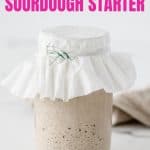

If you love sourdough like I do, but you've gone on a gluten-free diet, I have some great news for you. Yes, you can make gluten-free sourdough from this Gluten-Free Sourdough Starter and there are no special ingredients to buy!
And that's not all: you can make a grain-free sourdough starter too. Read on to get all of the sourdough-loving life-changing info you've been waiting for.

I'm convinced that gluten is a big health concern for many, but I still love good bread. And while this flax bread is super tasty, there's just nothing like a good sourdough.
We LOVE the tangy flavor of sourdough, and since there are so many people who can't tolerate gluten, I've been meaning to try my hand at making gluten-free sourdough bread. I am now that much closer to my goal!
In order to prepare myself for this post, I wanted to put myself in the shoes of someone who is gluten-free.
When most people think “gluten-free,” they think that bread is no longer an option–particularly breads like sourdough.
So in order to be able to empathize with them in their struggle to balance nutrition with their allergies or intolerance… I did some “research.”
Basically, I wanted to think about what it would be like to be gluten-free.
And bread-free.
So I ate bread.
Homemade bread.
Two pieces, actually.
With a lot of butter.
And I realized how much I would miss it if I weren't able to eat bread like this on a regular basis.
I'm not trying to rub it in anyone's face – quite the contrary! I know how fortunate my family is to be able to eat whatever we want without breaking out in hives or keeling over in digestive pain.
It saddens me to imagine what it would be like to:
– not be able to walk into my kitchen and slice off a piece of bread whenever I want
– request the waiter to remove the basket of bread instead of refilling it
– worry about being sick for days because someone accidentally contaminated a cooking spoon!
I think I can understand your pain.
That's why it truly brings me joy to share with you a way to have your cake–er, bread–and eat it too.
Gluten-free sourdough, baby. Oh yeah.
Imagine capturing wild yeast out of thin air and cultivating it over a period of several days so that, without any help at all, it will magically make the dough rise and become a beautiful (and relatively inexpensive–) gluten-free loaf of bread.
It really isn't as hard as it sounds!
But it is incredibly healthy! Quite possibly the healthiest bread you can make!
Benefits of Sourdough
There are many benefits to sourdough including:
Easily Digestible
Sourdough is easier to digest than regular bread (preventing issues like indigestion, etc.)
Beneficial Bacteria
Sourdough contains the healthy gut bacteria lactobacillus (the same major player in yogurt and kefir)
Fewer Nutrient-Binding Qualities
Most of the phytic acid in sourdough is broken down, reducing the effects of nutrient-binders on other foods in your diet.
Lower Glycemic Load
Since sourdough takes longer to digest, it doesn't cause as much of a spike in blood sugar as traditional bread does.
Functions As a Prebiotic
Sourdough functions as a prebiotic, so it helps support healthy digestion.
Reduced Acrylamide
Souring the dough reduces the amount of the amino acid asparagine which is a precursor of acrylamide formation, and acrylamide is a cancer-causing ingredient found in toasted grains, including bread crusts. So with sourdough, you can enjoy your bread crust with less acrylamide.
Gluten-Free vs. Regular Sourdough
Making a gluten-free sourdough starter isn't any different than making a regular sourdough starter.
– Both start with flour and water.
– Both take a few days, and both get bubbly.
– The only real difference comes when you're ready to make sourdough bread and you have to pull out all the various types of gluten-free flour.
Gluten-free sourdough starter can be made in as little as seven days using gluten-free flour, water, and a medium-sized bowl. I personally have successfully made gluten-free sourdough starter with brown rice flour, but I've read others have had success with white rice flour, teff flour, sorghum flour, or even a gluten-free all-purpose blend.
Typically, in the same way that using a blend of alternative sweeteners will work best when substituting for sugar, using a variety of flours will work best for your gluten-free sourdough.
Is Sourdough Gluten-free?
While many think that sourdough is already gluten-free, here are the facts.
I have seen this argument many times. People claim that white flour has no gluten in it since all of the gluten is in the hull, and that whole grain flour sourdough bread is gluten-free since the enzymes break down the gluten.
Sadly, that is not the case.
White flour has between 8-11% gluten so all the gluten is not in the outer hull that is sifted away.
Not enough of the gluten is broken down by the fermentation process. The definition of gluten-free is 20ppm or less. Sourdough is known to have 2000 ppm of gluten. Regular bread has 80000 in many instances, so 2000 is less, but it's not gluten-free.
Please take care that if you need to avoid gluten that avoid traditional sourdough.
Grain-Free & Paleo Options
Since this post was published, several readers have asked if you can make sourdough starters without grains. Well, the good news is: YES YOU CAN! There are 2 schools of thought on this, however.
Some say that you need at least 1/3 of your flours to be a starch: tapioca, arrowroot, or maybe cassava flour. Starch is what feeds the yeast so that is the reason behind this requirement. If using coconut flour, however, you will need to add more water to the starter. Instead of a close to 1:1 ratio, for every cup of coconut flour that you use, you will need to use about 1 2/3 cups of water.
Coconut Flour Sourdough Starter
Can you make a starter from only coconut flour? Good question.
There are some who say that you can, while others say that you cannot.
The information is in the recipe card so you can try it, but you might need to add some sauerkraut juice for it to work and not sure what kind of recipes you can make with it. From what I've read, this really doesn't turn out that well, but I know that some people are really desperate to make recipes that will work for them, even if they don't taste amazing, so I'm leaving this option here for you to experiment.
Sourdough Starter from Only Nuts / Nut Flours
You can make sourdough starter from nuts and likely only from nut flours, but you will need to add a fermented medium, like sauerkraut, to the starter.
Sourdough Recipes
Gluten-Free Sourdough Recipes
The following are a variety of gluten-free sourdough bread recipes for you to experiment with.
Keep in mind that every recipe will be different, calling for different types of flour and possibly using yeast. I've included several sources so that you can find something that suits you!
- Gluten-Free Brown Rice Sourdough
- Artisan Style Sourdough
- Sourdough Bread Boule
- Rustic Gluten-Free Sourdough
- Bread Srsly's Sourdough
- An excellent bread recipe, plus recipe adaptations in Sourdough A to Z by GNOWFGLINS
- Bread Machine Sourdough – note that you can try to adapt regular recipes to the bread machine, but here's one that is done for you.
Any of these recipes would be great topped with butter or Homemade Nut Butter. Mmmmmm.
Grain-free Sourdough Recipes
Here are some sourdough recipe for you to try after you have your sourdough starter ready to go:
There are other grain-free sourdough recipes out there but those that call for a nut base will need a different method for fermenting due to them needing something to jump start it (like sauerkraut) rather than just the starch. This recipe is an example of that. I hope to have some additional recipes for you in the future.
What You'll Need
To make gluten-free sourdough starter, you'll need:
- gluten-free flour (some grain-free options will work)
- water
- a jar (or bowl)
- a cover
- something to secure the cover

How to Make the Starter
Following are some images and some brief info about how to do this. Full instructions are below.

Combine flour (whatever gluten-free or grain-free flour or gluten-free flour blend you like) and water.


Feed the Starter for several days.

When your sponge looks like photo #8, you're ready to make sourdough bread!
Recipe Notes and Substitutions
- Ingredient Amounts: The amounts we give in the ingredient list are the amounts you will need if you only feed the starter twice a day, which is the least number of times you should feed it. So if you feed it more often, you will of course need more flour and water.
- Flour: Gluten-free flour blends (just like with alternative sweeteners like stevia) tend to work best when used in conjunction with others. So it's best not to try to make this sourdough starter or sourdough with only 1 gluten-free flour. Personally, I recommend using a blend of flours. As you can read in this gluten-free baking tips post, using a blend of flours tends to make baked goods turn out better when using alternative flours.
- Grain-Free: For a Paleo Sourdough Starter or AIP Sourdough Starter, just use organic cassava flour or organic tiger nut flour in place of the gluten-free grain flours.
Troubleshooting Your Starter
Here are three of the most common things that you might notice while watching your starter and what they mean:
Too Much Starter
If after a few days the starter begins to outgrow the bowl, pour some off to make a batch of sourdough pancakes. Leave at least 1/2 cup of starter in the bowl to continue feeding.
Liquid At the Top
Liquid may or may not collect at the surface of the starter. Either case is normal. (FYI: the liquid contains more lactobacillus and gives the bread its sourdough taste.)
No Bubbles
If you do not see bubbles at the top or at the sides of the starter, add a third feeding. Try to keep the feeding intervals equal. For example, 6am, 2pm and 10pm are all equally apart at 8 hours.
One thing you can do in this case is add one to two tablespoons of water kefir, dairy kefir, kefir whey or kombucha in place of the water for just one feeding. Since you are adding more bacteria “goodies” to the mix, you are boosting fermentation action.

FAQs
How Long Should You Feed Your Starter?
After the initial period of making the sponge, etc., your starter is officially in maintenance mode. Then you can feed it as often or as little as you like.
- At the very minimum, you can keep it in the fridge and feed it weekly. However, it's not recommended to have it in the fridge until after it's 4 weeks old.
- You can keep it on the counter and feed it daily, and use anything you don't need for recipes.
- You could feed it daily with as little as 1 tablespoon of water and flour to keep it fed but not produce a lot of starter.
How Long Can You Store Your Starter?
You can keep it for quite a while provided you feed it daily. You will, however, need to revive it when you want to use it again.
- Three and a half days before baking, remove the starter from the fridge and bring it to room temperature (let it rest for about 1/2 a day.
- Feed with equal parts flour and water.
- About 1/3 of a day later, feed the starter again.
- Once you have foam and liquid rising to the top of the starter, you can use the starter for bread. If you don't have that after 4-6 hours, keep feeding daily until you do.

Gluten-Free Sourdough Starter
Ingredients
Gluten-free Sourdough Starter
- 6 cups gluten-free or grain-free flour
- 5 1/4 cups filtered water
Coconut Flour Sourdough Starter
- 1/2 cup coconut flour
- filtered water
Instructions
Gluten-free Sourdough Starter
- Combine 1/2 cup flour (whatever gluten-free flour or gluten-free flour blend you like) and a scant 1/2 cup filtered water in a medium to large bowl.Whisk until smooth and cover the gluten free sourdough starter with a cheesecloth or clean dishtowel to allow air to circulate but prevent particles from falling in.Set the bowl in a warm area where it will not be disturbed. A kitchen counter, pantry cabinet, or patio can all be good options.
- Wait 12-24 hours.
- At least twice a day for the next six days, at regular intervals, add 1/2 cup of flour and a scant 1/2 cup of filtered water to the existing starter. Mix until smooth, and cover.This is called feeding the starter.Make sure to watch your starter carefully.
- When your gluten-free sourdough starter is very bubbly and creates a dome on top 2-3 hours after each feeding (like the above picture), you are ready to make bread. This is often called the sponge and typically it takes 5-7 days for this to happen.
- Use your starter for making the sourdough bread of choice. See above this recipe card in the post for some great options!
For Coconut Flour Starter
- Combine 1/8 cup coconut flour with 1/2 cup filtered water in a large bowl. Whisk until smooth. The mixture should be pourable but not thin.
- Cover the bowl with a plate or other air tight cover, making sure there’s at least a 1/2-inch gap of air at the top.
- Approximately every 12 hours add another 1/8 cup of coconut flour and ½ cup purified water. Stir well and cover.
- In 24–48 hours the mixture should get bubbly and smell fermented. If no bubbles form, try increasing the frequency of feedings to every 8-10 hours.
- If at any time there isn't a 1/2 inch gap at the top of the starter, move it to a larger bowl.
Notes
-
- Ingredient Amounts: The amounts we give in the ingredient list are the amounts you will need if you only feed the starter twice a day, which is the least number of times you should feed it. So if you feed it more often, you will of course need more flour and water.
-
- Flour: Gluten-free flour blends (just like with alternative sweeteners like stevia) tend to work best when used in conjunction with others. So it's best not to try to make this sourdough starter or sourdough with only one type of gluten-free flour. Personally, I recommend using a blend of flours. As you can read in this gluten-free baking tips post, using a blend of flours tends to make baked goods turn out better when using alternative flours.
-
- Grain-Free: For a Paleo Sourdough Starter or AIP Sourdough Starter, just use organic cassava flour or organic tiger nut flour in place of the gluten-free grain flours.
Nutritional information is provided as a courtesy and is an estimate only. It may vary depending on ingredient brands, substitutions, and preparation methods. Optional ingredients are not included. Net carbs are typically calculated by subtracting fiber and sugar alcohols (such as erythritol) from total carbohydrates. This information should not be relied upon for medical or nutritional purposes.
A Great Gluten-free Sourdough Starter You Can Buy
I know how it goes. It's exciting to think about doing everything yourself, but then you just might not get around to it.
If that's how you're feeling after reading this post, you can just buy this Gluten-Free Sourdough Starter and have it all done for you. This would make a great backup to have in your pantry too!
This is a fabulous jumping off point for tons of healthy creativity in the kitchen. So many options from breads to biscuits and more.

Tiffany is a frugal foodie, balancing the desire to feed her family healthy food while being a good steward of her finances. She realized it was possible to eat nourishing, traditional food on a budget if she made baby-sized changes in the kitchen. She continues to work hard at mastering real foods without going broke and shares her journey at Don’t Waste the Crumbs.
Help please! I apparently overlooked the fact I was suppose to feed the starter at least twice a day. I only fed it once a day. I am on day six. Does this really matter? I fed once a day 1/2 flour 1/2water. Can I proceed and make a loaf?
Hi Lisa! It does, and doesn’t matter. You’re still creating a starter with a once/day feeding, but it will take longer for it to be fully active. So at day 6 with 1x/day, you should probably feed 2x/day for a few more days, or keep feeding 1x/day for longer to get it fully ready to leaven a loaf. It’s ready when the starter is domed about 2-3 hours after you feed it. Hope this helps!
Hi, When you say leave air needs to circulate is that within the bowl? I have seen starter recipes that call for leaving the bowl uncovered so the yeast from the environment helps ferment the dough, so I’m trying to find out if covering is necessary. I don’t have a plate that fits well on the bowl I would use, so if it does need to be sealed, would tight plastic wrap work?
Thanks!
Hi Randi! Air needs to circulate from inside to outside the bowl, so you don’t want a seal that plastic wrap will provide. If you don’t have a plate, try a towel or a similar-sized lid, but leave it ajar for fresh air to move in.
Here is a recipe for a sourdough which I converted for gluten free
I use several bread flours and stick by a ratio of 2:1 i.e. 2 of heavy flours and 1 of starch.
Flaxseed sourdough gluten free
Evening before or early morning-
85g roasted flaxseed with 311g of water added after roasting.
Set this mixture aside and let cool.
540g water
20g psyllium husk
453g flour
2 tsp Xanthan gum
120g culture starter
Mix these ingredients and then autolyse for 30 min.
After autolyse, combine flaxseed/water mixture and add 17g of salt
After mix, add 283g flour.
Next day or that evening, preheat oven to 190 deg Celsius then bake:
50 min @ 190
10 min @210
10 min @ 230
Remove and cool on rack!
I am still altering this recipe by attempting to produce the bread with more air – any ideas?
“I’m not trying to rub it in anyone’s face – quite the contrary! I know how fortunate my family is to be able to eat whatever we want without breaking out in hives or keeling over in digestive pain.” They will suffer later in live!!!
“But it is incredibly healthy! Quite possibly the healthiest bread you can make!” Uhmmm no, not even close!
Sadly, everything coming from Corn, Starch, and all modern food, is causing Cancer, High Blood Presure, Cholesterole issues, and the 1.000’s other “Issues” that we as humans have, in the Western World! Go Natural, go back to your roots, and stop eating processed foods! It can be slow or fast suicide, but either way, the Western World, is eating them-selves to death, by eating something that aren’t food, like Potatoes!!! What people call Potatoes today, is containing 2 Starches, 80% Amylopectin and 20% Amylosis… Both of those are used in the chemical industry, as a thickner, in Glue, Lubricant, and to make Paper… Does that sound like food!? NO!!! And Rice and Pasta, contains up to 3 times as much Starch… Get back to your roots people!!!
I’m sorry you disagree with my viewpoint Ole, but perhaps I didn’t explain myself very well. My family doesn’t suffer from food allergies, and we are fortunate to not suffer immediate and severe reactions from eating a single slice of homemade bread or a tiny fraction of a peanut. In regards to processed foods, I’m sure you’d be pleased to know that our family eats minimal processed foods, and making homemade bread is one way we’ve eliminated unnecessary additives.
Just because a compound is identified in natural whole foods, plants and herbs and then isolated by scientists doesn’t mean that organic foods containing starches are bad. Avoiding modern corn and isolated starches is one thing but saying potatoes and rice aren’t food anymore is ridiculous. The food of our ‘roots’ includes dairy, which contains casein – also something that can be isolated and used as a thickener, glue, and plastic. Eat it in it’s original, raw and especially fermented state and all is well.
Can this be kept in the refrigerator like normal starters and just fed every so often like gluten starters or do you have to do this process each time you want to make GF sour dough bread?
Hi Michelle! You can keep the GF starter in the fridge just like regular starters. 🙂
I am curious about the lack of yeast in the starter. You really don’t need any yeast? I’ve been having a lot of health issues for years with no apparent answers. I was finally diagnosed with severe Candida albicans. After a 3 month diet to rid myself of the candida, I’m realizing that I am, at the very least, gluten sensitive. I am SO excited to try out this sourdough starter! My mom used one when I was little to make bread and pizza dough that were delicious!
You’re right Joy – you really don’t need yeast! If your starter is fully active, and you follow the directions of a recipe (that doesn’t include yeast) as written, your bread should turn out wonderfully! Good luck!
Thank you so much for the recipe. I have my first batch riding right now. I have a question after the initial starter is made. Do you put the starter in the fridge and feed it once a week or keep it out and feed it twice a day as usual?
Oops! I mean rising! Gotta love autofill! 🙂
:).
So my understanding is that generally, depending on the specific strain of lactobacillus, they will typically die off once temps reach over about 145*F. So if you’re baking bread at around 350*F, I’m pretty sure they’ll all die off. So how can it contain lactobacillus? Sorry, I’m pretty heavy into bacteria now, making cheese, Kefir, and sourdough, and I’m trying to learn all I can.
Bread is typically done at 220F, and if the assumption that Lactobacillus dies at 145F, then it would not survive the baking process. However, the bacteria has already done its job by then. 😉
The bacteria is always live in the unbaked starter. It’s what provides the tang, grows the yeast and helps to break down proteins (including gluten). If you’re looking for ‘live’ cultures, kefir or cheese or yogurt will be your best bet. But you still get the positive ‘side affects’ of the work from the culture (although not the culture itself) in baked sourdough goods. Does that help to clarify?
Is it possible to set this up to print without the photos?
With the current plug in I have, it isn’t. I have been thinking of adding a different one but I am swamped. Sorry for the trouble.
That’s okay. Thanks!
It is a bit of a hassle but you can copy and paste the text parts into a Word or OpenOffice File.
Then you can save the file to your hard drive and/or print the recipe.
You were featured at Trim Healthy Tuesday !!
Hi – I am curious if this would work with buckwheat. I am thinking about expirementing over the weekend. Have you ever tried this type of flour?
Hi Chrissy! I personally have tried with buckwheat, but it appears that other commenters have and have had success. Lisa mentioned (in another comment) that buckwheat is heavy and the starter may not bubble or done, but will still be fermenting properly. Good luck!!