
Gluten-Free Sourdough Starter (Grain-free Option)
This post may contain affiliate links from which I will earn a commission. Learn more in our disclosure.


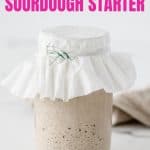

If you love sourdough like I do, but you've gone on a gluten-free diet, I have some great news for you. Yes, you can make gluten-free sourdough from this Gluten-Free Sourdough Starter and there are no special ingredients to buy!
And that's not all: you can make a grain-free sourdough starter too. Read on to get all of the sourdough-loving life-changing info you've been waiting for.

I'm convinced that gluten is a big health concern for many, but I still love good bread. And while this flax bread is super tasty, there's just nothing like a good sourdough.
We LOVE the tangy flavor of sourdough, and since there are so many people who can't tolerate gluten, I've been meaning to try my hand at making gluten-free sourdough bread. I am now that much closer to my goal!
In order to prepare myself for this post, I wanted to put myself in the shoes of someone who is gluten-free.
When most people think “gluten-free,” they think that bread is no longer an option–particularly breads like sourdough.
So in order to be able to empathize with them in their struggle to balance nutrition with their allergies or intolerance… I did some “research.”
Basically, I wanted to think about what it would be like to be gluten-free.
And bread-free.
So I ate bread.
Homemade bread.
Two pieces, actually.
With a lot of butter.
And I realized how much I would miss it if I weren't able to eat bread like this on a regular basis.
I'm not trying to rub it in anyone's face – quite the contrary! I know how fortunate my family is to be able to eat whatever we want without breaking out in hives or keeling over in digestive pain.
It saddens me to imagine what it would be like to:
– not be able to walk into my kitchen and slice off a piece of bread whenever I want
– request the waiter to remove the basket of bread instead of refilling it
– worry about being sick for days because someone accidentally contaminated a cooking spoon!
I think I can understand your pain.
That's why it truly brings me joy to share with you a way to have your cake–er, bread–and eat it too.
Gluten-free sourdough, baby. Oh yeah.
Imagine capturing wild yeast out of thin air and cultivating it over a period of several days so that, without any help at all, it will magically make the dough rise and become a beautiful (and relatively inexpensive–) gluten-free loaf of bread.
It really isn't as hard as it sounds!
But it is incredibly healthy! Quite possibly the healthiest bread you can make!
Benefits of Sourdough
There are many benefits to sourdough including:
Easily Digestible
Sourdough is easier to digest than regular bread (preventing issues like indigestion, etc.)
Beneficial Bacteria
Sourdough contains the healthy gut bacteria lactobacillus (the same major player in yogurt and kefir)
Fewer Nutrient-Binding Qualities
Most of the phytic acid in sourdough is broken down, reducing the effects of nutrient-binders on other foods in your diet.
Lower Glycemic Load
Since sourdough takes longer to digest, it doesn't cause as much of a spike in blood sugar as traditional bread does.
Functions As a Prebiotic
Sourdough functions as a prebiotic, so it helps support healthy digestion.
Reduced Acrylamide
Souring the dough reduces the amount of the amino acid asparagine which is a precursor of acrylamide formation, and acrylamide is a cancer-causing ingredient found in toasted grains, including bread crusts. So with sourdough, you can enjoy your bread crust with less acrylamide.
Gluten-Free vs. Regular Sourdough
Making a gluten-free sourdough starter isn't any different than making a regular sourdough starter.
– Both start with flour and water.
– Both take a few days, and both get bubbly.
– The only real difference comes when you're ready to make sourdough bread and you have to pull out all the various types of gluten-free flour.
Gluten-free sourdough starter can be made in as little as seven days using gluten-free flour, water, and a medium-sized bowl. I personally have successfully made gluten-free sourdough starter with brown rice flour, but I've read others have had success with white rice flour, teff flour, sorghum flour, or even a gluten-free all-purpose blend.
Typically, in the same way that using a blend of alternative sweeteners will work best when substituting for sugar, using a variety of flours will work best for your gluten-free sourdough.
Is Sourdough Gluten-free?
While many think that sourdough is already gluten-free, here are the facts.
I have seen this argument many times. People claim that white flour has no gluten in it since all of the gluten is in the hull, and that whole grain flour sourdough bread is gluten-free since the enzymes break down the gluten.
Sadly, that is not the case.
White flour has between 8-11% gluten so all the gluten is not in the outer hull that is sifted away.
Not enough of the gluten is broken down by the fermentation process. The definition of gluten-free is 20ppm or less. Sourdough is known to have 2000 ppm of gluten. Regular bread has 80000 in many instances, so 2000 is less, but it's not gluten-free.
Please take care that if you need to avoid gluten that avoid traditional sourdough.
Grain-Free & Paleo Options
Since this post was published, several readers have asked if you can make sourdough starters without grains. Well, the good news is: YES YOU CAN! There are 2 schools of thought on this, however.
Some say that you need at least 1/3 of your flours to be a starch: tapioca, arrowroot, or maybe cassava flour. Starch is what feeds the yeast so that is the reason behind this requirement. If using coconut flour, however, you will need to add more water to the starter. Instead of a close to 1:1 ratio, for every cup of coconut flour that you use, you will need to use about 1 2/3 cups of water.
Coconut Flour Sourdough Starter
Can you make a starter from only coconut flour? Good question.
There are some who say that you can, while others say that you cannot.
The information is in the recipe card so you can try it, but you might need to add some sauerkraut juice for it to work and not sure what kind of recipes you can make with it. From what I've read, this really doesn't turn out that well, but I know that some people are really desperate to make recipes that will work for them, even if they don't taste amazing, so I'm leaving this option here for you to experiment.
Sourdough Starter from Only Nuts / Nut Flours
You can make sourdough starter from nuts and likely only from nut flours, but you will need to add a fermented medium, like sauerkraut, to the starter.
Sourdough Recipes
Gluten-Free Sourdough Recipes
The following are a variety of gluten-free sourdough bread recipes for you to experiment with.
Keep in mind that every recipe will be different, calling for different types of flour and possibly using yeast. I've included several sources so that you can find something that suits you!
- Gluten-Free Brown Rice Sourdough
- Artisan Style Sourdough
- Sourdough Bread Boule
- Rustic Gluten-Free Sourdough
- Bread Srsly's Sourdough
- An excellent bread recipe, plus recipe adaptations in Sourdough A to Z by GNOWFGLINS
- Bread Machine Sourdough – note that you can try to adapt regular recipes to the bread machine, but here's one that is done for you.
Any of these recipes would be great topped with butter or Homemade Nut Butter. Mmmmmm.
Grain-free Sourdough Recipes
Here are some sourdough recipe for you to try after you have your sourdough starter ready to go:
There are other grain-free sourdough recipes out there but those that call for a nut base will need a different method for fermenting due to them needing something to jump start it (like sauerkraut) rather than just the starch. This recipe is an example of that. I hope to have some additional recipes for you in the future.
What You'll Need
To make gluten-free sourdough starter, you'll need:
- gluten-free flour (some grain-free options will work)
- water
- a jar (or bowl)
- a cover
- something to secure the cover

How to Make the Starter
Following are some images and some brief info about how to do this. Full instructions are below.

Combine flour (whatever gluten-free or grain-free flour or gluten-free flour blend you like) and water.


Feed the Starter for several days.

When your sponge looks like photo #8, you're ready to make sourdough bread!
Recipe Notes and Substitutions
- Ingredient Amounts: The amounts we give in the ingredient list are the amounts you will need if you only feed the starter twice a day, which is the least number of times you should feed it. So if you feed it more often, you will of course need more flour and water.
- Flour: Gluten-free flour blends (just like with alternative sweeteners like stevia) tend to work best when used in conjunction with others. So it's best not to try to make this sourdough starter or sourdough with only 1 gluten-free flour. Personally, I recommend using a blend of flours. As you can read in this gluten-free baking tips post, using a blend of flours tends to make baked goods turn out better when using alternative flours.
- Grain-Free: For a Paleo Sourdough Starter or AIP Sourdough Starter, just use organic cassava flour or organic tiger nut flour in place of the gluten-free grain flours.
Troubleshooting Your Starter
Here are three of the most common things that you might notice while watching your starter and what they mean:
Too Much Starter
If after a few days the starter begins to outgrow the bowl, pour some off to make a batch of sourdough pancakes. Leave at least 1/2 cup of starter in the bowl to continue feeding.
Liquid At the Top
Liquid may or may not collect at the surface of the starter. Either case is normal. (FYI: the liquid contains more lactobacillus and gives the bread its sourdough taste.)
No Bubbles
If you do not see bubbles at the top or at the sides of the starter, add a third feeding. Try to keep the feeding intervals equal. For example, 6am, 2pm and 10pm are all equally apart at 8 hours.
One thing you can do in this case is add one to two tablespoons of water kefir, dairy kefir, kefir whey or kombucha in place of the water for just one feeding. Since you are adding more bacteria “goodies” to the mix, you are boosting fermentation action.

FAQs
How Long Should You Feed Your Starter?
After the initial period of making the sponge, etc., your starter is officially in maintenance mode. Then you can feed it as often or as little as you like.
- At the very minimum, you can keep it in the fridge and feed it weekly. However, it's not recommended to have it in the fridge until after it's 4 weeks old.
- You can keep it on the counter and feed it daily, and use anything you don't need for recipes.
- You could feed it daily with as little as 1 tablespoon of water and flour to keep it fed but not produce a lot of starter.
How Long Can You Store Your Starter?
You can keep it for quite a while provided you feed it daily. You will, however, need to revive it when you want to use it again.
- Three and a half days before baking, remove the starter from the fridge and bring it to room temperature (let it rest for about 1/2 a day.
- Feed with equal parts flour and water.
- About 1/3 of a day later, feed the starter again.
- Once you have foam and liquid rising to the top of the starter, you can use the starter for bread. If you don't have that after 4-6 hours, keep feeding daily until you do.

Gluten-Free Sourdough Starter
Ingredients
Gluten-free Sourdough Starter
- 6 cups gluten-free or grain-free flour
- 5 1/4 cups filtered water
Coconut Flour Sourdough Starter
- 1/2 cup coconut flour
- filtered water
Instructions
Gluten-free Sourdough Starter
- Combine 1/2 cup flour (whatever gluten-free flour or gluten-free flour blend you like) and a scant 1/2 cup filtered water in a medium to large bowl.Whisk until smooth and cover the gluten free sourdough starter with a cheesecloth or clean dishtowel to allow air to circulate but prevent particles from falling in.Set the bowl in a warm area where it will not be disturbed. A kitchen counter, pantry cabinet, or patio can all be good options.
- Wait 12-24 hours.
- At least twice a day for the next six days, at regular intervals, add 1/2 cup of flour and a scant 1/2 cup of filtered water to the existing starter. Mix until smooth, and cover.This is called feeding the starter.Make sure to watch your starter carefully.
- When your gluten-free sourdough starter is very bubbly and creates a dome on top 2-3 hours after each feeding (like the above picture), you are ready to make bread. This is often called the sponge and typically it takes 5-7 days for this to happen.
- Use your starter for making the sourdough bread of choice. See above this recipe card in the post for some great options!
For Coconut Flour Starter
- Combine 1/8 cup coconut flour with 1/2 cup filtered water in a large bowl. Whisk until smooth. The mixture should be pourable but not thin.
- Cover the bowl with a plate or other air tight cover, making sure there’s at least a 1/2-inch gap of air at the top.
- Approximately every 12 hours add another 1/8 cup of coconut flour and ½ cup purified water. Stir well and cover.
- In 24–48 hours the mixture should get bubbly and smell fermented. If no bubbles form, try increasing the frequency of feedings to every 8-10 hours.
- If at any time there isn't a 1/2 inch gap at the top of the starter, move it to a larger bowl.
Notes
-
- Ingredient Amounts: The amounts we give in the ingredient list are the amounts you will need if you only feed the starter twice a day, which is the least number of times you should feed it. So if you feed it more often, you will of course need more flour and water.
-
- Flour: Gluten-free flour blends (just like with alternative sweeteners like stevia) tend to work best when used in conjunction with others. So it's best not to try to make this sourdough starter or sourdough with only one type of gluten-free flour. Personally, I recommend using a blend of flours. As you can read in this gluten-free baking tips post, using a blend of flours tends to make baked goods turn out better when using alternative flours.
-
- Grain-Free: For a Paleo Sourdough Starter or AIP Sourdough Starter, just use organic cassava flour or organic tiger nut flour in place of the gluten-free grain flours.
Nutritional information is provided as a courtesy and is an estimate only. It may vary depending on ingredient brands, substitutions, and preparation methods. Optional ingredients are not included. Net carbs are typically calculated by subtracting fiber and sugar alcohols (such as erythritol) from total carbohydrates. This information should not be relied upon for medical or nutritional purposes.
A Great Gluten-free Sourdough Starter You Can Buy
I know how it goes. It's exciting to think about doing everything yourself, but then you just might not get around to it.
If that's how you're feeling after reading this post, you can just buy this Gluten-Free Sourdough Starter and have it all done for you. This would make a great backup to have in your pantry too!
This is a fabulous jumping off point for tons of healthy creativity in the kitchen. So many options from breads to biscuits and more.

Tiffany is a frugal foodie, balancing the desire to feed her family healthy food while being a good steward of her finances. She realized it was possible to eat nourishing, traditional food on a budget if she made baby-sized changes in the kitchen. She continues to work hard at mastering real foods without going broke and shares her journey at Don’t Waste the Crumbs.
I’m on day three. I just opened the plate and it smells AWFUL. Like turn the oven vent on and now my lungs burn awful. I assume its bad, but what’s the problem?
Hi Kimball,
Mine smelled bad too around day 3 – like rotten eggs. I thought for sure something was wrong, but I persevered and by day 6, it’s smelled as it should. Keep feeding and I think you’ll be fine. If it STILL smells bad by day 7 (including all the right feedings), then I’d toss and start over.
Really? Mine too smelled like sulfur. Okay. I’ll keep going. I didn’t throw it out because I hoped you’d say this!
Sourdough is soooooooooooo good! I just made three loaves today. 🙂 This method is very similar to what I learned in Sourdough A-Z, which is a FABULOUS book.
Thanks for linking at Trim Healthy Tuesday!
Neat. We’ll have to try it, but we are thinking about 2 of us doing GAPS ;).
Thanks so much. I have a severe wheat allergy and cannot even smell bread baking without having an asthma attack. I love sourdough bread, and I used to make a stew that was served in a bread bowl. I can’t wait to eat sourdough bread again. And sourdough pancakes, too. I think I’m a little giddy just thinking about it.
:)!
Hi!
I’ve had great success making a GF sourdough starter (though I started with purple cabbage leaves to give the wild yeast a boost) and the subsequent breads. One thing should be noted when it comes to how “bubbly” the starter is. Very heavy flours like buckwheat will not really bubble. I used all buckwheat to feed my starter and it smelled fine and got the “hooch” on top, etc, but mine didn’t really bubble or dome, and I wondered if it was okay and was really fermenting properly. Finally, I read that very heavy flours like buckwheat will not bubble. I started feeding the starter occasionally with arrowroot or brown rice flour, and it lightened up the starter, and I did eventually get bubbles. Maybe my experience will save someone from throwing out a perfectly good non-bubbly starter 🙂
Thanks for the tip Lisa!
My mom used to make sourdough biscuits. Do you have a recipe for those?
No, I don’t have any sourdough biscuit recipes. Hope to find one :). Do you need them GF?
Yes, they need to be GF. I have a good GF biscuit recipe and was wondering if I could substitute the sourdough for buttermilk. What do you think?
Hi Dana,
In general, you can substitute sourdough starter for equal parts flour and water called for in a recipe. So if your recipe calls for 1 cup flour with 1/2 cup buttermilk, you can sub 1 cup sourdough starter, add 1/2 cup flour and let it rise to ferment the entire batch. The sourdough starter will replace acidic ingredients, so if you needed to add more liquid, you could regular milk instead of buttermilk.
Cultures for Health has a good, straight-forward guide that may help:
(Link deleted by Whole New Mom due to it not working anymore.) (affiliate link)
In all instances with sourdough, it may take a few tries to find the “perfect” adaptation, but I think that’s part of the fun!
PS – I tried making a loaf using only brown rice starter and it did not work, and honestly, it didn’t taste good. I’d recommend adding a different GF flour to the sourdough starter to help balance out the taste a bit in your biscuits.
So basically you are saying that the starter replaces the flour amt and the flour will replace the buttermilk, right? Just trying to figure out why you are adding more flour to the starter instead of more liquid–or 1/2 and 1/2. Thanks!
The starter replaces both flour and liquid. In the example above, there’s a total of 1 1/2 c flour/liquid, but I reduced the starter to only 1 cup b/c the starter itself is wet and not completely dry. You’ll likely have to add more flour (for a total of 1 1/2 c) to get a more biscuit texture. If you added 1/2 cup liquid, it would be more like pancakes. If you subbed 1 1/2 c starter, it would still be too wet for biscuits… Does that help?
Well I guess I would want to know how you decided on the 1 cup – is that standard to do so?
That’s the thing – there is no “one standard” way to convert regular recipes to sourdough because all sourdough starters act differently and all recipes are different. I read several different methods, and while all have different specifics, they all have in common substituting some or all of the flour/water with the starter.
From my own baking experience, I thought 1 cup would be a good starting point. Since it’s less than the total amount, it allows some wiggle room to add both ingredients in order to achieve biscuit texture, and is in fact what I would do if I were trying this myself! Most biscuit recipes call for flour, liquid, salt and butter – and they’re fairly a stiff dough. If she starts out with a full 1 1/2 cup, she may have to add a significant amount of flour to get a stiff dough, and then it may be too much flour to liquid for taste purposes, then you need more butter, salt, etc. 1 cup just seems easier for a first-time, experimental recipe. 🙂
Also, it’s a good amount for biscuits for the average family dinner when first attempting, plus if it turns out to be an utter fail, you won’t be wasting tons of money on ingredients. Also, one cup is a great number to work with when experimenting. After the first batch, it would be easy to tweak, knowing you only need 1/4 cup less/more per se of starter in order to achieve the consistency you want. 🙂
I am sorry if I missed it. How long do I cook this for and on what temperature? Do I keep a little out to continue with a new starter? Thank you, I can’t wait to try this!
The recipe links are at the bottom of the post :). Hopefully Tiffany can chime in here w/ a better answer :).
Hi Joy!
The recipe above is for the starter only. There is no cooking or preheating or anything for the starter – just room temperature and time.
Each recipe linked to should have more specific instructions on what to do with the starter once it’s ready. For example, using it to make pancakes, which really are delicious.
Ideally you would want to save 1/2 – 1 cup to continue feeding after you use it in a recipe. Simply continue feeding as you had been and it’ll continue to grow. It’s not the end of the world though if you happen to use it all – just start another. 🙂 When you have a chance, check out the three links inside the recipe. There’s excellent information in those, as well as FAQ’s from readers too! ~Tiffany
I am gluten intolerant. I went without any bread or baking for about 10-15 years, then decided to try making my own sourdough with ancient grains, (varieties of wheat that have never been cross-bred or hybridized by man. It is man that made gluten indigestible to Humans). But something you need to understand is that in the fermentation process of the sourdough, the gluten (proteins) in the wheat are broken (digested) down into amino acids, so the body doesn’t have to do it. (Our cells can not use protein for energy. The body has to break down the protein into amino acids before it can be be absorbed & utilized by the cells.) So if your sourdough is well fermented, there really is no gluten in it. Plus, these organically grown, ancient grains are rich in trace minerals (that conventional wheat lacks) and these minerals are very readily absorbed by the body, because there is no conventional yeast in the bread to block their absorption. I have served my sourdough, made with Red Fyfe, or Spelt wheat to many gluten intolerant people, and they’ve had no negative side effects!
Hi there. I have been talking about sourdough and gluten with other bloggers, and apparently those who are seriously gluten intolerant are apparently not OK w/ these home fermented breads. Apparently re-creating the exact fermentation environment to remove enough of the gluten is almost impossible. But I am for sure open if you have other information :). Please share.
I’m a Holistic Health practitioner. I Trained in nutrition after I reversed my Systemic Candiasis. I just wanted to be able to help others with this problem, which conventional medicine doesn’t recognize. As I said, I was without any kind of wheat for about 10 years before I started the sourdough. And now, my experience with some of my clients is that if they can go totally wheat -free for about 3 months to get it out of their system, and heal their colon, then they can re-introduce the ancient grains, very slowly (occasionally).
I feel that if your colon is in trouble (I don’t care what “diagnosis” the medical system labels it with) You need to eliminate all inflamatory foods (wheat, non-cultured dairy,corn, caffeine,and all chemicals -that is, eat all your foods as close to the way God gave them to us as possible), -for at least 3 months (or more… -depending on how strict you are, and how you feel about life (pain & anger are stored in the liver & colon) )
Don’t claim the disease as your’s. Give thanks to your colon for lessons learned, send it love, and give intent for a perfectly healthy body. Imagine yourself as if you were in perfect health, until you FEEL the perfection of it, -the freedom that comes with it… When you put that energy out to the Universe, that’s what it will bring back to you. (link removed..you can look up abram hicks)
I sent an attatchment with my sourdough recipe, and what works for me. There’s also a sprouted grain recipe in there, and I can’t seem to open it to remove that recipe, so… But I allow my sourdough to culture as long as possible to digest the gluten, in fact the loaves are ussually fallen (hollowed out instead of round) by the time I bake them.
Hope this helps,
Judy
Thanks, Judy!
Mmm. Perhaps for people who are just mildly intolerant or just “feel bad” off gluten, the sourdough method would work, as I understand many develop intolerances because of the hybridized wheat and the generally abysmal standard American diet. However, for people with Celiac disease, simply eating sourdough is not enough. I had had digestive issues since I was a teenager, and as an adult I began eating a whole-foods, Nourishing Traditions type diet, eating organic fermented, sourdough, and sprouted grains. My digestive issues all but went away. My stomach/gut felt the best they had since I was a kid. Then, after severe post-delivery complications after the birth of my daughter and recurring bloodwork showing I was malnourished and so severely vitamin deficient that I had to get shots (on a whole foods diet!), I was diagnosed with Celiac disease. So even though eating sourdough/sprouted grains/ferments cleared up my symptoms, I was still damaging my gut, predisposing myself to cancer and had to be completely gluten free. I would certainly not go back to eating (sourdough) gluten even if a health practitioner told me I could.
I was just about to comment that just because you digest it with no issues doesn’t mean it isn’t causing damage! And as a fellow celiac I know digestive troubles are not the only troubles wheat causes.
I hope you do not feed those with celiac your bread. Our immune systems respond rather than our digestive systems. The digestive symptoms are only a few of many, and even the smallest amount of gluten can cause inflammatory damage to many areas of the body aside from the intestines.
Judy, how can I get ahold of you to get some recipes ?Would you mind ? I LOVE the advice you gave about NOT owning your disease….its so true !!! my email is sblakley@cogeco.ca I am looking forward to hearing from you !
Thank you! I can’t wait to get started!
I’m curious if this can be done grain-free, like using almond flour. I wouldn’t think so, I’m just looking for grain-free recipes right now.
Hi Lyza!
In all my research of GF sourdough, I have not seen anyone use almond flour in the starter. There could have been a recipe or two that used it or even coconut flour in bread, but I can’t say for sure. I wish I had a better answer for you! ~Tiffany
Coconut flour makes an excellent grain free sourdough bread. It’s our personal fav!
Really? What ratio did you use for the coconut flour to GF flours?
Hello Sally – do you happen to have a recipe for the coconut sourdough bread you mention? I am currently feeding my coconut flour starter and am very keen for this grain free option.
I am looking for a coconut starter recipe. How much water to flour? Do you put anything else in it? The stuff is stiff, because coconut flour soaks up so much water, but I know with baking you shouldn’t add all that water. Does anyone have a recipe?
I’m also very interested in making a sour dough coconut bread. Do you have a recipe to share?
I am excited to see that many (if not all – didn’t look at all of them) of the recipes didn’t need eggs. It has been so hard for me to find a decent GF bread that doesn’t have eggs. It must be the nature of sourdough bread to not need them! I am so excited to try this. My highly allergic 2-year-old has thrown fits because he can’t eat bread. Maybe this will be a bread the whole family will love! Thanks 🙂
Great news! Have you checked out my Focaccia Flax Bread? You can make it egg-free as well!
I have 2 gluten free bread recipe that are really good! My whole family eats them if you want the recipe I will be glad to give them to you.
The 2bread recipes were for Cathy and her 2 year old. I forgot to put that in my comment.
Hello I have tried so many Gluten free bread recipes and none work very well. They taste okay on the day but the next day is as hard as stone. I would love to have a good gluten free bread recipe for my kids. Do you mind sharing?
Thank you
Adele
I would like the recipes please
I am new to gf and have not had any luck with bread recipes. I would love the recipes please.
Please share them!!
This I am looking forward to using! — have shared it all over already! Thanks so much for pulling it all together and sharing with us!!
You are so welcome!