
Homemade Sunflower Seed Butter (Creamy, Easy, Nut-Free)
This post may contain affiliate links from which I will earn a commission. Learn more in our disclosure.
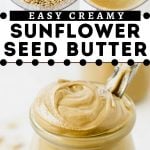
Homemade sunflower seed butter is a breeze to make and is so creamy and delicious. Once you make it yourself, you'll never go back to store-bought.
With homemade sunbutter, you can have total control over the ingredients and with the special tips in this post, you can make amazingly super creamy sunbutter in literally minutes.

With more and more people becoming allergic to peanuts and tree nuts, sunflower seed butter is becoming more popular because it tastes similar to peanut butter. And now, with this recipe, you can easily make tasty homemade sunflower butter yourself.
Why You Should Make Homemade Sunflower Seed Butter
First of all, by making your own sunflower seed butter, you'll save a ton of money. For example, right now a very reasonable price for organic sunflower seed butter is 8.39 a pound and you can buy it on Amazon for $9.79 per pound.
Organic sunflower seeds, however, are only $6.29 per pound on Amazon, and only $2.61 per pound if you get them at Azure. Think about all the money you can save with that option!
Second, you can have control of the ingredients and process. Buy organic or conventional sunflower seeds, add sweetener and/or oils or not, and choose which ones to add. Add salt or not. Roast or soak and dehydrate the seeds, or use them raw. It's all up to you.
Third, homemade sunflower seed butter simply tastes so much better than any store-bought sunbutter.
Ingredients
Here's a simple list of the ingredients you'll need for this recipe. For the amounts scroll down to the recipe card.
- sunflower seeds (organic preferred), either soaked and dehydrated, or roasted.
- oil (optional, but recommended).
- sweetener (as desired). Can use honey, maple syrup, a low-carb sweetener, stevia extract, or even dates. I use stevia. If using another sweetener, 1/32 teaspoon stevia equals 2 tablespoons of any sweetener that's the same sweetness as sugar.
- salt (optional but recommended. Not needed if using soaked and dehydrated seeds.)
Instructions
Here's what to expect while making sunflower seed butter. For the full instructions, see the recipe card below.
- Coarse crumbs
- Flour-like meal
- Thick clumps
- Smooth, creamy sunflower butter
- Don't be tempted to add a lot of oil too early. In many cases, the seeds simply need more processing time before they release their natural oils.


Variations
Here are some tasty variations to try.
- Maple cinnamon: Add 1-2 tablespoons of maple syrup and 1-2 to 1 teaspoon cinnamon to the seeds before blending. Add some pecans for crunch, if desired.
- Chocolate: For really dark chocolate, add 4 tablespoons of cocoa powder, along with a bit of sweetener before blending the seeds. Add less for a lighter chocolate version.
- Vanilla bean: Blend in the scraped seeds of a vanilla bean, 1–2 teaspoons of pure vanilla extract, or some vanilla powder before blending.
- Spiced: Add 1/2 teaspoon of cinnamon and a dash of cloves and nutmeg, again, before blending.
- Brownie batter: Add cocoa powder, a bit of milk or coconut milk, a sweetener and about 1-2 tablespoons of protein powder and/or flaxseed for a thicker texture.
- Banana bread: Add some cinnamon and banana chips to the mix.
- Espresso: Add 1-2 coffee beans to the mix
- Mocha: Add 2-3 tablespoons of cocoa plus 1-2 coffee beans.
- Coconut: Blend in for a yummy coconutty sunbutter or as a texture add in at the end after blending.
- Cinnamon Raisin: Add some cinnamon and vanilla when blending and then whir lightly or stir in some raisins.
- Cookie Dough: Add some vanilla and sweetener when blending and then afterwards add in som chocolate chips or cacao nibs
- Stir in some chia or flax seeds or chopped nuts or seeds for added texture.

How to Store
You can store this super creamy sunflower seed butter in an airtight container on the shelf for about a week, but you'll want it in the fridge for longer periods as the oils will go rancid.
You can even store it in the freezer for at least up to 3 months and in the fridge for up to 2 months.
If you add alternative ingredients to this recipe, the shelf life will be altered.

Ways to Use
There are so many ways to use homemade sunflower seed butter. Here are just a few ideas.
- spread on bread or toast
- in baked and no bake goods
- as a stir in swirl for ice cream
- on apples and celery
- added to smoothies
- on a spoon!
Recipe Notes
- You don't have to use 4 cups of sunflower seeds, but you'll need enough volume for the butter to start forming. For a high-speed blender, that amount is about 4 cups for the standard blender. For a food processor, the amount that you need will depend on the size or your machine, but 4 cups in general is a good amount to use.
- Make sure to scrape down the sides of the food processor periodically. In a high-speed blender, using the tamper is typically sufficient.
- Depending on the freshness and natural oil content of your sunflower seeds, you may not need any added oil at all. If the mixture seems dry, be patient—the seeds typically go through a meal-like and clumpy stage before releasing their oils and turning creamy.
- For really creamy sunflower seed butter, you might want to use more oil. This might cause the oil to separate out when storing, but a quick stir blends it back together. Using an oil that's solid at room temperature (like coconut oil) should prevent this, but I personally prefer extra virgin olive oil or avocado oil.
- If using roasted seeds, make sure they are cooled completely before processing them.
- IMPORTANT TIP!: Make sure that there's no water at all in the food processor, blender, or on the utensils that you use when making this or it will cause the nut butter to clump up. Add vanilla extract, or any other extract, after the mixture is creamy to prevent this problem. Alternatively, for adding a vanilla flavor, you can use vanilla paste or vanilla powder.
What Kind of Sunflower Seeds To Use
You can use plain raw, soaked and dehydrated, or roasted sunflower seeds. Raw seeds will make a very earthy flavored sunflower seed butter which I personally don't care for. I've made this sunflower seed butter many times using both soaked-and-dehydrated and roasted sunflower seeds. Roasted seeds have a deeper, toastier flavor, while soaked-and-dehydrated seeds have a milder taste.
All or most of the benefits of the seeds being raw are lost due to the high temperatures involved when grinding, but I keep soaked and dehydrated seeds and nuts on hand pretty much all the time and because roasting takes extra time, that's typically what I use for making homemade nut and seed butters.
Recipes Using Sunflower Butter
Technically, while all or most of these recipes don't specifically call for using sunflower seed butter, it works well in all of them either used alone or in combination with other seed or nut butters.
- No Bake Almond Joy Bars – I often use sunflower seed butter in this recipe.
- Almond Butter Dip – just swap out the almond butter for sunflower seed butter.
- Keto Almond Butter Cups – use sunflower seed butter to make your own Sugar-free Sunflower Butter Cups!
- Sugar-free Buckeyes – sunflower butter tastes great in this recipe!
- Healthy Caramel Apples – these caramel apples are peanut free and the delicious chocolate coating has sunflower butter in it!

Homemade Sunflower Seed Butter
Equipment
- high-speed blender or food processor
Ingredients
- 4 cups sunflower seeds (roasted or soaked and dehydrated)
- 1-4 tablespoons light oil
- 1/16-1/4 teaspoon stevia extract (or other sweetener of choice)
- 1/4-1/2 teaspoon salt (omit if using soaked and dehydrated seeds)
- optional additions
Instructions
- Place the sunflower seeds into the bowl of the food processor and process. If your processor is small, you might need to reduce the amount of seeds and the amount of the other ingredients as well. The seeds need to move in order to process into a butter.
- The mixture will go from chopped seeds to a meal, then to a flour-like consistency and then it will start clumping. If desired, add some of the oil starting with 1 tablespoon and adding more until you reach the consistency that you want. Make sure to let the machine rest every 2 minutes or so after starting processing to prevent overheating.
- Once the seeds have turned into a butter, you can add a bit more oil if you'd like to get the sunbutter even more creamy. Then add any sweetener, salt, or add ins that you'd like blended in and process briefly. Vanilla can be added at this point.
- Finally, add any texture add ins like cacao nibs, chocolate chips, raisins, flax or chia, or other nuts and seeds and process briefly so they aren't blended in.
High-Speed Blender Instructions
- Put the sunflower seeds and oil, sweetener and salt, if using, into the blender container. Start processing using the tamper or other device to push the seeds down into the blades.
- Make sure to let the machine rest if needed, following the manufacturer's instructions.
- Stir any textured add-ins in after removing the butter from the blender.
- Continue pressing the mixture into the blades until it turns into a smooth butter.
Notes
- You don't have to use 4 cups of sunflower seeds, but you'll need enough volume for the blades to properly process the seeds into a butter. In most food processors, 3–4 cups works best, while many high-speed blenders require at least 4 cups.
- Processing times vary depending on your machine. Expect anywhere from 5–20 minutes for the seeds to transform from a meal into a smooth, spreadable butter.
- Be patient during the clumping stage. The sunflower seeds will first turn into a flour-like mixture and then form clumps before eventually releasing their oils and becoming creamy.
- For a thinner, creamier sunflower seed butter, add additional oil 1 teaspoon at a time until you reach your desired consistency. Natural separation during storage is normal; simply stir before using.
- Fresh sunflower seed butter will be softer when warm from processing and will thicken somewhat as it cools.
- If using roasted sunflower seeds, allow them to cool completely before processing.
- A green tint may occasionally develop after storage or when used in baked goods. This is a harmless natural reaction involving compounds found in sunflower seeds and does not affect flavor or safety.
- Store in an airtight container at room temperature for up to 2 weeks or in the refrigerator for up to 2 months.
- Important: Make sure all equipment and utensils are completely dry. Even small amounts of water can cause the sunflower butter to seize, become grainy, or shorten its shelf life.
Nutrition
Nutritional information is provided as a courtesy and is an estimate only. It may vary depending on ingredient brands, substitutions, and preparation methods. Optional ingredients are not included. Net carbs are typically calculated by subtracting fiber and sugar alcohols (such as erythritol) from total carbohydrates. This information should not be relied upon for medical or nutritional purposes.
Frequently Asked Questions
Can I make sunflower seed butter without oil?
Yes, you certainly can. Whether you need oil or not will depend on the seeds and what consistency you want your sunflower butter to be.
Why isn't my sunflower seed butter getting creamy?
The seeds typically go through a thick, clumpy stage before becoming creamy. Keep processing and only add oil if needed.
Can I use raw sunflower seeds?
You can do this but it won't have the rich taste of sunflower seed butter made with roasted or soaked and dehydrated seeds (with roasted yielding the most rich taste).
Why did my sunflower butter turn green?
Sunflower seed butter can turn green when baked due to a harmless chemical reaction. with leavening agents. The chlorogenic acid (an antioxidant naturally found in sunflower seeds) and the alkaline ingredient (baking soda or baking powder) react to create the green color.
Some people like making baked good with sunflower seed butter for St. Patrick's Day for this reason, but if you don't want the color, you can reduce the leavening agents by about one third or add some lemon juice to the batter.
How much does this make? 4 cups or does it make more or less?
This information should be included in almost every recipe to help the reader.
Hi Carol! The info is there actually. The serving size is 2 tablespoons and the number of servings is indicated at the top of the recipe card. Hope that helps!
Sorry I must have been unclear: I want the AMOUNT this makes. I see the SERVING size is 2 T and # of servings is 16, but I want the actual AMOUNT this recipe makes. ie: 4 cups, 2 cups, 1/2 cup, etc.
Thank you.
Hi again.Yes, I understand that. If there are 16 servings and each one is 2 tablespoons, then there are 32 tablespoons total which is 2 cups. Please remember, however, to note my nutrition disclaimer. I know you care about serving sizes and carbs, etcetera and this is not meant to be an exact science. Does that help?
Yes! Thank you.
Great! You’re welcome!