
Homemade Sugar-free Marshmallows
This post may contain affiliate links from which I will earn a commission. Learn more in our disclosure.
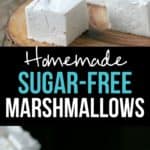
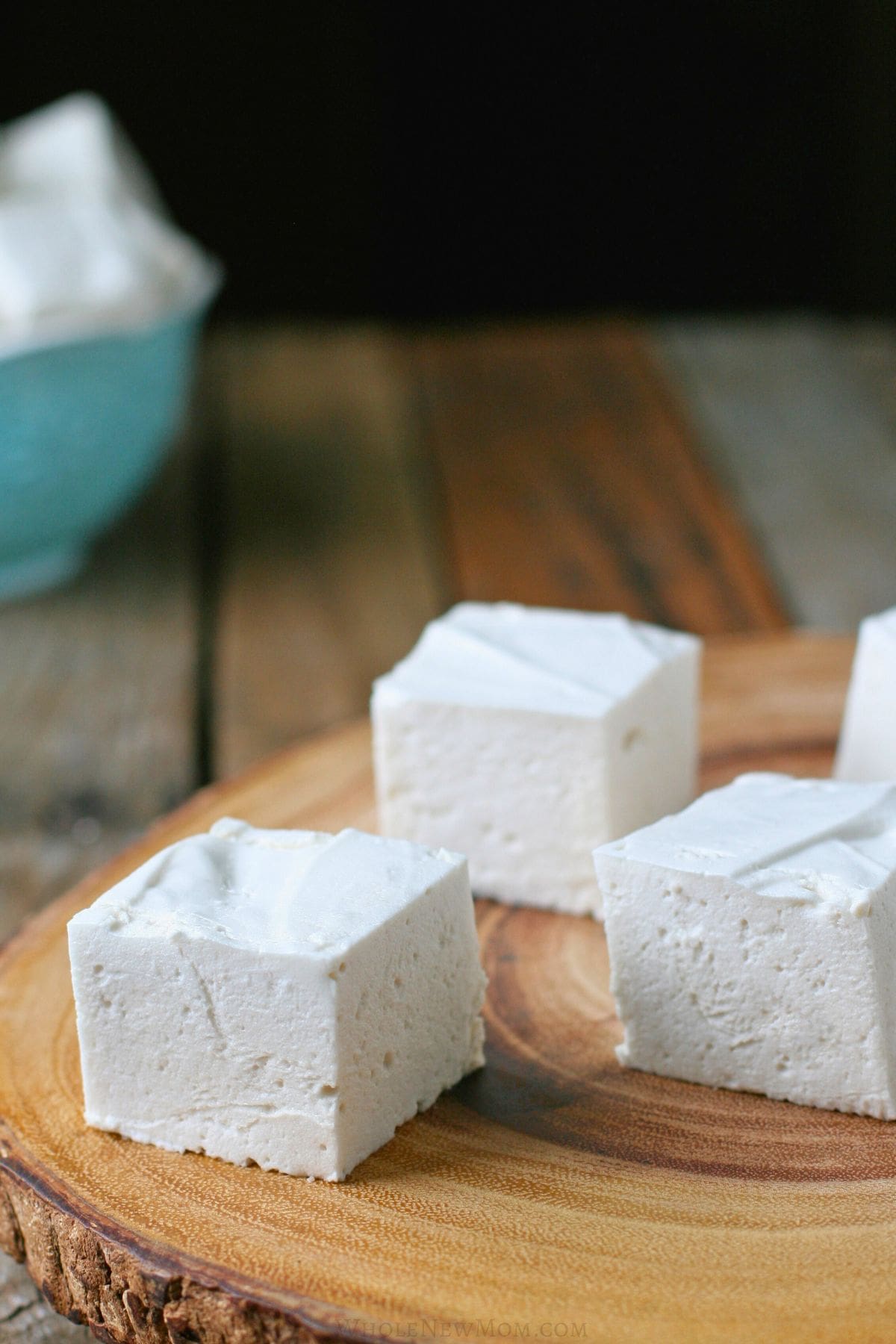
These sugar free marshmallows are light, fluffy, and easy to make. They’re a great alternative to store-bought marshmallows when you want a sweet treat without all the sugar.
They’re perfect for hot cocoa, snacking, or homemade s’mores—and you can adjust the sweetener to fit your dietary needs.

If you’ve ever wondered whether you can make marshmallows without sugar, the answer is yes—and they’re surprisingly delicious.
Making marshmallows at home is also a lot of fun. It’s amazing to watch a simple mixture transform into thick, glossy fluff and then set into soft, pillowy squares that taste even better than the packaged kind.
I love fun treats, but store-bought marshmallows often contain a lot of sugar and unnecessary additives. Making them at home gives you full control over the ingredients.
We used to make these marshmallows with sugar, but now that we've gone low-carb, those days are over. But you can substitute the low-carb sweetener with a regular one if you'd like.
I love making these marshmallows with our sons. What fun to see water, sweetener, and gelatin turn into white fluffiness in a bowl, and then seeing them turn into marshmallows that tasted much better than anything I'd ever bought in a bag.
Why Make Homemade Marshmallows
- Control the ingredients: Skip additives, dyes, and sweeteners you’d rather avoid.
- Lower sugar option: A great alternative to traditional marshmallows when you want a sweet treat without all the sugar.
- Flexible for special diets: Works for low-carb, keto, paleo, and more depending on the sweetener you choose.
- Fun to make: Watching the mixture whip into fluffy marshmallow is part of the magic.
- Perfect for treats: Great for hot cocoa, s’mores, or just enjoying on their own.
- Save Money: Sugar-free marshmallows cost a small fortune. Making them at home is so much less expensive.
We’ve even used these to make homemade s’mores (using homemade chocolate bars), and they were a huge hit with an organic skincare expert and friend who was visiting from Australia. She'd never had s'mores before!

Why This Recipe Works
- Uses allulose for proper structure: Helps create a soft, fluffy texture similar to traditional marshmallows
- No egg whites needed: Keeps the recipe simple and more allergy-friendly
- Balanced liquid ratio: Allows the marshmallows to whip up thick and set properly
- Whips to the right consistency: Creating that classic glossy, stable marshmallow texture
Best Sweetener for Sugar Free Marshmallows
Allulose works best for making sugar free marshmallows because it creates a soft, fluffy texture and allows them to melt and brown more like traditional marshmallows.
If you prefer a sweeter result, you can use an allulose blend (such as allulose combined with monk fruit or erythritol), but the texture may be slightly firmer.
Erythritol alone is not recommended, as it can result in a firmer, less smooth texture.
Frequently Asked Questions
Will These Sugar Free Marshmallows Roast?
Yes—if you make them with allulose, they can actually roast and brown nicely. They do tend to soften and brown more quickly than regular marshmallows, so keep a close eye on them.
Most other low-carb sweeteners will not roast the same way, though they can still get soft and gooey.
Can You Make Marshmallow Shapes?
Yes! These marshmallows work well in silicone molds.
Lightly grease the molds, then spoon or pipe the marshmallow mixture in. Let them set fully before removing.
Can You Use Other Sweeteners?
You can experiment with different sweeteners, but the results will vary.
Allulose typically gives the best texture and roasting performance. Erythritol alone does not work well, so it’s best to start with the sweetener recommended in the recipe.
What Kind of Gelatin Is Best?
Look for a high-quality, grass-fed gelatin if possible. This helps give the marshmallows the best texture, structure, and nutrition.
Substitutions for Special Diets
- Vegan option: Agar may work in place of gelatin, but I haven’t personally tested this version, so results may vary.
- Sweetener options: Different sweeteners can work, but texture and sweetness level will change. See recipe notes for best results.
- Glycerin substitution: Another sweetener may work in place of glycerin depending on the version, but some experimentation may be needed.

Flavor and Coating Variations
It’s easy to customize these sugar free marshmallows with different flavors and/or coatings.
Cocoa Marshmallows
For a light chocolate flavor, add 1–2 tablespoons cocoa powder when mixing in the vanilla. You can also dust the finished marshmallows with cocoa powder for a richer chocolate coating.
Coconut Marshmallows
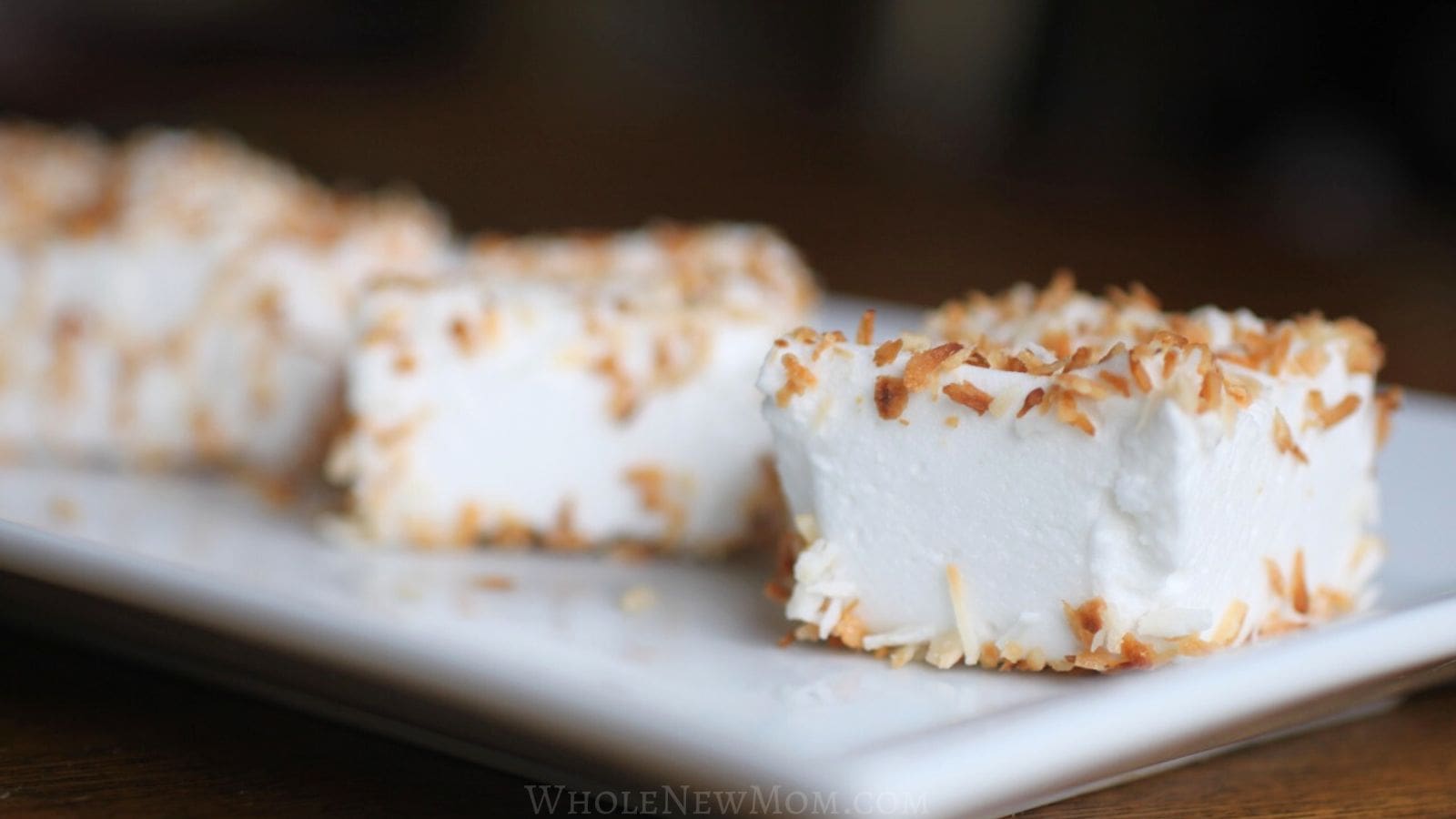
Roll or sprinkle the finished marshmallows with unsweetened shredded or toasted coconut for extra texture and flavor. This works especially well for a slightly firmer, less sticky exterior.
Berry Marshmallows
For a naturally flavored option, grind freeze-dried berries (like strawberries, raspberries, or blueberries) into a fine powder using a spice grinder. Either mix the powder into the marshmallow mixture at the end of whipping or dust it over the finished marshmallows for a light fruit flavor and a nice burst of natural color.
Start with a small amount and adjust to taste, as freeze-dried fruit powders are concentrated.
Powdered Sweetener Coating
Lightly dust the marshmallows with powdered low-carb sweetener to prevent sticking and give them a classic look.
Mixed Coatings
Try combining coatings for variety—some plain, some cocoa-dusted, and some rolled in coconut. This is a fun option for serving or gifting.
Ways to Use Sugar Free Marshmallows
- Add to hot cocoa
- Make homemade s’mores
- Enjoy as a snack
- Cut into smaller pieces for dessert toppings, like on pudding or ice cream, or add to cookies or chocolate bark.
More Homemade Healthy Pantry Recipes
If you like this recipe, you'll likely enjoy these recipes too!
- Powdered Sugar / Powdered Sugar Substitute
- Powdered Egg-Replacer (like Ener-G)
- Homemade Taco Seasoning
- Soft Pumpkin Cookies (these taste amazingly like Enjoy Life)
- Homemade No Bake Almond Joy Bars
These sugar free marshmallows are easy to make with just a few simple ingredients. Do make sure to review the notes below for the best texture and results, especially when choosing your sweetener.

Sugar-free Marshmallows
Ingredients
Instructions
- Add the cold water to a large mixing bowl. Sprinkle the gelatin evenly over the top and let it sit for 5–10 minutes to bloom.
- In a small saucepan, combine the allulose and hot water. Heat over medium heat, stirring until fully dissolved. Continue heating until the mixture reaches 240–245°F (soft ball stage).
- With the mixer running on low speed, slowly and carefully pour the hot mixture into the bloomed gelatin.
- Increase speed to high and beat for 8–12 minutes, until thick, glossy, and fluffy. The mixture should hold its shape and form soft peaks.
- Mix in the vanilla extract (and salt, if using).
- Beat on high until the mixture form stiff peaks (almost like beaten egg whites).
- Pour the mixture into a lightly greased or parchment-lined 8×8 pan, or into molds. Smooth the top quickly, as it will begin setting fast.
- Allow the marshmallows to set at room temperature for several hours, or until firm. You can refrigerate to speed this up, but avoid freezing.
- Cut into squares using a greased knife. If needed, lightly dust with powdered sweetener or starch to reduce stickiness. Dusting with cocoa powder will do the same and will add nice flavor as well.
- Store in an airtight container and try to keep your kiddos out of them!
Notes
- Use allulose for best results: It creates the softest texture and allows the marshmallows to melt and brown more like traditional ones.
- Whip until thick and glossy: The mixture should hold its shape before transferring to the pan.
- Work quickly: Marshmallow mixture sets fast once whipped, so pour it into the pan or molds right away.
- Grease well: Lightly oil your pan, spatula, and utensils to prevent sticking.
- Let fully set: Allow to set in mold or pan for several hours for best texture and clean cutting.
Nutrition
Nutritional information is provided as a courtesy and is an estimate only. It may vary depending on ingredient brands, substitutions, and preparation methods. Optional ingredients are not included. Net carbs are typically calculated by subtracting fiber and sugar alcohols (such as erythritol) from total carbohydrates. This information should not be relied upon for medical or nutritional purposes.
Tips for Perfect Sugar Free Marshmallows
- Use the right sweetener: Allulose gives the best texture and allows the marshmallows to brown when roasted. Other sweeteners may not perform the same.
- Whip long enough: The mixture should become thick, glossy, and hold its shape. This is key for that classic fluffy texture.
- Work quickly: Once whipped, the mixture sets fast, so transfer it to your pan or molds right away.
- Grease everything well: Marshmallow mixture is very sticky—lightly oil your pan, spatula, and even your hands if needed.
- Let them fully set: Give the marshmallows enough time to firm up before cutting for clean edges.
Are you a S'more or marshmallow lover too?
I made these today, but I guess something went wrong. It seems really really sticky. I greased the glass dish with coconut oil, but I can hardly get these cut and out of the dish. I pretty much have to use a spoon to scoop it out, and then just eat it off the spoon because it’s stuck. On the up side, it will probably work great on top of a sweet potato! 🙂
Sorry – I never had an issue. Glad you are flexible!
Can stevia be used as the sweetner?
You know, I didn’t think so but maybe. Try about 1/2 tsp liquid stevia maybe. I have a recipe on my blog for that if you want to save $$.
Yum! How would you make the mini marshmallows like the ones that are store bought?
Did you ever make marshmallows with marshmallow root?
Can you use syevia instead of xylitol? If so, how much? Liquid or powder?
How many drops of peppermint essential oil equal a 1/4 sp of peppermint extract?
And finally, can you please share the grai free graham cracker recipe?
Thanks!!!!
Just cut ’em smaller, but it might be hard :). Haven’t done the root thing yet :). You would need a bulking agent so maybe my DIY Truvia? I don’t know about the drops. I’ll have to work on the grain free cracker recipe – and find it again – sheesh! 🙂 I think I know where it is :).
Can I just use 2 cups of honey instead of the sweeteners listed or should I use a different amount to achieve the same level of sweetness?
This post on substituting sweeteners should help :-).
Help! I have now unsuccessfully made two batches of marshmallows and both of them came out with nice white on top, but the bottom is like a thick sticky jello. I used the gelatin you recommended along with all the same ingredients. I thought I didn’t mix them well enough. So I mixed the second batch higher and longer with my kitchenaid professional mixer. Then I thought I wasn’t setting them properly. Are they supposed to set in the fridge? Please help…
Alita
I set mine in the fridge, but they don’t need to. hope they work next time!
Hi there am wondering…if you have tried making rice crispy treats with these. And how it worked out for you, or if you think it might work.
Thanks, Alita
PS I love your xylitol recipes! Our family cant do any sugars at all, and stevia makes us ill (with headaches and stomach aches.) So after 2 years of no sugars, xylitol has finally put the sweet back into our lives. We call it happiness!
I think it would work for sure. We pretty much avoid processed cereals so I haven’t tried. You are so welcome!!! Did you see my DIY Truvia recipe?
I made these tonight, and only licked the spoon so far, as they are still setting.
I used Sucanat for the granulated sweetener and raw agave for the liquid, so they have a molasses taste and tan color.
I will caution that I had to beat the mixture for a good 7-10 minutes to achieve the consistency I wanted. I think it was my mixer, though, because it’s not the most powerful motor in the universe. After that time, though, it did get really fluffy and “Fluff”-like in consistency. It’s setting as I type this!
I can’t wait to put these in my cocoa (Sucanat goes well with chocolate)! I eat low-gi, so I can’t eat store-bought marshmallows, and ricemellow is just way too sweet for me.
Dunno how long I whipped it? Wasn’t stiff thou still kinda soft. But I scooped it out and put it in containers. Still like a creme after a number of hours. Um wonder what it will be like when I pull it outta the frig. Will let you know later
Maybe you just discovered how to make the creme :).
Well I followed the recipe and used coconut syrup for the (1/2 cup liquid sweetener (I used vegetable glycerine. You could also use more granulated – read substituting sweeteners first.)
It hasn’t hardened yet? Still thin, maybe I didn’t whip it long enough?
I don’t know what happens if you stop whipping early, but it really gets like stiff egg whites and then firms up inthe pan. I’m thinking it should work- did you use enough gelatin? Maybe you didn’t get it hot enough?
I made this for the marshmallow creme. I used xylitol & coconut syrup. Turned out well. Now to see how it works in my recipes that requires it!!!
Sorry – I am not following you – do you mean you are using this recipe to make marshmallow cream? let me know how you changed it b/c I think it will be quite stiff. Thanks!