
How to Make Baking Soda Cleaning Paste
This post may contain affiliate links from which I will earn a commission. Learn more in our disclosure.
This baking soda cleaning paste is one of the simplest and most effective natural cleaners you can make. With just a few ingredients, you can create a powerful scrub for sinks, tubs, stovetops, and more—with no harsh chemicals.
In this post, you’ll learn exactly how to make baking soda paste, how to use it, and when it works better than store-bought cleaners.

How to Make Baking Soda Paste
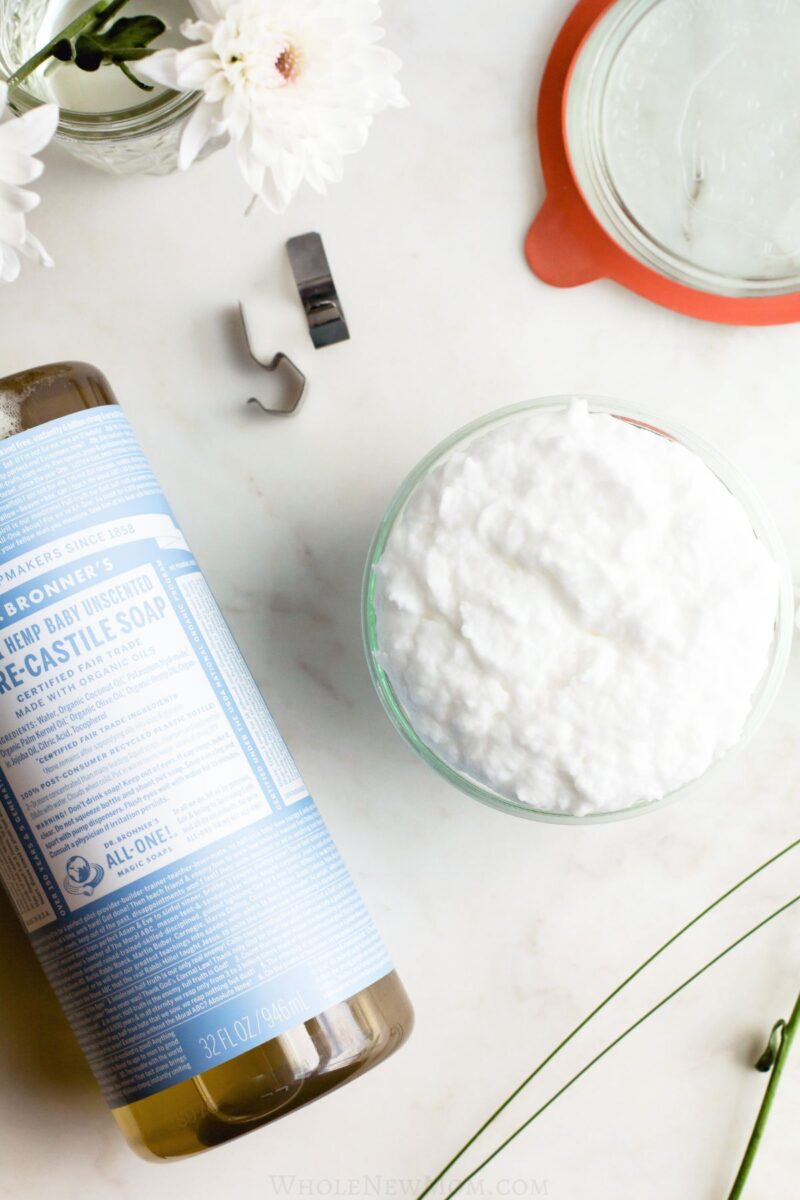
To make a basic baking soda paste, mix baking soda with castile soap until it forms a thick, spreadable consistency.
For tougher stains or buildup, you can add a small amount of cream of tartar if desired.
Why Baking Soda Cleaning Paste Works
Baking soda and soap work together to tackle different types of messes.
Soap helps break down grease and oils so they can be rinsed away, while baking soda acts as a gentle abrasive to scrub away stuck-on residue.
Because baking soda is slightly alkaline, it can also help neutralize odors, making it especially useful for kitchens and bathrooms.
Why You'll LOVE This Baking Soda Paste
I love making DIY everything from spice blends, to kitchen substitutes, to beauty products and home cleaners as well. Basically, if there's something I need, I often wonder if there's a way to make it cheaper and make it cleaner/healthier.
And when it comes to cleaning products, most of the ones in the stores are full of things I don't want in my house, and you likely shouldn't have them in yours as well.
Even some of the more “natural” companies have “fragrance” on the ingredient list which, if you don't know, can be a coverup for all kinds of nasty chemicals.
While you could go in the direction of buying very clean products, DIY options like this baking soda paste are so simple and inexpensive, there's really no reason to spend your money on a store-bought cleaning paste at all.
You don't even need to make this paste ahead of time because it's so simple. Just whip it up when you need it.
Take a look at these shockingly simple ingredients.
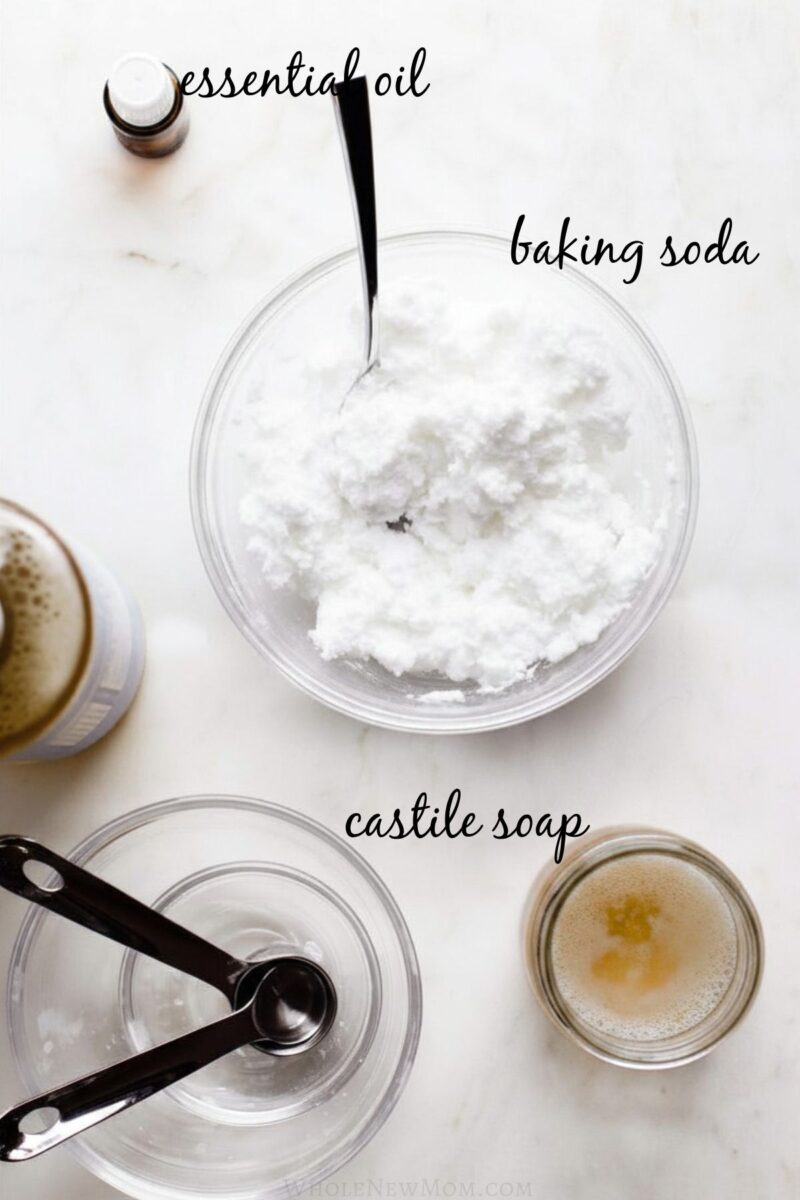
Ingredients
- baking soda
- castile soap
- essential oils (optional)
Tips
If you plan on storing some of this cleaning paste, make sure to keep it in a very air tight container so it doesn't dry out.
You also might wish to leave some air space at the top in case it does dry, since that will cause it to expand. It's no fun having a container break–especially if you use a glass one!
Does This Cleaning Paste Kill Germs?
While this cleaning paste is great at cleaning all sorts of areas, it's not technically a disinfectant. It will help addressing dirt, grease, and buildup, however.
If you're wanting something that's guaranteed to kill germs, you might want something specifically for that purpose like HOCl from Force of Nature or Ecoloxtech, for example.
How to Use
Scoop out 1-2 Tablespoons of the paste (more or less, depending on the job) and apply with a sponge, scrub brush, or cleaning rag, and scrub. Rinse thoroughly (warm water will make rinsing easier).
Ways to Use Cleaning Paste
- Clean, polish and protect chrome, stainless steel, porcelain and similar surfaces
- Remove label residue off of glass containers
- Kitchen and bathroom surfaces, including the tub and shower, sinks, hardware, and even the toilet)!

Baking Soda Cleaning Paste
Ingredients
- 1 cup baking soda
- 2-4 teaspoons liquid castile soap
- 10-20 drops essential oils (optional)
Instructions
Instructions
- Add baking soda to a small bowl.
- Slowly add castile soap, mixing until a thick paste forms.
- Adjust consistency by adding small amounts of castile soap or water as needed.
- Stir in essential oils, if using.
- Use immediately or store in an airtight container.
To Use
- Apply to surfaces with a sponge or cloth, scrub gently, then rinse clean.
Notes
Other Non-Toxic Household Products
Here are some more great non-toxic healthy home products you can easily make yourself.
- Sensitive Skin/Baby Laundry Detergent
- Non-Toxic Laundry Detergent
- No-Streak Window Cleaner
- DIY Dishwasher Rinse Aid
- Best DIY Fly Trap
- Homemade Soft Scrub
I'd love to hear what you think about this cleaning paste after you try it!
Works great and smells terrific! I have shared this recipe with many friends.
Hi Bernadette! That’s so great to hear! I’m so glad it’s working well for you. Thanks for sharing with others. That means so much to me! Hope to see you around again!
Thanks!
I just made this. I think your measurements are way off…..I had to use 1 Tbsp of castile soap, and 5 Tbsp of water to make a paste. (It may have come together with 4 Tbsp of water…) I used 20 drops of Lemongrass.
With 1 cup of baking soda, the liquid amounts were just not enough to make a paste…
I haven’t tried it yet, but it is similar to a goo gone recipe which calls for baking soda and coconut oil…and that works great!
What is the purpose of the cream of tartar?
Hi Carol! First of all, my sincere apologies for the late reply. I have a backlog of comments and am getting through them as I have time. I guess better than publishing and not answering them!
The cream of tartar is a mild acid which helps address stains.
Actually I am going to update the recipe for more efficacy. I can’t get to it right now because I have a deadline but I will! Stay tuned.
About the thickness, that could be the type of castile soap, the consistency of the baking soda, and also user expectation but I’ll address that in the post. I hope it works better for you next time and thanks for reading!