
DIY Swim Spray to Neutralize Chlorine
This post may contain affiliate links from which I will earn a commission. Learn more in our disclosure.
This DIY swim spray helps remove chlorine from skin and hair after swimming. Made with vitamin C, this simple after-swim spray neutralizes chlorine quickly and helps reduce dryness, irritation, and that lingering pool smell.
If you or your kids spend time in chlorinated pools, this easy homemade chlorine neutralizing spray can help protect skin and hair with just a few inexpensive ingredients.
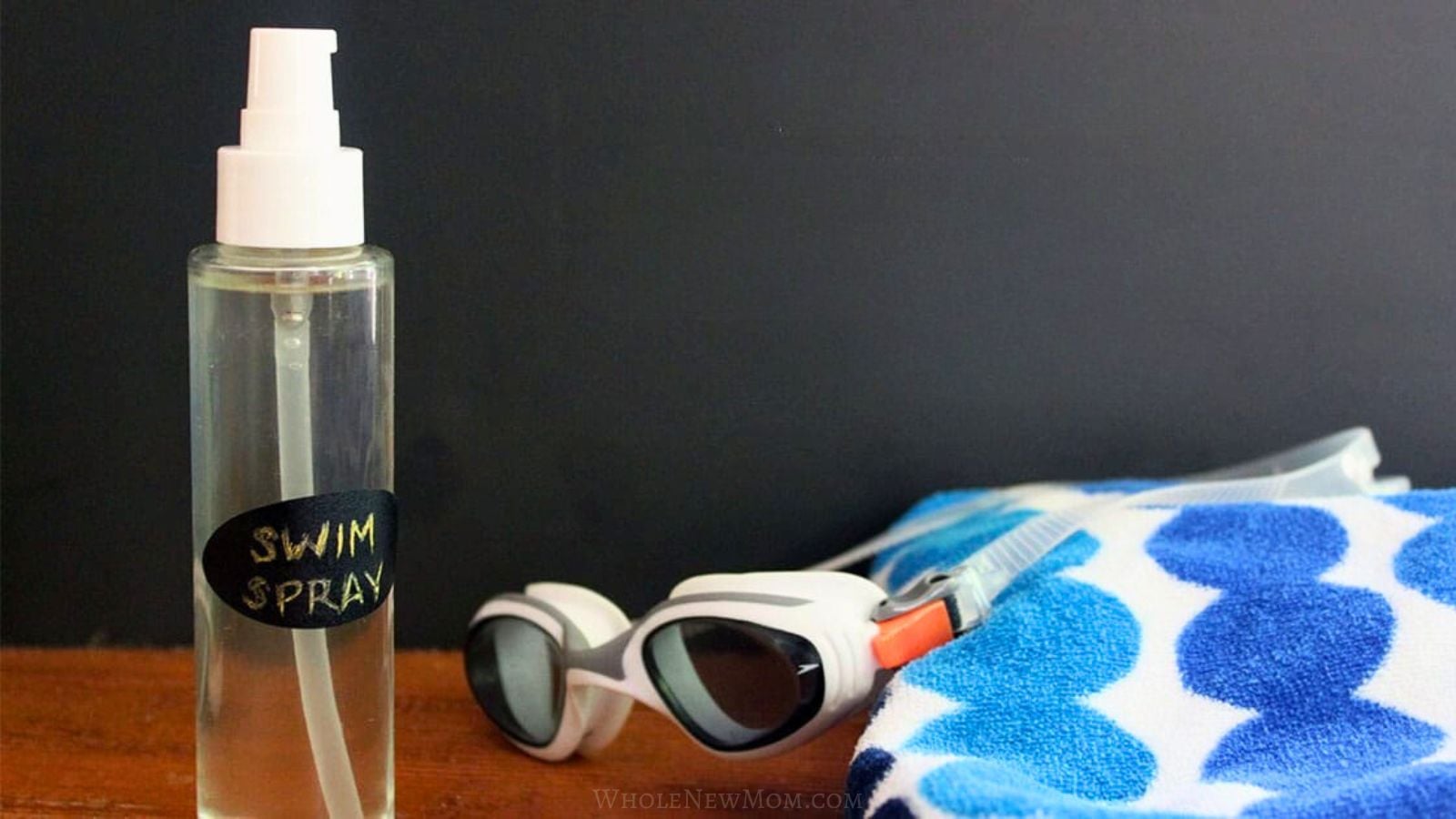
Summer is a time for fun in the sun and fun in the water, which can mean a lot of time at the pool. However, it also means more exposure to chlorine, which isn’t so great.
Thankfully, with this easy DIY Swim Spray, you can neutralize some of that chlorine and give yourself more peace of mind regarding your family’s health.
We live by a community pool and our boys took swim lessons there for a few years. They were required to shower after leaving the pool, and while I was glad about that, I didn’t want my boys using the toxic shampoo at the pool, so I sent them with safer options.
However, I have noticed that the chlorine smell still lingered on them, even after their sometimes prolific showering.
I found out that shampoo and other cleaning products don’t wash chlorine off the skin, and that’s when we started making this super easy homemade swim spray.
Where Chlorine Exposure Happens (Pools, Showers, and Tap Water)
Chlorine is something that we’re all exposed to. It’s in our tap water, in bleach used for disinfecting around the home by some, and of course it’s used heavily in most swimming pools. If you have the privilege of frequenting a salt pool, your exposure to chlorine can be less, but even that’s not guaranteed to be the case.
Clearly, it has its place. I mean, who wants to swim in a pool where some kid might have done something, plus there are all kinds of other things in our water that we don’t want on our body or in our drinking water.
However, chlorine in and of itself has health risks.
We all know how when you spend too much time in a chlorinated pool, you tend to have some irritation like red eyes and possibly a rash.
However, the health implications go beyond that.
Health Concerns Related to Chlorine Exposure
Chlorine can:
– dry out hair
– cause breathing problems
– cause dental erosion
– dry out skin
– cause stillbirths (from byproducts of chlorinated water)
– cause bladder cancer
– lead to rectal cancer
– cause cardiovascular disease
– cause allergies due to sensitization
How This DIY Swim Spray Works
- Vitamin C neutralizes chlorine on skin and hair
- Helps reduce chlorine smell after swimming
- May help prevent dry hair and skin from pool exposure
- Takes less than 2 minutes to make
How Vitamin C Neutralizes Chlorine
Vitamin C neutralizes chlorine by converting it to other things via a chemical reaction. In this case, vitamin C donates electrons to chlorine compounds, reducing them into harmless substances like hydrochloric acid and water. Then the vitamin C is oxidized into dehydroascorbic acid (DHA). This chemical reaction is called oxidation-reduction (redox) and it’s a very fast and effective reaction.
Vitamin C is used to neutralize chlorine in water systems. It’s safe for aquatic animals, and it’s also safe for you to use on your skin and hair.
While it won’t address chlorine that’s been inhaled or absorbed beyond the skin, it can certainly help remove some of the problem.
What This Spray Can and Can’t Do
This DIY swim spray can help neutralize chlorine on the surface of the skin and hair after swimming. However, it’s important to know that it isn’t a complete solution to chlorine exposure.
Chlorine exposure in pools happens through:
- breathing chlorinated air above the water
- absorption through the skin while swimming
- exposure to chlorine byproducts formed in pool water
This spray simply helps remove some of the chlorine that remains on the skin and hair after you leave the pool. While that can help reduce irritation, dryness, chlorine odor, and addresses some of the toxicity issues involved, it doesn’t prevent all potential exposure.
Showering, limiting time in heavily chlorinated pools, and swimming in well-maintained pools are other things you can do to reduce chlorine exposure.
Not all products actually remove chlorine from skin and hair. Many soaps only wash the surface but don’t neutralize chlorine. Here’s how common chlorine removal methods compare.
|
Chlorine Removal Method |
Removes Chlorine? |
How It Works |
Notes |
|---|---|---|---|
|
Regular Shampoo |
❌ No |
Cleans oil and dirt |
Chlorine smell often remains |
|
Soap or Body Wash |
❌ No |
Cleans surface oil |
Does not neutralize chlorine |
|
Baking Soda Rinse (see baking soda uses) |
⚠️ Partially |
Helps deodorize |
Doesn’t chemically neutralize chlorine |
|
DIY Swim Spray |
✅ Yes |
Neutralizes chlorine chemically |
Fast and effective |
|
After-Swim Commercial Products |
✅ Usually |
Often contains vitamin C |
More expensive |
As you can see, most soaps and shampoos don’t actually remove chlorine—they mainly clean oils. Vitamin C works differently by chemically neutralizing chlorine.
Does Showering Remove Chlorine?
Showering alone does not fully remove chlorine from skin and hair. Soap and shampoo mostly remove oils and dirt, but chlorine binds to proteins in hair and skin. Neutralizing it with vitamin C is needed to help remove chlorine more effectively.
Supplies for This Spray
Vitamin C
Two kinds of Vitamin C neutralize chlorine: sodium ascorbate and ascorbic acid.
While either version of vitamin C will work for this after swim spray, there are several reasons why sodium ascorbate is the better choice here.
First, ascorbic acid is more acidic, so it can lead to irritation, especially when used often.
Secondly, sodium ascorbate dissolves much more readily than ascorbic acid so it’s a bit easier to use.
Bottle Recommendations
Plastic is the best choice to prevent any breakage around the pool area where bare feet could end up with painful slivers in them, but make sure to choose a high-quality plastic bottle so that the optional essential oils and vitamin C won’t be likely to cause leaching of the plastic.
Light will cause the vitamin C to degrade so tinted bottles are best.
A fine-mist spray bottle can help distribute the solution more evenly over skin and hair while using less product. This can be especially helpful for long hair or for spraying active children who don’t stand still for long.
Tips for Using Vitamin C Swim Spray
- Shake Before Using: Ensures ingredients are well-mixed.
- Make Small Batches: With time, the solution will degrade, so it’s best to only make the amount you will likely use within a few days to a week.
Storage
- Use Dark Glass or Plastic Bottles: Again, this will protect the solution from exposure to light which causes it to lose effectiveness.
- Store in a Cool, Dark Place: Keep away from heat and sunlight, again to help it not lose effectiveness. Storing this spray in a dark bottle in the fridge is a good option.
How to Use This DIY Swim Spray
- Spray generously on skin and hair after leaving the pool.
- Let sit for 30–60 seconds so the vitamin C can neutralize chlorine.
- Rinse with fresh water or shower.
- Repeat if chlorine smell remains.
Optional: spray directly onto hair before rinsing to help reduce chlorine damage.
FAQ
Does vitamin C really remove chlorine?
Yes. Vitamin C (ascorbic acid or sodium ascorbate) neutralizes chlorine through a redox reaction that converts chlorine into harmless compounds.
Can I use this spray on hair?
Yes. It can be sprayed directly on hair before rinsing to help reduce chlorine damage and dryness.
Is this safe for kids?
Yes. The ingredients are very gentle, but you should avoid spraying directly into the eyes.
How long does vitamin C spray last?
Vitamin C breaks down when exposed to light and air. For best effectiveness, make small batches and use within about a week.

DIY Swim Spray for Neutralizing Chlorine
Ingredients
- 1/2 cup filtered water (see my recommendations on How to Filter Water here)
- 1/2 teaspoon powdered sodium ascorbate
- A quality Glass Bottle or quality Plastic Bottle
Instructions
- Using a funnel, add water to a glass bottle or stable plastic spray bottle.
- Add the sodium ascorbate.
- Put lid on bottle and shake to combine.
- After swimming, spray the solution all over, including on hair.
- Rub the vitamin c spray into your skin and massage your hair to cover as much of your skin and hair as possible.
- Shower as usual.
Notes
- Shake Before Using: Ensure ingredients are well-mixed.
- Make Small Batches: With time, the solution will degrade, so it’s best to only make the amount you will likely use within a few days to a week.
Don’t Feel Like DIYing?
This recipe is so simple to make, but Rowe Casa makes a great Swim Spray that’s similar to this recipe, but with added essential oils.
Have you ever used an After Swim Spray to neutralize chlorine?
Silly question, but you mention apply spray after, rub, then shower. Does the chlorinated water need to be on skin for spray to deactivate? I was swimming, showering, then spray/rub. Thanks for your clarification.
My understanding is that the spray works to deactivate the chlorine by putting it on your skin when the water is still there.
thank you Adrienne. 🙂
I currently use a body oil with essential oils after swimming. but I love this idea. could I add the vitamin C to my current oil or does it need to be a spray?
Hi there – thanks I think that should be OK if it dissolves well for you. No need for it to be a spray. However, you would have to wash it off so it might not come off as easily.
Sodium ascorbate seemed to get the chlorine smell out, but I think it dried out my hair. Natural suggestions for restoring moisture and resilience to hair?
I’m sorry! Most likely I would think that the chlorine did it, but maybe you are right. I personally use Beautycounter shampoo & conditioner and Giovanni Leave in Conditioner – mentioned in this post. https://wholenewmom.com/health-concerns/haircare-ingredients-to-avoid/
I sometimes use some argan oil as well. My hair is quite dry but this seems to help.
Oh – this post has some great DIY Hair Masks that should help! https://wholenewmom.com/whole-new-budget/diy-hair-masks/
Hi Adrienne,
This is really helpful. Thanks for sharing!
So my question is: Can I just use the bottled spring water instead of filtered water?
Thanks,
Kaitlyn
I don’t see why not! Sure!
For those of us who want to purchase a ready made product- which do you suggest
I just put on in the post for you :).
Do you have any idea if this helps protect against allergies to chlorine? I love swimming but over the years I have become so sensitive to it that I cant be around it at all, but I absolutely love being in the water
I would think possibly since it denatures it but not sure so maybe try it and see how it goes?
Hello. I’ve got a Natural vitamin C powder made from acerola cherry. Can I use that, will it have the same effect? Thank you.
Hi Tasha – so that is just powdered acerola?
Yes it is.
I don’t think it will work b/c it’s a whole food product. Might be messy too b/c of the color. I can’t figure out the science behind it. I see the reaction that ascorbic and sodium ascorbate lead to but I don’t know about the food based vitamin.
Good website, impressed at first visit.
Thank you! Hope to see you around again!
How long can this be stored? I can only find small spray bottles (50-60mL) and my is crap so I can’t work out what the amount of vitamin C for that much water would be. Could I create a jar and pour what I need into a small spray as I go?
I really don’t recommend storing water based products longer than 4 days so be careful. Just divide the total amount and make a smaller amount.
Is there a suitable preservative that can be added to stabilize the liquid suspension for longer than four days?
You would want a full spectrum one probably but some others could help. Actually I am looking at commercial ones and they don’t have preservatives so it’s possible that the vitamin C does a good enough job so perhaps it’s not needed. I can’t be on the hook for that but it might be good enough :).
Wish I could swim in ocean. Or, . .have my own pool, and not use chlorine.
I have a uterine fibroid, that I wonder if it was in part caused by this.
Really need the excercise of swimming.
I hear saline pools still have chlorine. Get worse in saline. Tighter skin feeling in chlorine. What to do ? My face looks like **** since stint of swimming.
Hi there. The Cl info on salt pools is confusing. I can imagine that your skin can feel bad in either. Sorry you are having that situation.