
Cilantro-Tips and Facts You Should Know
This post may contain affiliate links from which I will earn a commission. Learn more in our disclosure.
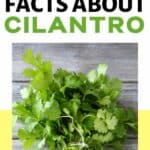
For years, whenever I made salsa, or any other dish calling for cilantro, I never added it. I kept telling my husband (who simply loves the stuff) that it tasted like soap. Ick.

Well, I was at a church gathering once where an amazing homemade salsa was served that was pretty heavy on the cilantro–
And I was hooked :-).
I came home wanting to add it to my next batch of salsa, but I just couldn't bear to:
- spend money on it
- use just the leaves and….
- have the rest of it go to waste.
You too?
Well, I did some research and now I have some great tips to share about how to use and store cilantro so that you can make great salsas and bean dips without breaking the bank (or just adding more fuel to your compost :-).)
Cilantro Tips – How to Use and Store Cilantro
1. You Can Use the Whole Plant!
– Did you know that you can use not just the leaves, but also the stems? That's right – you can! So stop throwing away or composting those cilantro stems and just add them to your favorite dishes along with the leaves! Get more bang out of your food budget!
2. How to Store Cilantro
a. Fridge
Store what you will use quickly in the refrigerator upright in a glass container so that the stems are resting in some water.
b. Freezer
– Whatever you cannot use right away, just chop into small pieces, store in a small plastic bag, and freeze. This will not only save money, but the next time you need cilantro, it will be ready and pre-chopped for you so your prep will be already done.
– I purchase my small plastic bags in bulk from Country Life Natural Foods (I use the small 4 x 2 x 8 size for cilantro) and I swear by Twixit Clips for bag-sealing of all kinds all around the house. Bonus–you can get a big discount at Country Life using code WHOLENEWMOM too – and they have all kinds of great things there.
– Frozen cilantro separates fairly easily–even frozen chunks chop up easily using a good knife on a cutting board.
You can see more about my other nifty storage techniques in these posts:
- How to Freeze Cucumbers
- How to Freeze Tomatoes
- How to Store Prepared Beans
- How to Store Nuts and Seeds
3. Dried Cilantro Just Doesn't Cut It
– Dried cilantro just doesn't have the “oomph” needed for great dishes. You can try it and see if you want to, but believe me, it just isn't worth it. Better to use your money on something else and just use the fresh herb for cooking.
4. Cilantro vs Coriander
Did you know coriander is another name for cilantro? Well, now you do! So if you want to have your own fresh cilantro, just plant some coriander seeds and start your own herb garden!
Cilantro is the Spanish name for this plant, but since cilantro became popular in the U.S. through Latin American cuisine, the Spanish name (cilantro) is often used here.
5. Cilantro–the Heavy Metal Magnet
Did you know that cilantro is supposed to be natural metal detoxifier? Yes, that's the truth.
This might be the most truly helpful of all the cilantro facts you will ever know.
Several years ago, I didn't know anything about metals and the real concern that they can be. Think of it this way–heavy metals are everywhere (think about the lead issue in the water in Flint, MI). Let's just say that eating a little (or a lot) of cilantro now and then might be a good thing but don't overdo it and speak with your physician if you have any concerns.
Do keep in mind that studies vary on the effectiveness of cilantro on heavy metals. (source)
You can read more about heavy metal toxicity and zeolite as well.
6. Why Cilantro Tastes Like Soap for Some
You likely have heard about how some people just truly can't stand the taste of cilantro, thinking it tastes like soap.
Did you know that that is due to a genetic issue? A 2012 study found that this taste phenomenon is due to the aldehydes in cilantro. People who dislike cilantro have a genetic variant on an olfactory (related to smell) receptor gene that that causes them to be super sensitive to aldehydes.
What's really really interesting is that many of your “genetic stuff” is not permanent. Epigenetics is all about how some / many genes can be turned on and off by changing the environment of the body.
I personally used to HATE cilantro, but I love it now. That change happened while working on my overall health. You can read a bit of my story here.
This book talks about ways to clean up your genes so that you aren't “doomed” to everything that is “genetic” in your life.


Ways to Use Cilantro
There are SO many ways to use cilantro, but one of our family's favorite recipes of all time is this Fast and Yummy Bean Dip. Just throw some of your fresh or frozen cilantro in with the rest of the ingredients and you have a great summer dish that won't heat up your kitchen!
Other Whole Foodie Kitchen Tips:
- How to De-Gas Beans – great “stop the tooting” tips
- How to Freeze and Store Berries
- The Easiest Way to Peel Garlic
- How to Freeze Tomatoes–no peeling and no blanching!
Which of these Cilantro Tips is the most helpful for you?
thanks for info on cilantro, it is commonly used in my kitchen. I will try your storing tip. Thanks for sharing this tips to Hearth and soul hop.
I love Cilantro. Use it all the time. Thanks for the tip on the stems. Excellent!!
I use all of the cilantro as well. The stems are delicious, there’s no need to waste. We eat cilantro regularly, but unfortunately I have to keep buying it in the store (thankfully it’s available year round) because when I plant it outdoors it dies quickly.
i love love love this post! i am a huge cilantro fan and am currently growing a whole bunch of it (planted the whole bag of seeds lol) i will need to book mark this post for when all my cilantro is ready to harvest :0)
Cilantro/coriander is one of my tippy-top favorite herbs! I grow it in my garden (though not too successfully yet). We’ve been using the stems for years, but didn’t realize that the plant detoxes metal. Too cool! (I followed you here from Domestically Divine). Thanks for sharing!
Coriander is actually the name of the leaves too. Cilantro is the Spanish name, but because it’s became popular in the US through Latin American cuisine, the Spanish name is often used there. Whatever you call it, it’s one of my favourite tastes.
Thanks for the info, Ruth! I will add that to my post!
We <3 cilantro! I always buy a batch of organic cilantro at the Farmer's Market…..because I have trouble growing things – except mold.
Yeah, our tomatoes looked like we were going to have a bumper crop and now about 1/4 are wilting. Ugh. Chard grows well. You might want to try that.
Thanks so much for the cilantro tips – especially on storing it! What are the chances you might share that amazing salsa recipe? I’m constantly on the lookout for salsa recipes! 😉
I actually could not find the salsa recipe, but I just contact the source and I should have it tonight! Keep on the lookout for an up and coming post once tomato season is here we hopefully have a bumper crop coming in from our garden!
Thanks for the tips! I have a ton ready to harvest now, but no ripe tomatoes yet to make salsa with–now I know how to hold onto it all until the tomatoes come in!
Interesting about the metal. I would love more info on that–it would be a great post!
I have a lot to say about metals and detox as this is something that our family has been dealing with for quite awhile. Stay tuned. In the meantime, you may wish to read my posts on adrenal fatigue.
Take care.
thanks for the tip on freezing cilantro. i wonder if this works just as well with other fresh herbs?