
Is Borax Safe?
This post may contain affiliate links from which I will earn a commission. Learn more in our disclosure.

Borax is recommended for a lot of DIY “green cleaning” products around the house, but is borax safe? In this post, we'll cover the basics about borax safety so you can make a more well-informed decision about whether or not to use borax or borax containing products in your home.
When I was a brand-new mom, I thought I would save our family money by using a non-toxic laundry detergent recipe.
Laundry explodes when you have a family, especially a little one who spits up a lot. And if you are using cloth diapers? That's a whole other story.
I had quit my job to become a stay-at-home mom and my husband was a PhD student which meant very little income and lots of tightening of the budget.
One way I worked hard to save us money was by making my own laundry detergent. I tried a few formulas including liquid and a powder made with Fels Naptha soap, and more.
However, along the way, I started hearing concerns about borax safety and wondered if I was causing myself and my family harm with my laundry DIY projects. The more I researched borax, the more confused I became. Some sources treat it like a dangerous poison, while another seem to think concerns were completely overblown.
Borax Safety Ratings
Though it's not perfect, EWG is a one place that many natural-minded people turn to evaluate the products that they make or use.
Upon checking the safety of some of the ingredients in my homemade detergents, I got an unwelcome surprise.
A D!? Yikes! What's even worse, EWG used to rate borax with an F!
Let's talk about what borax first.
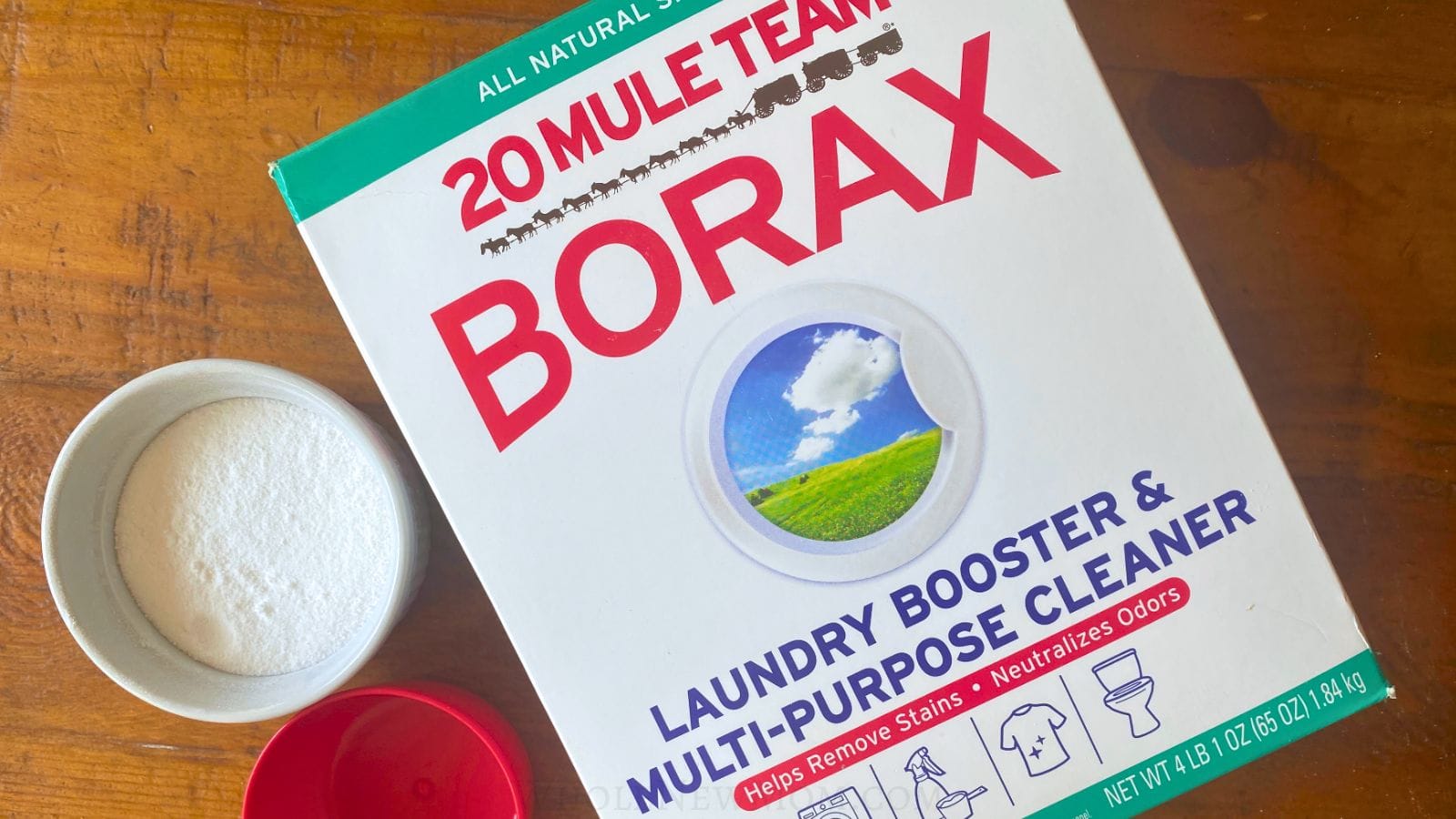
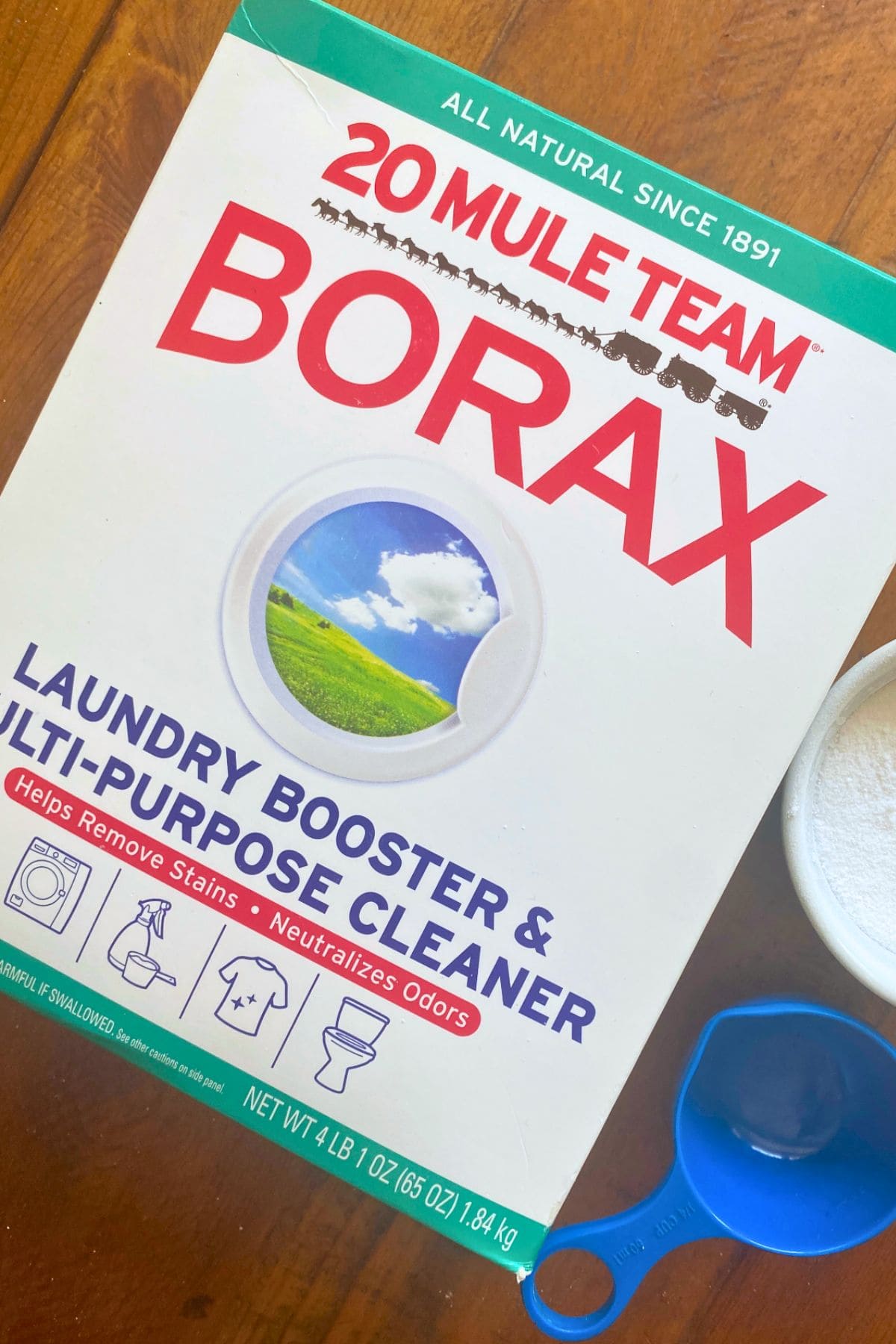
What Is Borax
Borax is a naturally occurring mineral compound made primarily of sodium, boron, oxygen, and water. Its proper chemical name is sodium tetraborate.
Borax is mostly sold as a white powder and has been used for decades in laundry products, household cleaners, and some industrial applications.
Borax is related to boron, a naturally occurring element found in soil, water, and certain foods. However, borax and boron are not the same thing chemically. Borax contains boron in the form of borate compounds.
When dissolved in water, borax forms borate compounds in solution. Its alkaline nature and water-softening properties are part of what make it effective for cleaning and deodorizing.
Borax vs. Boron: What's the Difference?
Boron is a trace mineral found in foods and supplements. Borax is a mineral compound that contains boron along with sodium, oxygen, and water. Although related, they are not the same thing, and much of the confusion surrounding borax stems from discussions about boron's potential health benefits.
Why Does Borax Work?
Borax is highly alkaline, with a pH of around 9–9.5, which helps it break down grease, deodorize fabrics, and improve cleaning performance.
One reason borax is used in laundry is because it softens hard water. Minerals in hard water can interfere with detergents and leave residue behind, while softened water allows soaps and detergents to work more effectively.
Borax is also often used to help address odors, mildew, and buildup in laundry and washing machines or in damp or mold-prone areas of the home. Some people spray diluted borax solutions on surfaces as part of temporary mold-cleaning routines because borax is alkaline and has mild antifungal properties.
That said, I don’t consider borax a complete solution for significant mold problems or ongoing moisture issues, which need to be addressed at the source.
In addition, borax has mild insecticidal and antifungal properties, which is why it has historically been used in some pest-control and mold-cleaning applications.
Borax Safety Concerns and Precautions
While borax itself is not generally classified as a carcinogen, some regulatory agencies in Europe have raised concerns about reproductive and developmental effects from boron compounds at certain exposure levels.
Borax is also considered a skin and eye irritant, and breathing in the powder can irritate the respiratory tract.
Most concerns about borax safety relate more to repeated exposure and ingestion than to occasional household use.
Why Does EWG Give Borax a Poor Safety Rating?
One reason borax creates so much debate in natural-living circles is that organizations like the Environmental Working Group (EWG) give it relatively poor safety ratings.
These ratings are largely based on concerns about irritation, ingestion risk, and animal studies at certain exposure levels.
Some critics argue that EWG ratings occasionally blur the distinction between hazard and real-world exposure. In other words, a substance may be capable of causing harm under some conditions without necessarily posing the same level of risk during normal household use.
Personally, I think borax is one of those products where context, exposure, and how it’s actually used matter a lot.
Is Borax Safe for Laundry?
Borax has been used for laundry purposes for decades and is often an ingredient in homemade laundry detergents because it can help soften water, reduce odors, and improve cleaning performance.
Many people use borax in laundry without problems, particularly for musty towels, heavily soiled fabrics, or washing machines prone to mildew and odor buildup.
Borax is generally considered color-safe for most washable fabrics when used appropriately, although delicate materials should always be spot tested first.
Because borax is powdered, one of the main practical concerns is avoiding unnecessary dust exposure while handling it.
Why I Use Borax for Laundry
One reason I use borax in laundry is because washing machines—especially front loaders—can develop mold, mildew, biofilm, and persistent musty odors over time.
I’ve found borax helpful for odor issues, laundry buildup, and fabrics exposed to damp or mold-prone environments. I typically dissolve it in hot water before adding it to the wash.
Is it Safe to Ingest Borax Water?
Some people in natural health circles use very small, diluted amounts of borax as a source of boron, often calculating doses to match typical boron supplement levels.
While this approach is based on the fact that borax contains boron, borax itself is not intended or studied as a dietary supplement.
One important note about DIY borax water ingestion protocols is that concentration, dilution, storage, and consistency can vary widely, making it difficult to know exactly how much exposure one is getting over time.
Now, I don't personally think that every natural or traditional practice needs perfect standardization or expensive clinical testing to have value, and I can understand the reasoning behind using very small amounts of borax water as a boron source. However, some of the higher-dose or escalating intake recommendations that are sometimes promoted online give me pause.
Personally, I prefer moderation and obtaining boron primarily from food or supplements intended for consumption.
Common Questions About Borax
Is borax non-toxic?
Borax is often marketed as a more natural cleaning ingredient, but the term “non-toxic” can sometimes be misleading. While borax is generally considered lower risk than many harsh chemical cleaners when used properly, it can still irritate the skin, eyes, and lungs and should not be ingested.
Is borax safe for laundry?
Borax is commonly used in laundry to help with odors, stains, and hard water issues. Many people use it safely for their laundry, though it’s still smart to avoid breathing in the powder while handling it.
Is borax environmentally friendly?
Borax is a naturally occurring mineral and is sometimes considered more environmentally friendly than certain synthetic cleaning ingredients. However, “natural” does not automatically mean harmless, and large amounts of boron compounds can affect plants and aquatic environments.
Is borax carcinogenic?
Borax is not generally classified as a known human carcinogen. Most safety concerns around borax relate more to irritation and potential reproductive or developmental effects at certain exposure levels.
Is borax safe for colored clothes?
Borax is generally considered color-safe for most washable fabrics when used appropriately, though it’s always best to test delicate fabrics first.
Is Borax Safe? My Personal Conclusion
After researching borax more thoroughly, my own view has become more nuanced than simply labeling it “safe” or “unsafe.”
Borax isn’t the extremely dangerous substance it’s sometimes made out to be—but I also don’t think it should automatically be considered completely harmless simply because it’s natural.
Like many household ingredients (and most other things in life) context matters:
how it’s used, how much exposure there is, and whether basic precautions are taken.
I’m personally comfortable using borax for laundry and some household cleaning purposes, while still being mindful about handling it carefully.
For me, the most sensible approach is neither fear nor blind trust, but informed and thoughtful use.
I'd love to hear your thoughts about borax after reading this post.
Boron is a component of Borax and is likely considered a necessary trace mineral in the human diet. Like all other trace minerals, excess intake is toxic. A deficiency of this trace mineral appears to affect hormones, joint and bone health, mental acuity, utilization of other minerals, and much more. Borax or other boron sources like Calcium Fructoborate (naturally found in fruits and vegetables) are sometimes added to dietary supplements, but the amount is typically only as necessary to provide in the order of 3 milligrams of elemental Boron or slightly more.
Reviewing the Materials Safety Data Sheet (MSDS) for Borax (Sodium Borate) and common Table Salt (Sodium Chloride), we can conclude that borax toxicity is only roughly twice as toxic as table salt.
Regarding the toxicity of Borax or its derivative Boric Acid to ants and cockroaches, the toxicity occurs when the substance recrystalizes within their microscopic digestive tracts after ingestion. Crystallization ruptures their digestive tracts.
I believe Borax can generally be safely used as directed on the box. I doubt it would be sold for household use if it was of great risk, but like all other household cleaning products, these products should not be accessible to children and pets, and should be properly handled.
Of further note…. Borax is a naturally occurring mineral salt and is not some man-made substance. Borax is also a great mold inhibitor and was used decades past as a food preservative, and is still used in some cosmetics like certain lipstick brands also as a preservative.
Please Google everything I have stated above for yourself and do not accept my comments above at face value. I make no recommendations for or against the use of Borax or other compounds containing the element Boron. Please share your thoughts and experiences with me. You are in your own.
Here is a link to the Federal website the National Institute of Health (NIH) regarding the roll of the mineral Boron (which is a component of Borax) in human health.
https://www.ncbi.nlm.nih.gov/pmc/articles/PMC4712861/
Thanks for the thorough comment and for reading. Actually I have been planning to redo this post for a long time–I just need another me! But thanks again. 🙂
Borax, or sodium tetraborate (Na2B4O7), is a salt. Salts can cause metabolic acidosis if taken in high amounts. Compare:
SODIUM CHLORIDE (table salt)
(Link deleted by Whole New Mom due to it not working anymore)
The deaths were usually preceded by a syndrome that included metabolic acidosis, CNS depression, respiratory distress progressing to gasping respiration, hypotension, renal failure, and, occasionally, seizures and intracranial hemorrhage.
SODIUM TETRABORATE (borax)
(Link deleted by Whole New Mom due to it not working anymore)
SEVERE TOXICITY: Dehydration, hypotension, CNS excitation or depression, lethargy, seizures, coma, acute renal failure, dysrhythmias, and metabolic acidosis have been reported in patients with severe toxicity.
I mean, table salt can be pretty toxic as well. Better keep the kids away from that too… Anyways, boron itself is not toxic. Even though it is not known whether it is beneficial in humans, it is an essential nutrient for plants, and since we eat plants, one would expect we would be adapted to digest it.
Hi Linda. Actually interesting that you shared this b/c I have been rethinking this issue. Thanks!
Having looked at the ingredients of the deals-naphtha soap I decided that using that in the homemade laundry soap. Then a while later I read you could use ivory soap. That is what I have been using in the laundry soap I make. And yes borax is one of the ingredients. Fels-naphtha scares me more than borax.
I don’t drink it, put it in my eyes or feed it to my animals – so, no way am I going to stop using it. I think those alarms are way overstated, because, seriously? Who in their right mind is going to do any of those 3 things? I have (really should say, HAD) Rosacea, until I found a natural cure for it. Rather than paying $165 for a generic cream that obviously would have never “healed” me, but, just made it worse? I found that by making a water/borax solution, soaking a cotton ball with it and half hydrogen peroxide on the same cotton ball, then putting it all over my face, neck and chest every morning and night….(all for a cost of under $10, I might add) – within a week, my rosacea was gone. AND, two moles that I had scheduled for surgical removal disappeared too! My face is extremely soft now as an added bonus. Take away my Borax?? I think NOT.
Thanks for sharing, Belenda! It’s great that you were able to find such an affordable solution!!
Oh…by the way. I still use Borax to soak my whites in if I have a particularly bad load. Also, I use it diluted in cleaners that I make. I don’t have an issue with it. I just think that Soap nuts get my clothes cleaner and require no extra work.
Hi!
Thanks for the info 🙂 I used to use Borax, but I got tired of making detergent. Sometimes it feels like all I do is cook and make products for cleaning! SOOoo I discovered Soap Nuts. They are awesome. I have been using them for about 4 months now and my husband and I agree that we can’t tell any difference in the cleanliness of the clothing. There is one interesting difference though. I no longer need dryer sheets or softener! Apparently the detergents build up in the fabrics of the clothes and cause static. I Live in Colorado Springs which is very arid most of the time. I love the fact you can use the same bag of 6-8 nuts for up to 6 loads of laundry too! They can be thrown in the dryer. They don’t need to be taken out during the rinse cycle. And somehow my clothes come out magically clean and smelling like nothing at all. Sometimes I’ll drip a bit of essential oil on a cotton ball and throw it in the dryer if I want some fragrance. I do a lot of laundry and I have been on the same 14 dollar bag of nuts since I started using them. I think I’m about half way through the bag. Look on Amazon for more reviews 🙂
I agree with you, Hannah … Soap Nuts are great! And they are so much easier than making your own detergent.
How are theybin price comparison ? Making it is just so cheap ? and it’s fast