
Is Borax Safe?
This post may contain affiliate links from which I will earn a commission. Learn more in our disclosure.

Borax is recommended for a lot of DIY “green cleaning” products around the house, but is borax safe? In this post, we'll cover the basics about borax safety so you can make a more well-informed decision about whether or not to use borax or borax containing products in your home.
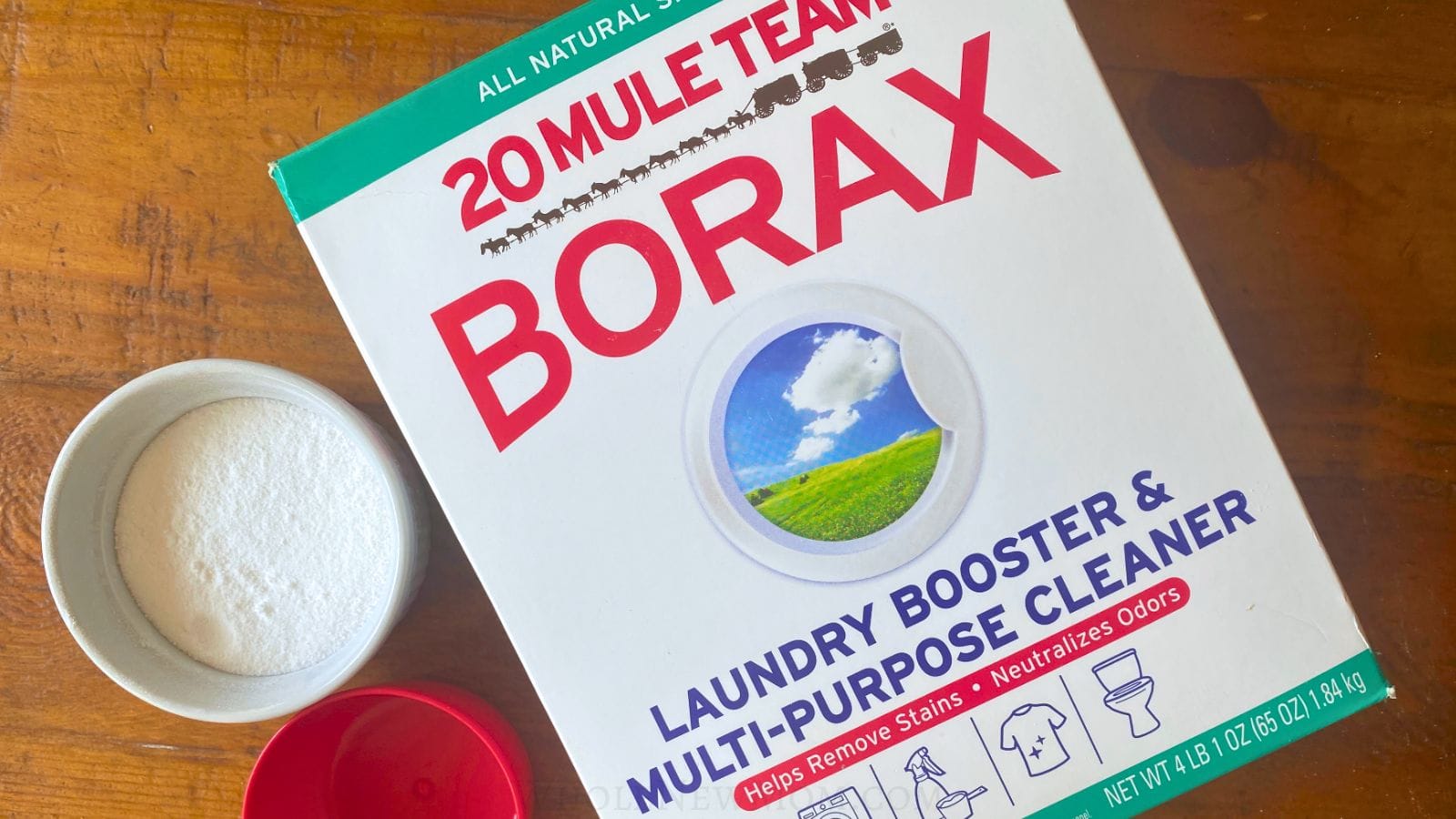
When I was a brand-new mom, I thought I would save our family money by using a non-toxic laundry detergent recipe.
Laundry explodes when you have a family, especially a little one who spits up a lot. And if you are using cloth diapers? That's a whole other story.
I had quit my job to become a stay-at-home mom and my husband was a PhD student which meant very little income and lots of tightening of the budget.
One way I worked hard to save us money was by making my own laundry detergent. I tried a few formulas including liquid and a powder made with Fels Naptha soap, and more.
However, along the way, I started hearing concerns about borax safety and wondered if I was causing myself and my family harm with my laundry DIY projects. The more I researched borax, the more confused I became. Some sources treat it like a dangerous poison, while another seem to think concerns were completely overblown.
Borax Safety Ratings
Though it's not perfect, EWG is a one place that many natural-minded people turn to evaluate the products that they make or use.
Upon checking the safety of some of the ingredients in my homemade detergents, I got an unwelcome surprise.
A D!? Yikes! What's even worse, EWG used to rate borax with an F!
Let's talk about what borax first.
What Is Borax
Borax is a naturally occurring mineral compound made primarily of sodium, boron, oxygen, and water. Its proper chemical name is sodium tetraborate.
Borax is mostly sold as a white powder and has been used for decades in laundry products, household cleaners, and some industrial applications.
Borax is related to boron, a naturally occurring element found in soil, water, and certain foods. However, borax and boron are not the same thing chemically. Borax contains boron in the form of borate compounds.
When dissolved in water, borax forms borate compounds in solution. Its alkaline nature and water-softening properties are part of what make it effective for cleaning and deodorizing.
Borax vs. Boron: What's the Difference?
Boron is a trace mineral found in foods and supplements. Borax is a mineral compound that contains boron along with sodium, oxygen, and water. Although related, they are not the same thing, and much of the confusion surrounding borax stems from discussions about boron's potential health benefits.
Why Does Borax Work?
Borax is highly alkaline, with a pH of around 9–9.5, which helps it break down grease, deodorize fabrics, and improve cleaning performance.
One reason borax is used in laundry is because it softens hard water. Minerals in hard water can interfere with detergents and leave residue behind, while softened water allows soaps and detergents to work more effectively.
Borax is also often used to help address odors, mildew, and buildup in laundry and washing machines or in damp or mold-prone areas of the home. Some people spray diluted borax solutions on surfaces as part of temporary mold-cleaning routines because borax is alkaline and has mild antifungal properties.
That said, I don’t consider borax a complete solution for significant mold problems or ongoing moisture issues, which need to be addressed at the source.
In addition, borax has mild insecticidal and antifungal properties, which is why it has historically been used in some pest-control and mold-cleaning applications.
Borax Safety Concerns and Precautions
While borax itself is not generally classified as a carcinogen, some regulatory agencies in Europe have raised concerns about reproductive and developmental effects from boron compounds at certain exposure levels.
Borax is also considered a skin and eye irritant, and breathing in the powder can irritate the respiratory tract.
Most concerns about borax safety relate more to repeated exposure and ingestion than to occasional household use.
Why Does EWG Give Borax a Poor Safety Rating?
One reason borax creates so much debate in natural-living circles is that organizations like the Environmental Working Group (EWG) give it relatively poor safety ratings.
These ratings are largely based on concerns about irritation, ingestion risk, and animal studies at certain exposure levels.
Some critics argue that EWG ratings occasionally blur the distinction between hazard and real-world exposure. In other words, a substance may be capable of causing harm under some conditions without necessarily posing the same level of risk during normal household use.
Personally, I think borax is one of those products where context, exposure, and how it’s actually used matter a lot.
Is Borax Safe for Laundry?
Borax has been used for laundry purposes for decades and is often an ingredient in homemade laundry detergents because it can help soften water, reduce odors, and improve cleaning performance.
Many people use borax in laundry without problems, particularly for musty towels, heavily soiled fabrics, or washing machines prone to mildew and odor buildup.
Borax is generally considered color-safe for most washable fabrics when used appropriately, although delicate materials should always be spot tested first.
Because borax is powdered, one of the main practical concerns is avoiding unnecessary dust exposure while handling it.
Why I Use Borax for Laundry
One reason I use borax in laundry is because washing machines—especially front loaders—can develop mold, mildew, biofilm, and persistent musty odors over time.
I’ve found borax helpful for odor issues, laundry buildup, and fabrics exposed to damp or mold-prone environments. I typically dissolve it in hot water before adding it to the wash.
Is it Safe to Ingest Borax Water?
Some people in natural health circles use very small, diluted amounts of borax as a source of boron, often calculating doses to match typical boron supplement levels.
While this approach is based on the fact that borax contains boron, borax itself is not intended or studied as a dietary supplement.
One important note about DIY borax water ingestion protocols is that concentration, dilution, storage, and consistency can vary widely, making it difficult to know exactly how much exposure one is getting over time.
Now, I don't personally think that every natural or traditional practice needs perfect standardization or expensive clinical testing to have value, and I can understand the reasoning behind using very small amounts of borax water as a boron source. However, some of the higher-dose or escalating intake recommendations that are sometimes promoted online give me pause.
Personally, I prefer moderation and obtaining boron primarily from food or supplements intended for consumption.
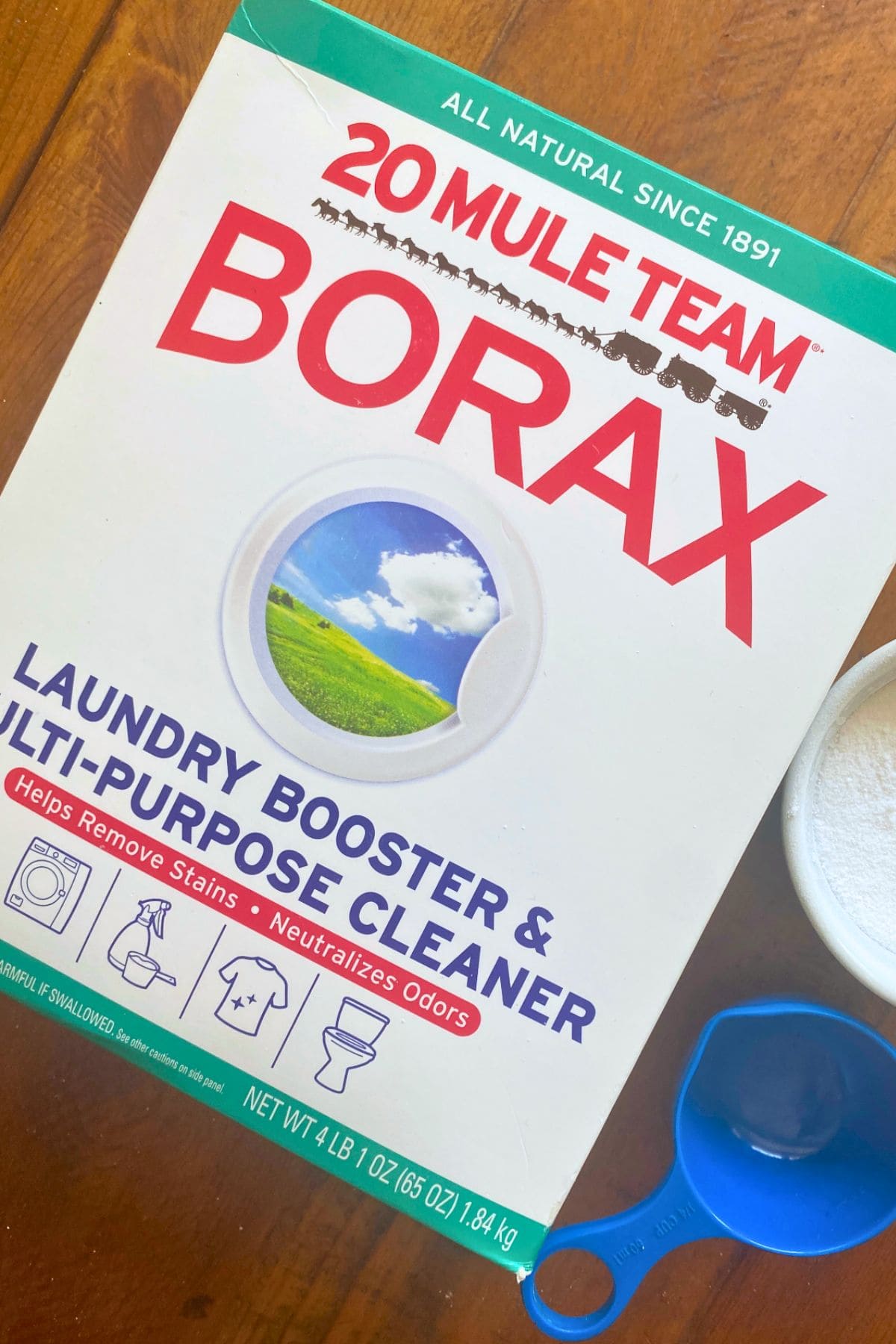
Common Questions About Borax
Is borax non-toxic?
Borax is often marketed as a more natural cleaning ingredient, but the term “non-toxic” can sometimes be misleading. While borax is generally considered lower risk than many harsh chemical cleaners when used properly, it can still irritate the skin, eyes, and lungs and should not be ingested.
Is borax safe for laundry?
Borax is commonly used in laundry to help with odors, stains, and hard water issues. Many people use it safely for their laundry, though it’s still smart to avoid breathing in the powder while handling it.
Is borax environmentally friendly?
Borax is a naturally occurring mineral and is sometimes considered more environmentally friendly than certain synthetic cleaning ingredients. However, “natural” does not automatically mean harmless, and large amounts of boron compounds can affect plants and aquatic environments.
Is borax carcinogenic?
Borax is not generally classified as a known human carcinogen. Most safety concerns around borax relate more to irritation and potential reproductive or developmental effects at certain exposure levels.
Is borax safe for colored clothes?
Borax is generally considered color-safe for most washable fabrics when used appropriately, though it’s always best to test delicate fabrics first.
Is Borax Safe? My Personal Conclusion
After researching borax more thoroughly, my own view has become more nuanced than simply labeling it “safe” or “unsafe.”
Borax isn’t the extremely dangerous substance it’s sometimes made out to be—but I also don’t think it should automatically be considered completely harmless simply because it’s natural.
Like many household ingredients (and most other things in life) context matters:
how it’s used, how much exposure there is, and whether basic precautions are taken.
I’m personally comfortable using borax for laundry and some household cleaning purposes, while still being mindful about handling it carefully.
For me, the most sensible approach is neither fear nor blind trust, but informed and thoughtful use.
I'd love to hear your thoughts about borax after reading this post.
Just to add to your research, check out “The Borax Conspiracy”. It is a very interesting read. As we know, there are a lot of people out there that don’t like the fact that sometimes the things that help us the most are inexpensive, and more natural and pure. Of course they want us to be buying THEIR products. Makes sense that you can find anything and everything on the internet that says what ever you want it to say. That’s where our trust and God given instinct has to fall in to place. TRUST in your own gut feeling in what you read!
Thanks, Cheri!
Excellent Cheri! You have those instincts for a reason. You really can’t trust most things anymore, i have discovered over the last few months.
Water is a chemical and it can be toxic. My background in chemistry has taught me that everything is a chemical and everything can be toxic based on how, where, when, and how much is used. Borax is not a bioccumulative compound, it does not cause cancer, and it is a natural as can be. People don’t need to freak out. As you said, it is up to each person to decide to use it or not, and although you said you were not going for scare tactics I am sure you do realize the title is meant to grab people’s attention, and it was written with the sock factor in mind. And with all these blog posts out there people just don’t know what to trust anymore. So sadly many will reads this article and go “OMG borax is toxic! Let’s stop using it altogether” and that is when bloggers do a disservice.
I don’t think Hilary wrote this to shock at all. I think she was very balanced and shared that this was her decision and not everyone’s. Now, if she had said “Borax is a killer. Get it out of your house NOW!” then that would be different. I do appreciate your “holding out feet to the fire” but I would check our her writing a little more and see if you don’t agree with me. Thanks.
I’m sorry, Athena, but I really wasn’t going for scare tactics. When I was a new – and naive – mom, I didn’t realize that everything is a chemical and that everything can be toxic based on how, where, when, and how much is used. Since I didn’t know and was surprised to find out, I thought other moms and pet owners would at least like to be informed and choose their own decisions.
I believe readers should carefully pay attention to the information in whatever blog post, newspaper or magazine article, or book they read. All writing should be read with discernment.
The same could be said about you. Just because you say it isn’t toxic because of your chemistry background, we should auto believe you. Back it up that it isn’t toxic.
Very informative. I do use Borax. Basically for cleaning my floors & the tub. I was using it in my DIY powdered laundry detergent and then found out that it really needs to be used with hot water in order for it to perform best. I almost exclusively wash in cold water. I did make liquid detergent with it before–but really disliked exposing myself to inhaling all those ingredients while I cooked it (it just doesn’t seem like the best idea to me). I have used it mixed with sugar for ant control. I will continue to use it.
Hmmm, must be used with HOT water, eh? I use cold or warm water most of the time…I wonder if that’s why my tea towels don’t seem absorbent anymore?? What to do, what to do? I have borax/washing soda/Linda bar soap (not Fels-Naptha) stocked up to make another batch of homemade detergent and I’m down to my last few scoops…
Does anybody who has used any variation of this recipe combo care to comment about its affects on laundry? Besides the lack of absorbancy in the tea towels now, my laundry also isn’t as white as it used to be. That doesn’t really bother me but I’m wondering if that’s normal?
The lowest published lethal dose for washing soda is 714 mg/kg , whereas the lowest published lethal dose for borax is 709 mg/kg (https://www.drugfuture.com/toxic/q126-q420.html). While the EWG gave them different grades, they have similar side effects for humans, and I certainly wouldn’t give either chemical to my children to play with. Exposure through laundry soap that you don’t expose skin to and rinse off of clothing with vinegar? No need for getting people worked up.
I’m so glad I didn’t just read the article and have a freak out moment since I’ve been using Borax in my homemade detergent for 2 years (with my 3 young children too!) I appreciate the response from Cindy with resources. If you’re writing a about potential health consequences please be sure you are using good sources. The possibly side effects named are scary and not backed up! I only follow a few blogs that I really respect, and I’m really disappointed in this blog.
Hello Missy. I think if you read the end of Hilary’s post you can see where she is coming from. She is concerned about her children’s exposure. I don’t think it is “over the top” scare tactics at all, but merely a mom doing what she thinks is best. Could you please clarify what you think is a bad source in the post?
I personally consider Andrea Fabry, another writer here, to be a very detail oriented and balanced thinker. Here is her post about Borax. She advises caution as well. I would love to hear what you think. Thanks. https://momsaware.org/household-general/139-borax-friend-or-foe.html
I completely agree about using good sources, Missy. It’s why I cited agencies and organizations who are accountable to the public. (And I do use the EWG’s consumer guides for my own purchases for my own family so I have some kind of a framework about the safety of products.) Like Adrienne, I also would like you to please clarify what is a bad source.
I had read Crunchy Betty’s post about Borax (Link deleted by Whole New Mom due to it not working anymore) last year and noticed she offers the same perspective as I have tried. The only difference is that she chooses to still use Borax and I don’t.
Like every product, it is completely up to you if you want to use Borax or not.
Unlike some cleaning products on the market that are unequivocally harmful, Borax is a personal judgment call. (And, as I explained, because my children help me clean, I’ve chosen to not use it in my home.)
I do love Andrea Fabry’s post about Borax, also. (https://momsaware.org/household-general/139-borax-friend-or-foe.html)
If you have a free moment to read Cindy’s resources, you’ll note that three of them are the same article reprinted in different websites – Walter Last’s “The Borax Conspiracy.” The other resource is Crunchy Betty’s post.
I’m glad you didn’t have a freak out moment; I certainly didn’t intend any scare tactics. (As I wrote in the post, the European Union studies show that Borax MAY cause damage and that animal studies were performed.) I just wanted to give homemakers something to ponder because natural remedies aren’t always flawless or completely harmless, even if we hope – or even expect – them to be.
I had purchased Borax to make my own laundry detergent. This is the one time I’m glad I procrastinated! I now use a green eco-friendly detergent from the store, and keep the Borax for pesky ant hills!
Scary!!! I have switched to baking soda and acv to clean my hair. One blog, can’t remember which right now suggested adding borax to the acv as an added conditioner. I did and it worked well to soften my hair, but after reading this I may as well have been using the store bought stuff. When the bottle I had mixed up ran out, I didn’t add the borax because I was in a hurry, and it’s on the back burner. Thank God! My son was using it also!
Hi Hilary, thanks for sharing this information. I just started using soap nuts for laundry to reduce my chemical exposures but toying with the idea of making my own detergent with borax. I am glad I read your article. 🙂
I use borax to kill weeds and ants, so, no, borax is not as safe as some people think. I treat borax like other chemicals: with care.
I love your perspective, Heather! It really SHOULD be used with care.
While I was looking for a recipes for homemade laundry soap, I began reading that borax was not as good as it was once believed. I do not use it anywhere else as a cleaner so I included in the laundry soap even though there are recipes without borax.