
16 Ways to Make Cut Flowers Last Longer and Homemade Flower Food Recipe
This post may contain affiliate links from which I will earn a commission. Learn more in our disclosure.
Fresh flowers can brighten a room, but they aren't cheap and it's disappointing when they wilt after only a few days.
Over the years, I've tried a number of ways to make cut flowers last longer, from changing the water more often to using homemade flower food. Here are 16 methods to try, plus the super simple mixture that worked really well for me.

Years ago, I wasn't a big fan of receiving flowers. Not because I didn't think they're beautiful—I always have. But I really struggled with spending money (or having someone else do the spending) on something decorative that only lasts a short time.
Watching a bouquet wilt a few days later made me sad, especially knowing what it cost.
My husband and I were on a very tight budget early on in our marriage. He was an MDiv and then a PhD student, and at one point I had to leave my job to take care of our newborn son. Talk about hubby having a fire under him to get his PhD done!
Anyhow, he bought me flowers and talked about it at other times, but after sharing why I wasn't thrilled about it, he changed gears and started bringing home wildflowers from walks and bike rides with our boys. In fact, some of my favorite arrangements have come straight from our yard—flowers that many people would probably call weeds.
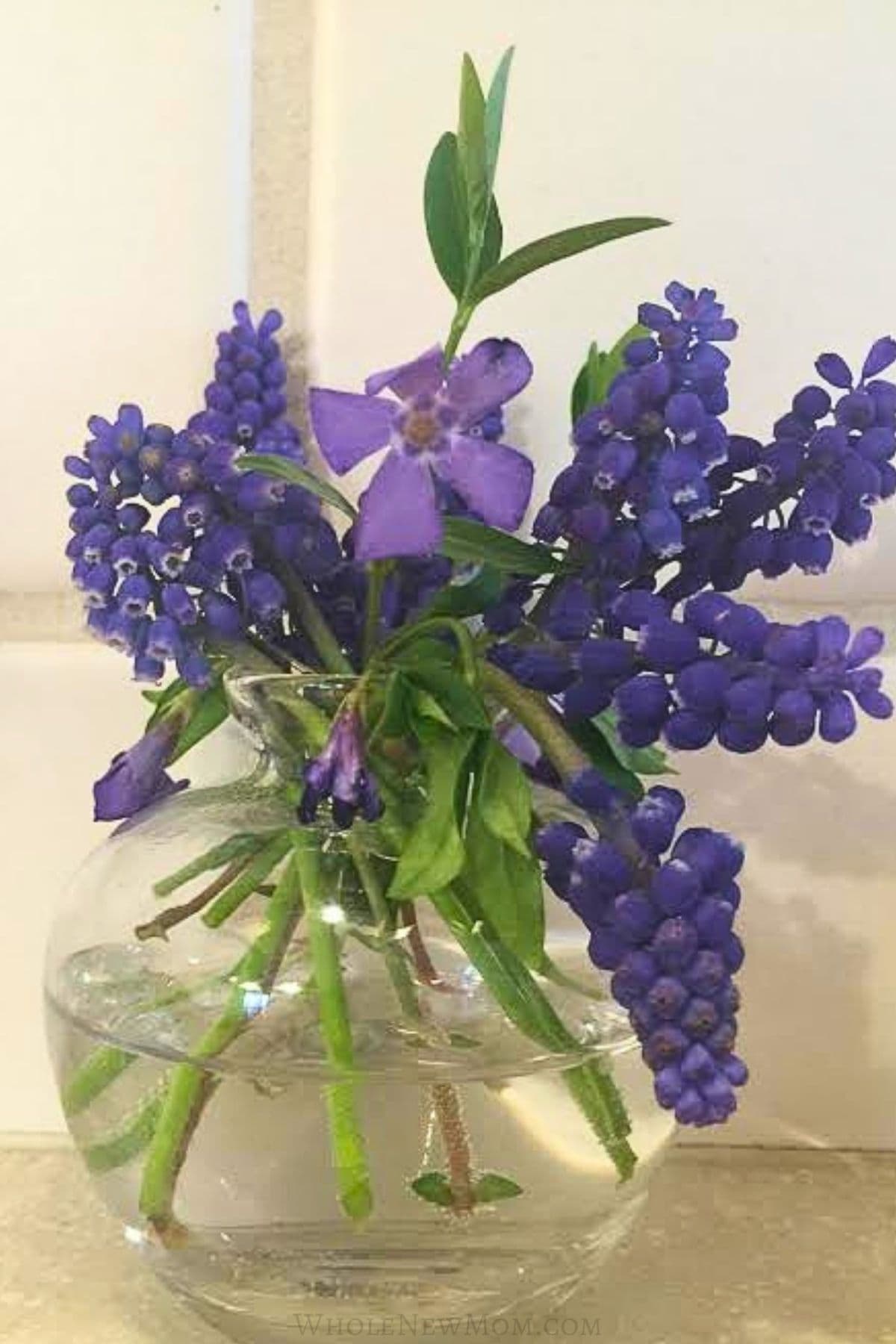
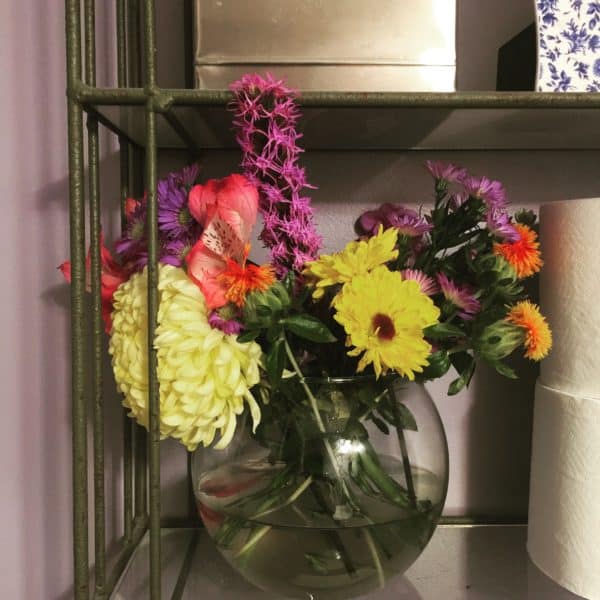
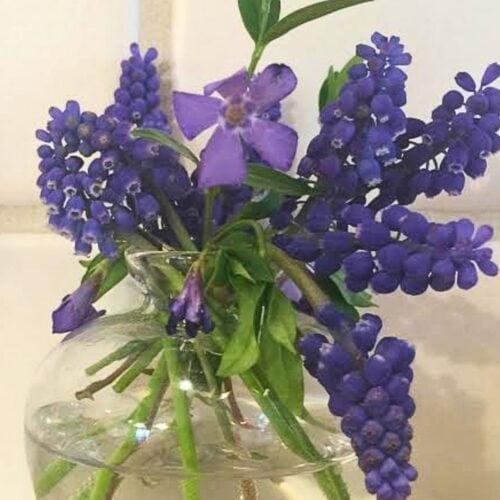
One of the photos in this post is exactly that: flowers picked from our front yard and placed in a small vase by the kitchen sink. They cost nothing and brighten my day and the time spent doing dishes and cleanup.
Of course, they also died pretty quickly, but at least high cost wasn't a factor and there were always more to be picked as long as it was warm outside.
I never really worked on making them last longer until one summer when something unexpected happened.
That year I went to a conference. Afterwards the centerpieces were left on a few tables, ready to be tossed into the garbage along with many other things.
The conference was absolutely lovely and the flowers were the perfect reminder of the time I had and joyful new friendships made.
I really wanted the flowers and the memories to last as long as possible.
Over the years, I'd looked up ways to keep flowers fresh, and some of the tips worked, while others haven't done so well.
So I got to researching what other options might work to help me keep my lovely flowers alive.
Here is a list of options that I pulled together. Each one has some merit, but we'll talk about what I chose and what worked really well for me and helped me keep my treasured flowers alive longer than I'd expected.
How to Make Cut Flowers Last Longer
Here are some tips that I pulled together to help keep your cut flowers in bloom longer.
- Trim – Trim the stems at a 45 degree angle before placing them in the water. This allows more water to be absorbed.
- Remove leaves – Remove foliage from lower part of the stem – the foliage is a great place for bacteria to grow which is something that shortens the life span of the flowers.
- Fresh water – check water level daily and add or replace the water as needed to keep it fresh.
- Use filtered water – filtered water removes tap water additives like chlorine and fluoride and also minerals in hard water that can negatively affect all cut flowers with some of these affecting certain flowers more than others.
- Sterilize the vase – bacteria shortens the life span of the flowers so putting them in a clean vase helps.
- Bleach – reduces bacteria.
- Keep dark – sun and heat encourage flowers to age/mature so darkness does the opposite.
- Vodka — Vodka, or any alcohol, might halt ethylene production, but it also might help prevent bacteria growth.
- Sprite — Some say that the acid in the water helps and others say that the sugar helps the flowers.
- Apple cider vinegar and honey or sugar — Vinegar is an antibacterial agent and the sugar in honey serves as flower food plus has some antibacterial qualities as well. Sugar can be used instead of honey, but lacks the added benefit.
- Refrigerator — Cold temperature slows aging of the flowers, but of course, you can't see them very often when they're in the fridge.
- Aspirin — Aspirin may lower the pH of the water, helping to keep the flowers fresher longer.
- Add a penny – The copper in “real” pennies is an acidifier that is thought to help keep flowers fresh.
- Flower freshness packs (the ones you get at the florist)
- Melaleuca essential oil
After looking over the above list, I decided to try the Apple Cider Vinegar and Honey option.
I really didn't feel like investing in those packs of flower freshness stuff, plus I found out that one of the ingredients in those Flower Fresh Packs is BLEACH (source)!
No thank you! Keeping flowers around longer in my mind isn't worth putting bleach into the environment.
Some of the other options weren't something I had or felt like spending money on (like Sprite). I mean, if I were going to drink the rest of the Sprite, I might invest in a bottle for my flowers, but since we struggle with candida here and soda isn't on my healthy list of drinks (we actually never buy soda except for possibly Zevia or Bai on very rare occasions), I wasn't about to spend money on it for this purpose.
We don't have aspirin in our house, and I had forgotten I had vodka (plus that's a pretty pricey way to keep flowers fresh, in my opinion), and didn't want my flowers in the fridge, of course, because it's hard to enjoy them when you can't see them.
So in went the Apple Cider Vinegar, Honey, and Water blend, and so began the experiment.
I had several vases, and I put most of them in rooms with light, but one vase went in the bathroom, which tends to be darker.
Three days after doing this, they all still looked pretty good, with the exception of the ones with stems that weren't hitting the water (oops)!
And interestingly enough, I later did some more research and found a test that ranked the vinegar-and-sugar method among the most effective options (source).
In my experience, the vinegar-and-honey method worked well and it just so happens that it's one of the simplest homemade options to try.
DIY Flower Food Without Bleach
Many homemade flower food recipes use a combination of a food source, an acidifier, and ingredients that help reduce bacteria growth. This simple version uses honey and apple cider vinegar and can be adjusted for any size vase.
Ingredients in Homemade Flower Food
Water: Fresh water helps flowers stay hydrated. Replace it every 2–3 days for best results. Filtered water may help flowers stay fresher longer.
Apple Cider Vinegar: Vinegar helps acidify the water and may help reduce bacteria growth. I like using apple cider vinegar in our home for food and personal care but I use regular vinegar for cleaning. Either will work for your flowers.
Honey: Honey acts as a food source for the flowers. Regular sugar can also be used instead.
Homemade Flower Food (Without Bleach)
Ingredients
- water (enough for the vase)
- 2 tablespoons apple cider vinegar
- 2 tablespoons honey
Instructions
- Fill vase with water.
- Mix vinegar and honey into the water.
- Add flowers.
- Change water and re-trim stems every 2–3 days.
Notes
- Remove leaves that would sit below the water line.
- Check water levels daily.
- Adjust vinegar and honey amounts for larger or smaller vases.
Frequently Asked Questions
What can I put in flower water to make flowers last longer?
Use a mixture of apple cider vinegar, honey, and fresh water. The vinegar helps discourage bacteria while the honey provides nutrients for the flowers.
Does honey help cut flowers last longer?
Honey may act as a food source for cut flowers and is commonly used as a natural substitute for commercial flower food.
How often should I change flower water?
Change the flower water (and add in the same helpful additives) every 2–3 days for best results.
Do flowers last longer in filtered water?
They often do better in clean water, especially when combined with regular water changes and stem trimming.
Do cut flowers need flower food?
Flower food can help extend the life of cut flowers, but many people use homemade alternatives made with ingredients such as vinegar and honey or sugar.
Do you like having flowers in your home?
What have you tried to make them last and has it worked?
I followed directions from another site. 3 tablespoons sugar, 2 tablespoons vinegar to a quart of water, the next morning all had dropped. Maybe honey will work!
How did it go for you?
I really enjoy having fresh flowers around the house, and I like this method for keeping flowers fresh for longer periods of time. I’ve also found that raw honey works really well for the same purpose. I was out of ACV when my husband brought me a bouquet and figured I’d try the honey in place of it and the sugar. Once a week I would change the water and rinse the stems while also removing any that were a little droopy. They stayed looking great for about a month!
Oh wow – a month – that’s a long time! Thanks for sharing. I bet it was food and natural bacteria resistance.
Thanks for the info! My mom used to use aspirin and sprite in our Christmas tree stand when I was a kid. FYI, you might want to edit a bit. Right now you have “Refrigerator — Cold temperature slows aging of the flowers” and “The Fridge – Cold temperatures slow the decay of the flowers” included in the list of ways to make flowers last longer, and you write “It’s pretty fun when you find out that what you chose to do was, in fact, the best choice of all.
Better yet, it’s toxin (and sugar) free!” Yet one of the main ingredients in the method is sugar. (This confused me at first…I was trying to figure out if you used some sort of substitute for sugar.)
Thank YOU!
I’ve been way too busy and missed those typos. I’m so geared on being sugar free that my fingers must have typed it automatically! 🙂
To make your lovely lilies last longer like the StarGazer ones…….Always cut off the pollen Stamens as they bloom! There is NO need for them to be putting energy into pollen since they have been cut away from other plants. It will definitely will make them last longer. you can leave the large middle stem just cut out the pollen coated ones.
How interesting – thank you!
I thought I was the only one who did not like getting flowers. I think it is a waste of money for something that will die in a couple of days. For mother’s day my children have just started to buy me flowers that can be planted. This way I can have them for the whole summer and it is easier on their budget.
You are not alone!! Yay :). Have them get you perennials and then you can have them every year! We have a bunch around out house and we are loving them!
My husband likes to buy me roses from time to time (when he gets a great price on them), and I have learned that after 2 days, if I pour all the water out, the roses will dry nicely. They look droopy, but they stay intact for a long time. I have many years worth of roses in vases around the house. Periodically, I will cull out the ones starting to literally fall apart, but this is usually after a LOT of time has gone by. We can’t afford a dozen roses at one time, but who cares when you get a few here and there and then put them together in a vase. My largest bouquet probably has 30 or more roses in it. I can enjoy them year round, not just at holidays or anniversary. One tip with this method–don’t put your vase of dried roses in front of a window when the wind is blowing in strongly! Don’t ask how I learned this!!
Oh wow. I love dried flowers! Do you have a tip for keeping them more dust free?
Thanks for the blowing wind tip :).
Unfortunately I don’t have a tip for dust free. Usually the adding in of a few flowers from time to time or the taking out of the ones falling apart keeps them looking good and the dust from accumulating too much. When they start to look pretty dusty and dingy then I know it’s time to throw them all out and start over. As much as I hate throwing them out, I also feel pretty good knowing that those roses probably have lasted 4-5 years.
4-5 years for roses is amazing!
If you hang them upside down to dry, they won’t droop.