
Is Stevia Safe or Is It a Danger to Your Health?
This post may contain affiliate links from which I will earn a commission. Learn more in our disclosure.
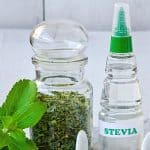
Have you been wondering if stevia is safe? Likely you've heard scary things about stevia, that it might be tied to infertility, genetic mutations, and more. It's frightening stuff, for sure.
Join me as I dig into all the research in this post to find out if stevia is safe or if it's a sweetener you should avoid.

I've been using stevia for a long time. We use powdered stevia extract mostly, but I also really like using Liquid Stevia Drops.
Well, after literally YEARS of using stevia, imagine my fear when a friend forwarded a post to me by a blogger who gave up stevia, claiming it was super dangerous.
I wanted to ignore it and stick my fingers in my ears and say “lalalalalala” until I made my next treat with stevia, like these no-bake coconut cookies, snickerdoodle cookie dough balls, or homemade chocolate chips.
But I had to know if something we eat a lot of was potentially that dangerous.
So into the research I dove.
It took a long time, but today I'll go through the concerns one by one so you can see the conclusion I came to, and then decide for yourself what you think.
What Is Stevia?
Stevia is an incredibly sweet sweetener that doesn't feed candida, so it's used by many who want to have something sweet without the bad “side effects” of sugar. You can buy it as a whole herb, a ground herb, as a white refined powder plain or added to other sweeteners and fillers, or in a liquid form.
Stevia:
- doesn't feed candida
- may help with blood sugar regulation
- doesn't cause caries (tooth decay)
- may reduce blood pressure when it is too high
- has no calories
What's not to love?
Claims About Stevia Side Effects
Well, it turns out that there are some of the claims floating around about the negative effects of stevia. Those claims include that stevia
- can cause infertility
- has a hormonal structure
- can act as a mutagen and cause cancer
- taxes the adrenals
- causes hormone issues
- causes hypoglycemia
- lowers blood pressure
- has dangerous additives
- is high in oxalates
- tastes bitter
Pretty scary stuff, huh? Let's see if any of these claims are valid.
My Responses to Claims Against Stevia
Unhealthy Additives
Stevia sold in stores and online is sometimes mixed with fillers and flavor enhancers like:
- maltodextrin
- glycerine
- dextrose
- cellulose
- erythritol
- the ubiquitous undisclosed “natural flavors”
I'm sorry but this whole thing is simply a ridiculous argument.
While bloggers who make this point about stevia safety are correct to point out that there are often unsavory substances added to stevia, this is the equivalent of saying that we shouldn't eat meat because it's often mixed with nitrates, the cows are often fed antibiotics, or it is often made into hotdogs.
Just.Buy.Stevia.That.Isn't.Mixed.With.Anything.Else.
In other words, buy Pure Stevia Extract.
Even if you buy stevia with some other ingredients added to it, they aren't problematic ingredients. For example, here are some things that are often added to stevia along with my thoughts.
- Glycerine is mostly a concern due to it often being made from soy, but there are non-soy derived versions.
- “Natural flavors” aren't always problematic. Sometimes they are what they say: all natural
- Erythritol concerns might not be what some claim.
Stevia Tastes Terrible
Yes, some stevia is sub par.
Some is just bad and even pretty horrendous-tasting. But there is also some great-tasting stevia out there.
I used to only use NuNaturals, but I am now on the hunt for a replacement because they've changed their formula. Of course, if you use too much stevia in baked goods and the like, you might get a bitter aftertaste no matter what, but there are ways to make stevia taste better.
I hope to find some more brands to recommend in the future.
Adrenal Problems
Is stevia safe for people with adrenal fatigue? The concern is that:
- you eat stevia
- your body expects glucose because it tastes something sweet
- your body lowers blood sugar (causing hypoglycemia) since it is clearing the way for glucose. Your body then sends cortisol and adrenaline to create sugar from your tissues. Thus you are causing stress on the adrenals by eating stevia.
I simply couldn't find any research to back this up. All I can say is that my adrenal issues are far better now (after years of eating stevia) than they were when I was eating sugar.
Plus there are plenty of places where folks recommend stevia over and above sugar and higher glycemic sweeteners in order to heal adrenal issues including here and here.
I do think that it's a good idea to make sure that stevia is consumed with other calories to mitigate any possible adrenal effect.
One important thing to note is that those who make this claim appear to be of the mindset that candida is not caused or aggravated by sugar consumption. I beg to differ.
Yes, candida is a complex issue, but yeast DEFINITELY feeds off of sugar. Just bake some homemade bread to see how yeast works (hint: it eats the sugar) and it's plain as day.
Linked to Hypoglycemia
Another concern brought up about stevia safety is that is causes hypoglycemia. This is tied into the adrenal issue cited above.
Well, I had hypoglycemia (I diagnosed myself at first because my doctor missed it) and I had it bad. I went completely off sugar at that point and started eating a bunch of stevia: more than I ever had before.
Now, my hypoglycemia is gone. Completely reversed.
Now, does that mean someone else couldn't have an odd reaction to stevia that might cause hypoglycemia? Of course not. If you're concerned, check your blood sugar after consuming stevia.
There are some studies showing that stevia helps control hyperglycemia, but that may or may not mean that it causes hypoglycemia. Note this study, for example, that found that stevia did not cause hypoglycemia.
Is Stevia Safe During Pregnancy?
One of the main concerns about stevia safety is that it affects fertility.
There's information floating around the internet that there are studies showing stevia causing infertility in rats, and there's also talk that stevia's been used in Paraguay for contraception.
Well, I think we can put this issue to rest. There have been several studies showing contraception issues with stevia, but they have all been debunked. You can read one here to read an extremely thorough article, with appropriate sourcing that addresses this issue completely.
Though I completely agree with the author of the above-referenced post. If you think stevia is causing issues with your fertility, stop using it. Just the stress of that concern might be enough to cause issues for you.
Stevia and Glycogen Synthesis
The argument here is that your body needs glucose to function and by eating stevia you're not allowing that to happen. Basically this is the same argument above related to hypoglycemia and adrenal issues.
However, in one post the additional argument was made that your body needs glycogen to convert inactive thyroid hormone T4 into active thyroid hormone T3.
The thinking here is that if you are using stevia instead of fruit and natural sugars, then you won't have sufficient glycogen. I don't know enough about this but I have been doing a lot of reading about the effects of low-carb diets on thyroid and adrenal health and I think it's worth considering that going completely keto might not be the best for your health.
However, I don't think that this argument necessitates giving up stevia, but it does mean that we ought to consider making sure that we have sufficient carbs in our diets. This post from Body Ecology and this one from Chris Kresser go into great depth regarding these low carb diets and adrenal/thyroid issues.
This study, in fact, shows that stevia helps with glucose tolerance. This study also suggests that stevia can help balance blood sugar. If that's the case, then concerns about stevia safety as it relates to glycogen synthesis seem to be invalid.
A Hormone in Disguise?
Several bloggers mentioned that stevia is synthesized in the same pathway as 2 plant hormones, and that it ends up being structurally similar to those hormones.
Again, this is something that I could not find anything about on the internet. And just because something is synthesized in the same way or is structurally similar to hormones, that doesn't mean it is a hormone.
Take NaCl for example.
Salt is fine to eat and we sprinkle it on food all the time. HCl, however, is stomach acid and we would do damage to ourselves if we sprinkled it on our food. I take HCl as a dietary supplement as mentioned here, but it would cause serious damage to your teeth and esophagus if you sprinkled it on your food.
Just because something is similar to something else doesn't mean that it has the same qualities as that thing. I did, however, read a very detailed article on stevia safety that stated that it isn't that stevia is synthesized in the same way as gibberellin and kaurene but that the plant is making kaurene and can either make gibberellin or stevia. Sadly, I can't find that article any longer.
I feel like more research is warranted on this topic, but I do think I feel at peace enough to not worry about it.
Stevia and Oxalates
Oxalates are naturally occurring substances in foods, but some people are very concerned about reducing them in their diet because eating too many of them (without balancing them with calcium intake in particular) can lead to kidney stones, hypercalciuria, and other things.
One of the bloggers who wrote about stevia being dangerous to consume initially wrote that stevia it is high in oxalates, but she later removed that from her blog post.
However, since it was initially there, and also since oxalates are getting more attention these days, I'll address it.
Even if stevia were high in oxalates, the amount of stevia used is so small that it doesn't amount to much and should not be a concern since oxalates are everywhere.
Also, most high oxalate foods have lots of nutritional benefits so it's important to not risk poor nutrition by limiting your diet too much. I think it's much better to reduce your sugar intake for a very minimal risk regarding oxalates.
Additionally, there's evidence that gut bacteria play a big part in whether or not you will have oxalate issues. This post on the gut brain axis can be of help, or this post on finding a good low-histamine probiotic can as well.
Finally, it appears that any oxalates in stevia are only present in the whole leaf form, and not in the extract. A quick search on the internet shows many sources stating that “chemical stevia” (which appears to be the term they are using for stevia extract) has no oxalates, which makes sense since oxalates are in plant food and the white powder is just an extract and not the part of the plant that has the oxalates.
If you like using the whole leaf form, it seems that there are about 46mg in a 1 teaspoon size serving.
Since stevia (even ground leaves) are much stronger than sugar, you're not going to be ingesting a whole teaspoon at once, and high oxalate foods are those that have 100 mg or more of oxalates per serving. Add that to the fact that almost all people who use stevia are using the extract, so I think this is a non issue.
Side note, I've also learned that aspergillus and other molds create oxalates, so it you have an oxalate problem, you might want to see if you have a mold problem in your home.
Causes Mutagenic Reactions and (Yikes) Cancer
I read in several places that stevia can cause mutations and even cancer. Scary stuff.
Thankfully, one of the posts on stevia safety did clarify that the studies that appeared to demonstrate these risks were in the minority and that the amounts of stevia fed to subjects were quite high so they are typically discarded in discussions questioning stevia's safety.
This study is one showing that stevia consumption does not cause genetic problems. From the study:
these substances do not pose a risk of genetic damage following human consumption.
And here is this study with a similar conclusion.
Furthermore, in one study that is often cited regarding mutagenic reactions to stevia, the synthetic chemical structure of stevioside is being examined rather than the stevia leaf itself (aka rebaudaside A, M, etc.). The study is suggestive and not conclusive.
Also, they stated in the study that the topic needs to be studied more.
Finally, this study was done in 1985, which was before machinery, isolation, and extraction techniques were very different than they are today so that needs to be taken into account as well.
Allergic Reactions and Stevia
The big claim here is that stevia isn't safe for those with ragweed allergies.
So, I thought for a period of time that I was allergic to stevia and yes, I'm allergic to ragweed.
I would use it and seemed to have sinus and eye symptoms from it. Over time I did more tests, however, and finally came to the conclusion that I am not allergic to it.
Please do note that stevia is related to daisies, chrysanthemums, ragweed or marigolds. It's possible that if you are allergic to these plants that you might have a cross-reaction to stevia.
But that is not the case for everyone and I am proof positive of that. Bottom line; anyone can be allergic to anything.
However, at the same time, just because you are allergic to one thing, that doesn't mean that you are allergic to everything that is related to that thing.
You also can either avoid the food or address internal issues that are causing your immune system to overreact, or both. But just because stevia might cause allergies for some people is not a reason for everyone to avoid it. Of course anyone can be allergic to anything and we all can't avoid everything. Also, please make sure to read the next section which addresses another possible cause for reactions to stevia.
Often Processed with Chemicals
Is stevia produced safely?
Some stevia producers use chemicals to produce their stevia extract. For that reason, I only choose stevia from companies that do not use chemicals for processing their pure stevia extract. This post on how to use stevia has more information about that.
If you're having reactions to stevia, one possible issue is that you're reacting to how the stevia is processed. If the manufacturer is using clean processing, then that concern would seem to be a non-issue.
Causes You to Eat More Sweets
Some people are concerned that sweeteners like stevia can cause your body to expect glucose and therefore you end up craving and eating more as a result. Apparently, this happens particularly in those who are sugar-sensitive.
Note that this would apply to all low carb sweeteners and not just stevia, which is the case for many of the negative claims here. I've heard about this concern before, but personally I haven't experienced this. In fact, I think I crave sweets more and eat more sweets if I eat “real sugars”.
Is Stevia Toxic for Your Liver?
This is a recent addition to the list of concerns. One of my friends said that a friend's herbalist told her that stevia causes problems if you have liver disease.
I couldn't find anything backing up that claim. To the contrary, I did find a study showing that stevia actually reduces the accumulation of fat in the liver of obese mice (source). So I don't feel that concerned about this issue and am not sure where this herbalist got this information from.
Causes Nervous System Problems
A reader shared an article with me stating that stevia contains compounds (beta-caryophyllene and caryophyllene oxide) that may depress the activity of your central nervous system. This really perplexes me. I recognized those terms as being beneficial terpenes so I decided to see what they were referring to.
The answer? I have no idea.
In fact, beta-caryophyllene is known to have protective effects on the nervous system (source).
And caryophyllene oxide has also been shown to have loads of benefits as well (source). I did find one study talking about the potential for some depressing activity of these terpenes (which I assume is the source of this information) but it's not appropriate to evaluate a substance based on one small part of it. For example, you wouldn't say that an essential oil is bad because it has one of these terpenes in it.
The same article made a lot of other claims, none of which had links to any sources verifying the information, so I think that this claim is dubious at best.
Conclusion
So, is stevia safe?
If you're concerned about stevia's safety, here are my basic final thoughts. I think that there are numerous benefits to using stevia and I also think that the concerns are largely unfounded.
For those of us struggling with candida, blood sugar issues (like diabetes and insulin resistance) or trying to eat a low carb diet, I think there is likely no better thing to put in your cuppa (whether it's coffee or this coffee substitute), or homemade sugar-free lemonade.
Or even bake with. Because life without brownies is hard, right?
Basically, my answer to the question, “Is stevia safe?” is “yes!”
More Research-based Health Posts
Oh, and by the way, it doesn't mean I can't be wrong, but this kind of research is basically my (sugar-free) jam. I thrive on this.
You can see more posts like this here:
- Is There Paint Thinner In Your Cereal? – and if so, is that bad?
- Is Glycerin Bad for Your Teeth? – or is it your teeth's BFF?
- Is Costco Coconut Oil Junk or the Real Deal? – find out why some people claim it's total garbage and what I think about that.
- Heavy Metals In Cosmetics—What You Need to Know
- Is Your Probiotic Making You Sick?
What do YOU think?
Do you use stevia? Will you keep using it?
When you receive some of the Trim Healthy Mama stevia, I think you’ll find that it is manufactured as purely as the authors could get it manufactured, and it tastes much like the NuNaturals used to taste. We use it all the time and are so thankful to have found a pure stevia extract (THM’s is 99% pure) to use in our cooking and baking.
Looking forward to trying it. I have several others to try as well that are made purely so we’ll see how it goes – thanks!
Ive been using Stevia for ten years with no ill effect My friends tell me say I look ten years younger than my real age
Do you think the stevia is why? I think many of us will bathe in it if that’s the case. 🙂
Thank you for this article! I have been hearing “bad” talk against Stevia for quite some time now. I’ve often wondered if it’s coming from other sources who don’t want to see people moving away from using their product (Crystal Cane Sugar Grower’s and HFCS anyone?). Stevia is very sweet; a little goes a LONG way. When you get to the point in your evolution with food–that is, you have changed your eating habits to that of organic and healing the body through nutrition–the whole end point should be to get AWAY from excessive consumption of sugar. Any type of kind of sugar. To that end, nobody should be substituting Stevia for endless amounts of sweets/deserts anyway; one should be cutting DOWN on the amount of sweets they eat, only making something special every once in a while. If a person is working on this, then right out of the gate, they should have drastically lowered their need to use a better sugar like pure maple syrup, raw honey, Stevia, pureed fruit/dates, etc. anyway.
The whole point to eating better is to curb our relentless need and want for something sweet. Americans as a whole eat way too many sweets, even if they are made with “good” sugars. (And I know how hard it is to give up sweets! I am finding it very hard to cut back. I’ve been using Stevia myself for the past 6 years to get rid of Candida as well as pure maple syrup and raw honey in as small amounts as possible I can get away with in my baking.)
I did not know, though, that there is/could be a cross-reaction between Stevia and those with allergy to daisies, chrysanthemums, ragweed or marigolds. That is VERY valuable information that I will definitely put away in a folder. Thank you!
I don’t know about that. Seems some of it is from the crowd who encourages eating sugar and that sugar doesn’t feed candida but I am not sure.
I have a killer sweet tooth but it is better than it used to be. I agree that we all need to work on that.
Thanks for the kind words!
Great post! I’m very curious, what is your opinion on erythritol? I’ve recently discovered it and have been using it quite often. I have read mixed things on it but I’m not sure what to think. I do love it using it since it is very comparable to sugar in taste and measures the same in baking to replace sugar. I’m really hoping the unhealthy claims are untrue but if it isn’t a healthy choice I would like to know.
I have mixed thoughts on sugar alcohols – just not sure. I prefer xylitol typically or a blend of multiple sweeteners but I have been sticking to only stevia and glycerine recently due to a new gut healing protocol. It doesn’t really measure the same as sugar – it’s about 70% as sweet so you would normally use about 1 1/3 of the amt the recipe calls for. But I typically cut sweetener recommendations so perhaps you are right. I think the manufacturing process doesn’t sound great but I think it’s likely better for me than sugar. I have to read more about it.
Here is some research I’ve done on erythritol you may find helpful (Link deleted by Whole New Mom due to it not working anymore)
Thank you for this post! I’ve heard about the hypoglycemic issues from numerous sources. I once asked my holistic nutritionist about it and she said stevia is safe to use, Good to know you have researched this topic and have info to back it up! I rest easier.
You are so welcome!! It took a ton of time but I needed to do it for me too!!!
Great post. I would add a small bit of food for thought on number 3. “your body expects glucose because it tastes something sweet” is a factor in a different way in that your receptors are primed to receive sweet (just like you are saying), and it helps create hunger because it didn’t get what it was looking for, just like an artificial sweetener (except that stevia is safe.) You may find that you experience more cravings as a result, especially those who are sugar sensitive. (Kathleen DesMaisons wrote an amazing book “Potatoes Not Prozac” which explains in details about the special receptors for sweet things and the affect it has on the body.)
You are right. I have read about that but I don’t have that issue. Thanks!
Thanks for doing the research. I really do appreciate the time and energy you put into your articles.
Thanks so much. This was a loooong one for sure.
I love your blogs and your research. Thank you for settling this in my mind.
Thanks so much!
Thank you for addressing the fact that it can cause infertility and miscarriages. I’ve been trying to avoid stevia for that reason, but I didn’t know all those other things about it. Thanks so much for the informational read! 🙂
Thanks so much, Margaret!!
Excellent post! I think I may be reacting to stevia, but I am also allergic to ragweed (for now, while I try to improve gut health). But I use it for my hubby’s tea. The ladies at Trim Healthy Momma have begun producing their own line of stevia sweeteners that supposed to be like NuNaturals was before the formula change. I also ran across a website that explains how to make your own stevia extract at home, but since I’m not willing to buy vodka I won’t be doing that (water or glycerin can also be used, but the result is less sweet and has a much shorter shelf life).
Thanks for another informative post. I’m a long-time lurker who refers others to your website regularly. 🙂
Hi there. Thanks! I should have some of the Trim Healthy Mama stevia soon and hope to try a bunch of kinds. I did try some but it all got pretty confusing so back to the drawing board. I did buy vodka for making vanilla but it felt odd :). Not that I have a real thing against alcohol but I’m not a drinker. Thanks again!
If you are allergic to ragweed you should avoid chicory root – does your stevia product you are using have this added to it?
Thanks, Roni. Interestingly I have allergies to ragweed but I have no issues w/ chicory or stevia.
Interesting I replied to Morgans post that is above yours. She states she thinks she is having a problem with the Stevia and is allergic to ragweed. I wonder why the response was tied to your posts. Oh well.
I am sorry about that. I will talk to my IT people to see what might be wrong. Thanks for letting me know!
I see – I had replied to her already so it looks like that must be the default way that the plug in sorted it out.