
How to Make Shredded Coconut and Coconut Flakes
This post may contain affiliate links from which I will earn a commission. Learn more in our disclosure.
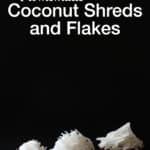
If you love coconut, you'll love how easy it is to make shredded coconut and coconut flakes in your kitchen in just minutes.
It's pretty easy to do and you can make a sweetened version as well using any sweetener you like and no icky preservatives!

Dried coconut shreds and flakes are great to have in your pantry for so many uses, especially if you're eating a low-carb diet.
We eat a lot of coconut in our home including coconut butter, shredded coconut, and coconut flakes. We love coconut in all of these forms, but when you can make it fresh, it's even better.
Before I get to that, why do we eat so much coconut? Several reasons.
Why You Should Make Your Own Dried Coconut
- No Additives – Most dried coconut in the stores has added sweeteners (typically refined white sugar) and preservatives (typically sodium metabisulfite). You can avoid all of that when you dry your own coconut.
- Fresher Than Store-Bought – Who knows how long those products have been sitting on the shelf.
- Great for Many Dishes – Coconut is super versatile as both a main ingredient in dishes (like these No Bake Coconut Cookies or No Bake Almond Joy Bars) or as a garnish like on this Cranberry Smoothie Bowl.
- Food Allergy Friendly – Dried coconut is great for making so many things like coconut milk and coconut butter, both of which are a huge help for allergy-free baking and cooking.
- Low-Carb/Keto Friendly – With so many watching their carbs, coconut is a great ingredient that isn't high in carbohydrates.
- Stores Well – Dried coconut stores quite well.
Directions
Here are the basic directions. For the full list, scroll down to the Recipe Card.
Crack open the coconut. Scrape out the interior. Cut/shred the coconut meat to the desired texture. Dry in oven or dehydrator, sweetening if desired.
How to Sweeten Coconut Shreds and Flakes
For every cup of coconut that you want to sweeten, combine the desired sweetener with water in a saucepan to make a syrup. Coat the coconut with the syrup and then dry in a dehydrator or oven on low as instructed.
How to Use
You can use these Homemade Coconut Shreds and Flakes anywhere you would use coconut. Here are some of our favorite recipes:
- Homemade Coconut Butter
- No-Bake Coconut Cookies
- Chocolate Avocado Truffles
- Healthy No-Bake Chocolate Mint Bars
- Healthy Birds Nest Cookies
- Healthy Mounds Bars
- Caramelized Toasted Coconut Chips
- Honey Bunches of Oats Coconut Chips

Now if you live in some place that doesn't have coconut chips or shreds, or if they just happen to be out of stock, you can make them yourself.
Or, if the only coconut available to you is coconut treated with icky sodium metabisulfate preservative, here's your non-toxic delicious coconutty solution.

Homemade Coconut Shreds and Chips
Ingredients
- Fresh Coconut
Instructions
- Break open coconut with hammer. Remove the hard outer shell. Peel the soft outer shell with a vegetable peeler.
- Grate the fresh coconut meal according to desired result. Use small holes for fine shreds, normal big holes for typical shredded coconut, and use the grater slicer for chips. Alternatively, for the chips, peeling with vegetable peeler makes a cleaner and more attractive chip — but it is a bit thicker.
- Dry in oven, convection oven, or dehydrator. How long they take to dry will depend on the size of the coconut pieces and the temperature of your oven or dehydrator.
- Spread the coconut chips or shreds in a single layer for drying. Here are some ideas of how long it will take each size to dry. Small and medium shreds will take about 2 hours for small and 3 hours for medium in a 100 – 125 °F (40 – 50 °C) convection oven. The chips will take a little longer and will dry in a dehydrator in about 6 hours at 125°F.
- The chips will dehydrate in about an hour in a regular oven at 60ºC/140ºF. It may take longer, depending on your oven. Note that over 125°, the coconut will not be considered raw.
Sweetened Version
- For every cup of coconut that you want to sweeten, combine 4 teaspoons of sugar or a low-carb sweetener like xylitol with 1/4 cup water in a saucepan.
- Heat over low heat until the sugar dissolves and makes a simple syrup.
- Add the coconut to the pan.
- Remove from the heat and stir occasionally until the liquid absorbs.
- Spread the coconut on a baking sheet let it dry in the oven, in a dehydrator, or at room temperature.
Toasted Version
- For toasted sweetened coconut, leave the coconut in the oven until lightly browned.
- Make sure to check on it after 15 minutes or so, toss or stir well, then return to the oven and check every 10 minutes to shake and toss to prevent burning.
Nutritional information is provided as a courtesy and is merely an approximation. Optional ingredients are not included and when there is an alternative, the primary ingredient is typically used. We cannot guarantee the accuracy of the nutritional information given for any recipe on this site. Erythritol carbs are not included in carb counts since they have been shown not to impact blood sugar. Net carbs are the total carbs minus fiber.
Do you love coconut?
What is your favorite way to eat it?
Photo credits: Naomi Huzovicova
I would like to make coconut smallish size chips for coconut custard pie. Just as the person in Slovakia wrote, there are none in Czech Republic, either. I don’t want them toasted, just dried. I have no dehydrator. Nor is my oven a convection one. Is it possible to do this in my regular oven? If so, what temperature and how long?
Hi there, Elaine! I just updated the recipe card for you – does that help? Let me know and thanks! Hope it works out well for you!
Hello!
So, I’m from Kenya.. We have desiccated coconut and plenty of fresh ones.. But no flakes (Sweetened or unsweetened)
I’ve had to to use dedicated coconut for Macaroons.
Now, I’m a baker and want to try a German Chocolate Cake and other desserts along those lines (like German Chocolate French Macarons) and also try Macaroons the right way..
I’m just wondering.. Will the flakes remain white? I’ve tried sun drying some in the past but they browned ????? will the methods you’ve mentioned keep that from happening?
Thanks!
Hello there! If you use a dehydrator they will not brown. Hope that helps and best wishes.
You would not want to dehydrate at a high temperature, however.
We love coconuts too! We live in Florida where coconuts are aplenty! I’ve been toasting coconut flakes as long as I can remember. I simply throw a bunch of chunks in a blender and end up with mostly flakes, and a few chunks. Toss them through a colander to separate the smaller pieces from the larger chunks. The chunks I will “blend” again with another batch. My problem was, whenever I tried to dry the flakes they ended up toasted. Toasted coconut is great, but I don’t always want it toasted for recipes. I simply could not just dry them out. I’ve learned to, not only lower the temperature of the oven, but place a pan on the shelf above the coconut so it isn’t being toasted from above. It’s quick and easy!
Great tips!!! I think toasted coconut tastes like candy–it’s amazing! I think you would like these: https://wholenewmom.com/recipes/honey-bunches-of-oats-coconut-chips/ 🙂
Hellooo could you tell me what temperature ?