
Easy Homemade Hand Cream Recipe (Non-Greasy)
This post may contain affiliate links from which I will earn a commission. Learn more in our disclosure.
Looking for an easy homemade hand cream recipe? This one is a keeper. It’s rich enough to deeply moisturize dry hands, but it has a lighter, less greasy feel than many DIY hand creams.
This simple DIY hand cream uses nourishing oils and butters, comes together quickly, and can be customized with essential oils if you like. Even better, it works beautifully as a homemade hand lotion for dry skin, especially in winter.
This recipe is especially great if you have dry hands, wash your hands frequently, or want a natural, non-toxic alternative to store-bought hand creams.
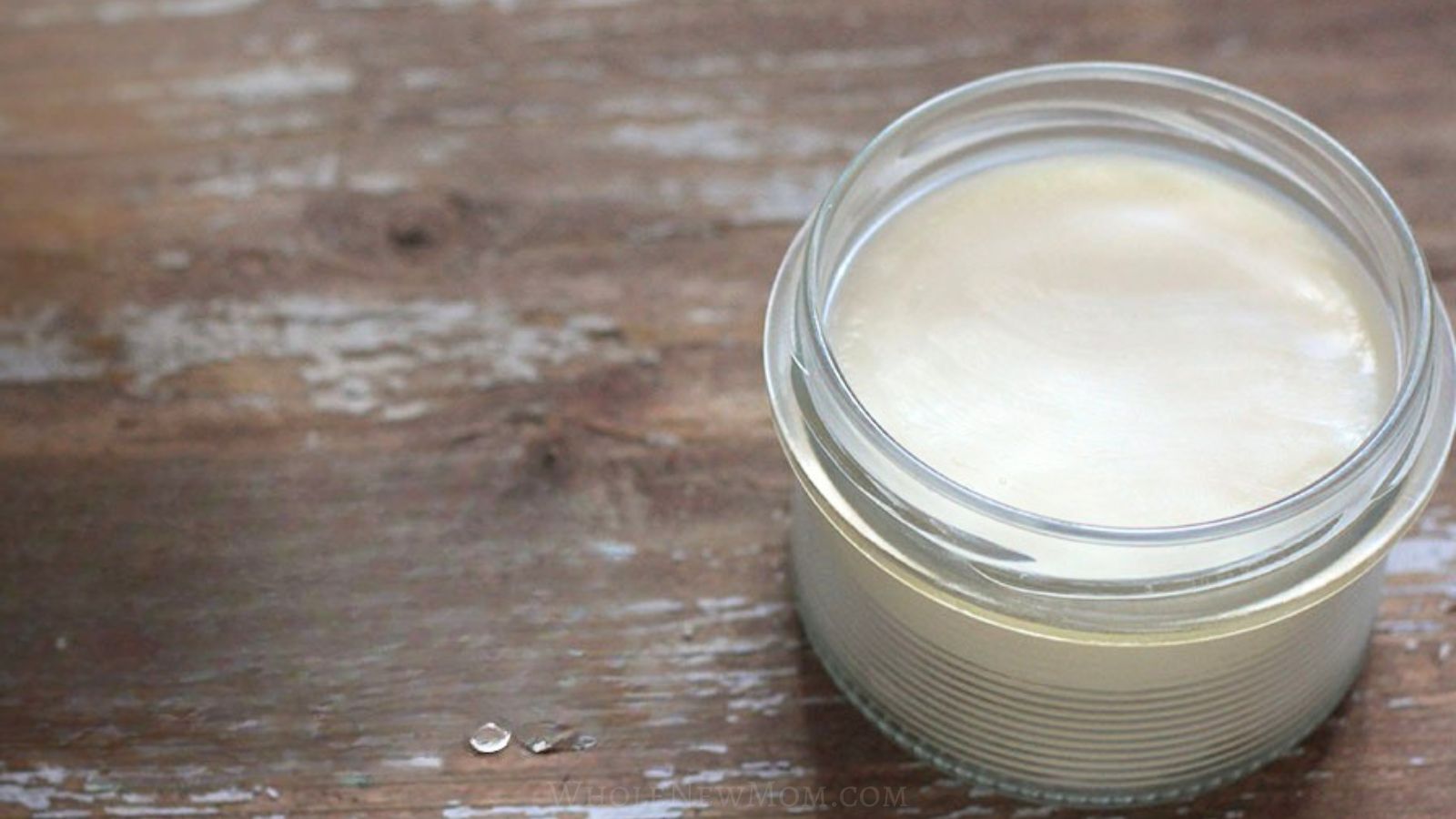
I love making as many of my personal care items in order to cut down on toxins in our home and on our bodies.
I've made Eye Makeup Remover, Alcohol-Free Hairspray, Sugar Scrub, Nourishing Lip Scrub, Hair Rinse, Homemade Body Wash, and more. I've been looking for a homemade lotion recipe that works for a long time, and I finally have it.
I can't stand forking out a ton of money for something when I can make it for a fraction of the cost myself.
This recipe is based off of a recipe that one of my readers shared with me. I liked it a lot, but ended up tweaking it to make it even better.
Why You’ll Love This Hand Cream
This homemade hand cream is
- deeply moisturizing for dry hands
- non-greasy compared to many DIY hand creams
- easy to make with simple ingredients
- customizable with different oils, butters, and scents
- doubles as a hand lotion or body cream
Why This Hand Cream Works Better Than Lotion Bars for Me
I love the concept of lotion bars, but I've found them to be hard to use due to how long it takes for them to soften. When I try to use them before they’ve softened enough, they pull on my skin, which I don’t love.
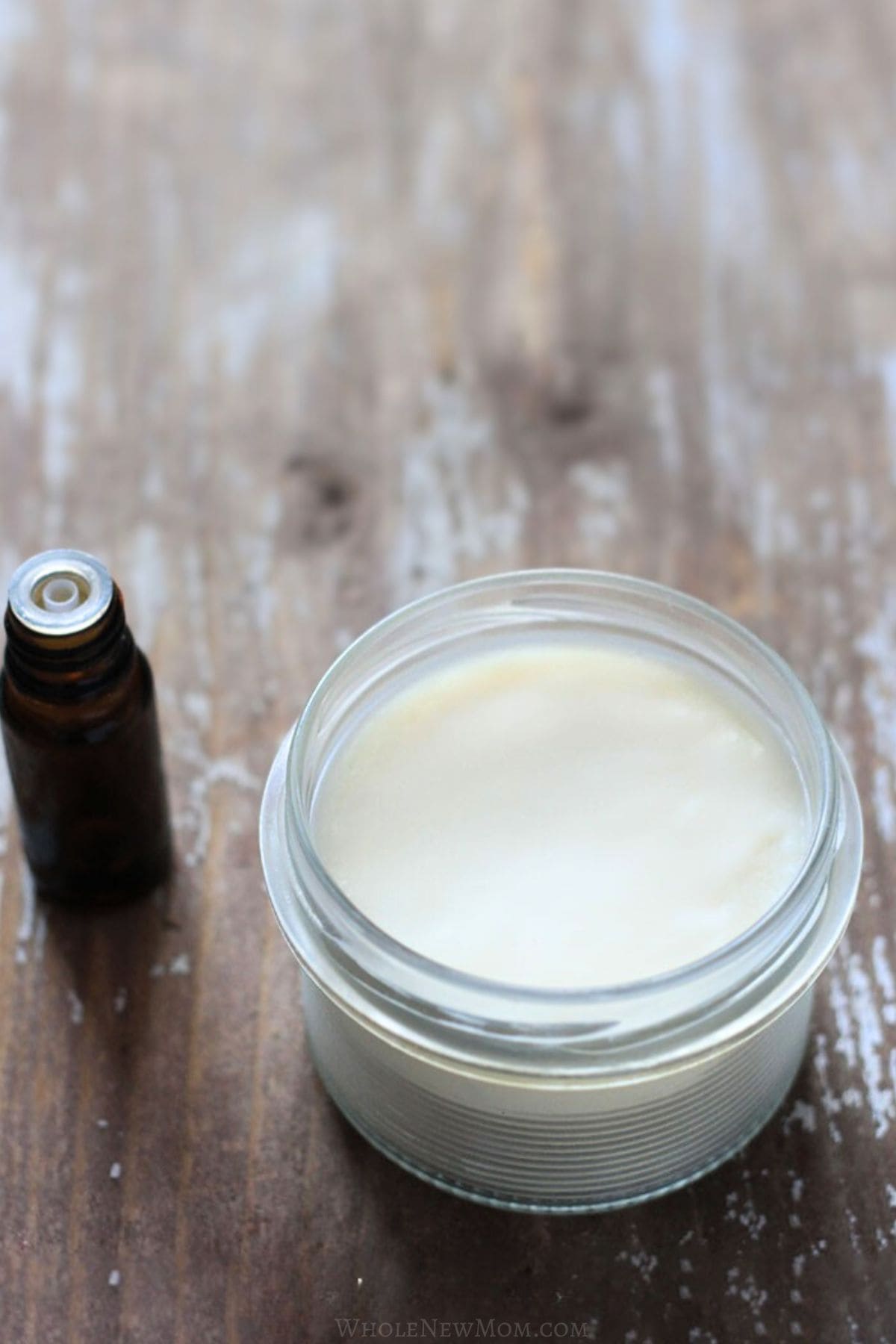
This hand cream is solid at room temperature, but it isn’t super hard and softens up really quickly in your hands, even in our home in winter, and we don't keep our heat turned up that high.
Why This Hand Cream Feels Less Greasy
The simple step of adding arrowroot powder helps this hand cream feel much less greasy on your skin. So simple!
Arrowroot is a great oil absorber. It can be used for removing oil stains from clothing and it’s also a great ingredient in DIY dry shampoo. In fact, we often use arrowroot on its own as a super quick “I didn’t have time to wash my hair” solution.
Of course, arrowroot doesn’t remove all of the oil in the recipe (that would be ridiculous), arrowroot absorbs some of it so that the resulting lotion is a great consistency and also a non-greasy treat for your skin.
You can also use cornstarch or tapioca starch, and you should get the same or a very similar result.
How to Use This Homemade Hand Cream
You can use this homemade hand cream
- before bed
- any time of day for dry hands
- to soften cuticles
- for rough patches anywhere on hands or body
- elbows/knees if desired
You can simply apply this hand cream anytime, but here are a few ways to make it work even better.
- Use a Sugar Scrub followed with this cream for hands that feel super soft and revitalized. The moisture left from rinsing off the scrub is sealed into your skin by the cream.
- Put this body cream on before bed (misting your body with some water first is best) and wake up to healthy, nourished skin.
Hand Cream vs. Hand Lotion: What’s the Difference?
Hand cream is usually thicker and more concentrated than hand lotion, which makes it especially helpful for dry or rough hands. This recipe has the richness of a hand cream, but thanks to the arrowroot, it feels lighter and less greasy than many homemade versions. So while I call it a hand cream, many people would think of it as a homemade hand lotion too.
How to Customize This Hand Cream for Different Skin Needs
By choosing essential oils for your specific skincare need, you can turn your lotion from being simply moisturizing to something that really addresses what is going on with your skin.
- Dry or aging skin? Try rose or geranium.
- Need to be energized and refreshed? Try lavender, lemon, and grapefruit.
- Troubled skin? Try helichrysum, frankincense, lavender, sandalwood, chamomile, rose or jasmine.
- Want to avoid stretch marks? Try helichrysum, lavender, patchouli, neroli, rose, or geranium.
Recipe Notes
- Essential Oil Options: Use whatever combination you like. I've used orange, which was really heavenly smelling, especially combined with the fragrance of the coconut oil. It smelled kind of like a creamsicle. Lavender would be very soothing as well.
- Butter/Oil Options: This recipe is very versatile. I've used extra coconut oil and shea butter when I was out of cocoa butter, and it still turned out great.
- Container Size: This makes a small amount: just enough for small canning jars like these.
- Solidifying Problems: Please note that some (including me) who have made this have had issues with it not solidifying. I suspect it has to do with the type of shea butter used. It seems that if you use a raw shea butter, the resulting product is not as firm. Even if your hand cream is more liquid, you can still use it. In fact, you could put it in a pump bottle and use it that way.
Frequently Asked Questions
Can I use this as hand lotion?
Yes. This recipe is thicker than a typical hand lotion, but it spreads easily and works beautifully as a homemade hand lotion.
Why is this homemade hand cream non-greasy?
Arrowroot powder helps absorb some of the oils, so the finished cream feels less heavy and greasy on the skin.
Can I make this hand cream without shea butter?
Yes, but the texture may change. You can experiment with more coconut oil or another butter, though the finished cream may be softer or firmer depending on what you choose.
Why didn’t my hand cream solidify?
Different brands and types of ingredients can affect texture. If your cream stays softer than expected, you can still use it in a jar or pump bottle.
Can I use cornstarch instead of arrowroot?
Usually yes. Tapioca starch may also work similarly.
More Homemade Personal Care Products You'll Love
- Homemade Shea Butter Lotion – non-greasy and great for all skin types, including aging skin and acne-pron skin.
- Homemade Lip Scrub – so healthy you can literally eat it!
- Apple Cider Vinegar Hair Rinse – makes your hair super healthy!
- DIY Sugar Scrub – get spa results without the spa prices
- Black Cumin Face Oil Blend – get amazing skin without paying a hefty price

Nourishing Hand Cream (Non-Greasy)
Ingredients
- 1/4 cup coconut oil
- 1/8 cup shea butter
- 1/8 cup cocoa butter
- 1 tablespoon carrier oil of choice
- 1/2 tablespoon arrowroot powder
- 5-10 drops essential oils optional
Instructions
- Heat the shea butter, coconut oil, and cocoa butter over very low heat until melted. A double boiler works well for this.
- Remove from heat.
- Combine the carrier oil, arrowroot, and essential oils (if using) in a small bowl. Whisk to combine.
- Store in container of your choice. I like these small canning jars.
- Add the carrier oil mixture to the melted butters. Mix well with a fork or hand mixer, but don't over-whip. Allow to cool in the fridge.
Not Wanting To DIY?
If you aren't really in the mood to make your own lotion, or just are out of time, you can buy clean lotions too. I'm really careful to avoid using anything with artificial fragrances.
Poofy Organics has a lot of great options at a reasonable price. Their Skin Hero lotion is fantastic. Use code WNM to get 10% off your first order.
Have you ever made your own homemade hand cream?
Photo credits – Naomi Huzovicova
Could you tell me the stuff that would people be alergic to cause im selling stuff and i dont want they to get alrigec thanks <3
People can be allergic to anything. Just disclose your ingredients carefully :).
So how can I make this with a decent shelf life? Add lemon to it? Or just take out the sloe juice? What about putting aloe powder in it instead?
Natural preservatives are a little tough. I have heard of vitamin E and radish root. Here’s an affiliate link to the radish root. https://amzn.to/1NcCG8a
I’m not an expert at this yet so how would I put radish root into this recipe?
Hello – there is a recommended percentage in the product description. Hope that helps!
What is another alternative to cocoa butter?
I would think shea or coconut.
Adrienne,
Im allergic to shea and coco butter. Any suggestions that r easily obtained that can be sustituted for these items?
Hmmmm….possibly coconut oil?
This should not even be called a cream, doesn’t end up looking anything like the picture and I laugh (HA) at the fact that this is described as “non-greasy”, This is an oily mess that never solidifies and it separates so putting it in a “pump” wont help any. If you are looking for a “cream” please please look elsewhere. You will waste time and resources making this mess. I am going to try and save my resources by adding some bees wax and blending.
I’m sorry you had this problem. It works for me and for so many other readers. Perhaps you used something not pure for one or more of the ingredients?
Just looking at the ingredients (aloe vera juice + butters + oils), this will separate. You would need an emulsifier (e-wax) to combine water & oils. Also, because this does have a water ingredient (aloe), you would then need a preservative (not glycerin, that is not a preservative that I read in a recent post), otherwise this will only last a few days (if that) before microbes grow in it. Omit the aloe if you want a pure oil-based product without a preservative that will not separate. Soften the butters up slightly, add your liquid oil & fragrance & whip it with a hand mixer & you’ll have a beautiful whipped butter. Add a little vitamin E also to prevent the oils from oxidizing (going rancid). Beeswax will work to hardened your oil like lip balm or a solid lotion bar. I agree, putting this in a pump would not work. & I would not classify this as a ‘cream’.
Hi there. Thanks for your comments. I found we used this pretty quickly and didn’t have any issues w/ rancidity and there are plenty of similar lotions on the internet w/o preservatives and such. I think this is a great post about this concern. https://www.thankyourbody.com/are-your-homemade-beauty-products-safe/
I bought a solid block of Ashanti Pride SHEA BUTTER 6 months ago and don’t know why. Now hoping it will work in one of your recipes for creams or lotions if mixed with coconut oil and an essential oil? Oh, I am also reading about ‘fractionated coconut oil, but presumably that is different and has been pre-treated in some way.
Am totally new to all this but because of health issues I am doing a lot of research on Frankincense, Myrrh, and many of the others you mention. Because of what I have learned from reading through your blog I have been exploring the NAN site and have spoken to them and found them incredibly helpful.
Am thrilled to have found you, Adrienne
Thank you so much, Valerie! Hope to see you around again. Fractionated oil is a fraction of coconut oil in which most of the long chain triglycerides are removed. The medium chains remain, making it a saturated oil and thus giving it a longer shelf life. It’s a great carrier, however :)!
I’m not sure what I did wrong…mine turned completely liquid. It’s smells nice but it’s pretty oily. I only warmed the ingredients to get them to melt then whisked the batch by hand, and then cooled the final product in a jar. What went wrong? Also, it’s not white like the picture but more a golden color.
I’m sorry – did you use the exact ingredients?
Mine also, This was the worst! Followed the recipe to the T. Wasted such great ingredients! I Ended up adding beeswax and emulsifying wax to make it hard to use as a balm. Thankful I was able to save it.
So sorry – glad you were able to use it!
I had that happen but put it in the fridge for a day and its perfect ?
You can try whipping the mixture with a mixer with a whisk attachment for about 5 minutes. I’ve done this with coconut oil and Shea butter combined. It gets quite creamy and it won’t become solid or liquid. Its more like a body butter.
Thanks! Great minds :). https://wholenewmom.com/health-concerns/why-i-stopped-using-moisturizer-from-stores-and-what-i-am-using-now/
can I use 1/8 of cocoa butter + 1/8 of cocoa butter instead of shea butter? cuz in my country there isn’t shea butter 🙂 thanks
I think that should work fine – hope you enjoy it!
I should make this or get this. I have dry skin(some of it my fault- washing my hands too much) & use store bought lotions too much. I just don’t like shea because it’s a humectant or anti-humctant. Can I use mango butter or kuku butter? Or even hemp butter
I’d like to pass this idea along we should all work together create a glycerin preservative method that works:
We need 60-70% of it to work as a preservative. I was thinking we add an anti-humectant(joboba oil, beeswax, etc.) to cancel the humectant each time if that is possible. This would require us to have only 5% of product in it(60% glycerin & 35% anti-humectant). But glycerin+humectant might be cheap & worth it. There would also be 25% glycerin that wasn’t cancled but that isn’t too much.
We can also use solid rain(the stuff from Mexico that collects water in soil for farming) to collect the glycerin each time we use a lotion or product with 60-70% glycerin. Without touching that much glycerin. This is useful for dry powders. I’m not sure if we could separate glycerin from lotion.
If we could get something to work we could have our natural, effective, safe preservative:
I think you could use those for sure. I’m not sure what you are referring to about a glycerine preservative, but it sounds interesting!
I am having a ball making my own spa products. I’m making all sorts of things for friends! It’s great for learning how to make luxurious spa products at home immediately and it’s easy 🙂 I save a lot of money not going to the spa and the products are exactly the same, if not better. I have used my friends and family to try out the products I’ve made and they have been absolutely delighted! I’m thoroughly enjoying working my way through the recipes and then adjusting them to my own design. I really wish I had started this years ago.
Oh nice! Though I think Mango Butter is a humectant or anti humectant too but I’d love to try Mango Butter so that’s great! 🙂 I’m glad you think so 🙂 I heard glycerin was an effective preservative even broad spectrum(I heard it was a fungicide too) but at 60-70%. I was thinking if we added 35% anti-humectant to cancel it out we could safely use glycerin as a preservative.
We could also drain the 65% glycerin from our product each time we use it with something like solid rain. Though that depends if it would work.
If it worked we would have a safe preservative.
You are talking way above my head. So how do you know if a butter is humectant or anti and would you need to know which it is in order to use it? And I didn’t know glycerin was a preservative. I don’t know what you mean by solid rain. Thanks.
Glycerine is a humectant; it attracts moisture; shea butter is an occlusive; it holds the moisture in. They aren’t mutually exclusive, they are actually a great pairing. The problem comes when anti-humectant is regarded as something that keeps moisture out, vs. actually holding existing moisture in (this is why an oil-based product works better after your bath/shower). Your product would have to be at least 50% glycerine in order to act as an effective preservative, but would make the product way too sticky.