
How to Freeze Avocados: 4 Ways
This post may contain affiliate links from which I will earn a commission. Learn more in our disclosure.
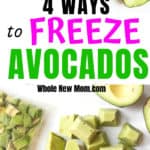
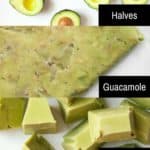

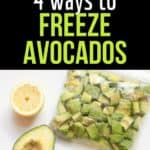
Yes, you can freeze avocados—and it’s a great way to save money when they’re on sale or prevent them from going bad too quickly. While the texture changes after thawing, frozen avocados work really well in smoothies, dips, and dressings.
If you’re anything like me, you’ve probably had a few avocados sit on the counter just a little too long…and suddenly they’re overripe. I’ve definitely been there—especially when I stock up during a good sale.
So I started figuring out how to freeze avocados properly, and it turns out there are a few different ways to do it depending on how you want to use them later.

If there was an Avocados Anonymous we’d all be full-fledged members. And we might even be the heads of our local chapter. In fact, I’m sure that we would be.
But I have yet another problem.
My name is Adrienne and I’m a Frugalaholic.
When something is on sale, I feel the need to stock up.
My husband and I were the types who loaded all of the loss leaders into our cart and got funny stares from people in the checkout line.
Well, when you buy in bulk and make a lot of homemade healthy food, you need to figure out how to store bulk purchases so that they don’t spoil, and that includes avocados.
Why I Had to Freeze Avocados
Recently there was a 3/$1 sale on avocadoes, and I started wondering how I could store avocados without them spoiling.
I mean, if you buy a lot of avocados, you can eat them plain, with salt, dip carrots into them (with a little salt on top), make this Zingy Avocado Dressing, these Chocolate Avocado Truffles (serious yum), these Chocolate Mint Grasshopper Bars, and this AIP Guacamole.
But there’s a limit to how many avos you can eat before they turn to mush.
Problem is, that some of the information out there about freezing avocados is wrong.
I am instead going to share some great methods for freezing avocados.
And to make things even better, I’ve rounded up 4 different ways to freeze avocados, depending on the time you have and how you’re going to use them.
Please note, that frozen avocados will not lend themselves well to eating thawed on their own or sliced on a sandwich. The texture will be more suitable to things like dressings, dips, etc. (or Chocolate Truffles!).
However, diced or cubed frozen avocados work great in smoothies like this delicious Strawberry Avocado Smoothie.

Ways to Store
- Zipper Freezer Bags
Some frugal folk have recommended this alternative to the Food Saver System: putting a straw into a Ziploc bag, then sucking the last bit of air out of the bag before sealing. I haven’t tried it yet so I’d love to hear your thoughts on this as well! - Store in Jars
If you’d prefer to not freeze in bags due to concerns about plastic, storing in these jars is a good alternative. - Water instead of Lemon Juice
You can try water instead of lemon or lime juice, but the antioxidants in the citrus juice works better.
Shelf Life in Freezer
Avocados should keep for 3-6 months in the freezer. They will still be safe to eat after that time, but their flavor might be diminished.
Of course, their shelf life in the freezer will depend on the method used to freeze, as well as the quality and temperature of your freezer.
How to Defrost
To thaw frozen avocado, place either the halves or diced avocados in a bowl of cold water or in the fridge. Halves could be thawed on a plate for about 30 minutes and some say that they taste better when eaten a bit on the frozen side.
Other Ways to Preserve Foods
If this post has been a help for you, you might find these to be of help as well:
- How to Freeze Bananas
- How to Freeze Cucumbers
- How to Store Nuts and Seeds
- How to Freeze and Store Berries
- The Easiest Way to Store Tomatoes
- How to Store Prepared Beans
- The Best Way to Preserve Herbs
- How to Store Leafy Greens

How to Freeze Avocados–4 Ways
Ingredients
- avocados
- lemon juice/lime juice pptional but recommended for best color
Instructions
In Halves
- This is the easiest way to go about freezing avocados. Simply cut your avocados in half lengthwise, peel them (either before or after cutting), put them on a plate or tray, spritz each half with some lemon (or lime) juice. You don’t need to douse the avocados, but you do want to make sure that you are pretty much coating them.A good rule of thumb would be about 2 teaspoons lemon or lime juice per each large avocado, or 1 teaspoon for each small one. Place the avocado halves in a plastic storage bag and press as much of the air as possible. If you really want to get all of the air out, you can use a food saver system. I've had my eye on these and would love to know if you all find them to be a great addition to a frugal kitchen, or just one more gadget that doesn't get used much.
Diced
- If you'd rather go an extra step to protect your avocados from browning due to air exposure, you can dice your avocados and toss them with lemon juice. Then place the dices in a Ziploc Bag or use a food saver system to get as much of the air out as possible.You can then use the dices in any recipes calling for avocados.I recommend bagging up 2-4 diced avocados at a time and noting how many avocados are in each bag by writing something on a label on the bag, so that you can easily grab some from the freezer and use them in recipes.
Puree
- Since you're likely going to be mashing up your frozen avocados, this is another great way to freeze them. If you freeze halves or dices, your final recipe will be chunkier than if you puree them, but pureeing works great for making dressings, sauces, guacamole, truffles :), or putting avocado into smoothies.Simply toss your avocado into a food processor or blender, squeeze in some lemon juice, and process to desired texture. Then scoop the puree into a plastic storage bag, remove as much air as possible, and freeze.Alternatively, you can store the pureed avocados in ice cube trays. Fill each cavity with some of your lovely and smooth avocado puree, and freeze. I would recommend buying separate ice cube trays for this as they might get a bit discolored. Silicone ice cube trays work best.Place the trays in the freezer until the puree is frozen. Then simply pop the cubes out and place in a plastic storage bag.
Guacamole
- Either freeze the guacamole in a plastic freezer bag or in ice cube trays. Silicone ice cube trays work the best for easy removal. Guacamole without tomatoes works best.Any guacamole recipe will work. I will say, however, that the texture of your guacamole will be better after freezing if you avoid the tomatoes. Even though my Easiest Way to Store Tomatoes is a great option, the results aren't optimal and I think you might not be happy with less than optimal results guac.You can either freeze the guacamole in a plastic storage bag, or try the ice cube tray method again. This would be particularly handy if you are making Taco Salads (or any kind of salad or meal) in a Jar ahead of time. These jars would be perfect for this!Simply toss a cube or two of your frozen guacamole onto the salad the night before. It will be thawed and ready to eat by lunch the next day.
Nutritional information is provided as a courtesy and is an estimate only. It may vary depending on ingredient brands, substitutions, and preparation methods. Optional ingredients are not included. Net carbs are typically calculated by subtracting fiber and sugar alcohols (such as erythritol) from total carbohydrates. This information should not be relied upon for medical or nutritional purposes.
If avocados were on sale 3/$1 where you live, how many would YOU buy?
I beat your cheat price, I found some avacados today for 25 cents a piece. I only got four though. My boyfriend is a frugaloholic too and said, you should get more? but I didn’t. Thanks. I may not even need to freeze them but I was scrolled through the web to see freezing options. Thanks)
Hi! You can even let them ripen and them pop them in the fridge and they stay for a bit that way. Go back and buy more – that’s amazing!!! 🙂
I cut mine in half or quarters then I freeze mine by dipping them in lemon juice and freezing them on a sheet pan. I think I’m going to try chunks next time. Once they’re frozen I place them in Ziplock bags of vacuum seal them. For a cheaper sealer Ziplock makes one. They run around $60 and it works extremely well.
Thanks for the great tip,
have tried the straw and ziplock trick by Alton Brown, never really worked for me. ziplocks still leak.
Bought a 2 in 1 foodsaver system, best investment I’ve made. I think it’s well worth the investment.
Thanks again
Rich J.
Thank you!!!
Looking forward to receiving tips on healthy living.
Wasn’t able to reply from email but yes my daughter in law freezes potato chips and also corn chips I believe. With the food saver you are able to reseal the mylar chip bags. She also freezes marshmallows
Hi there. Thanks for responding! Can you tell me if you think something was wrong with the email and how you could respond? Did you try to do something and it didn’t work? Thank you in advance.
I have had my food saver since 2007 when we traveled to Alaska–lots of fish to package. Only had one problem with it sealing correctly (after about 8 yrs) I ordered new gaskets and it works great. Wouldnt be without it and I imagine the newer models are even better
HOW ABOUT JUST FREEZIN, CUT IN HALF WITH THE SKIN ON & SEED IN, AND THEN PUTTING THEM BACK “TOGETHER” AND THEN FREEZE? THIS WAY THE CUT ENDS ARE NOT EXPOSED TO THE AIR & MAYBE THEY WON’T TURN BROWN…
I had a reader or two say that they didn’t do well freezing them whole. Not sure what to think but I haven’t tried it.
I am a food hoarder, if it’s on sale I don’t buy one, I buy ten. I use a vacuum sealer for stocking up on sale items. My sealer has paid for itself many times over. You can make your own vacuum bags and re-use them several times over. All the air is vacuumed out and the food keeps for longer period of time. The straw method is a waste of time, the air always leaks out. I would not do without my vacuum sealer. Love it!!
How do you make your own? thanks for the helpful reply! Can I ask if the main issue is that you aren’t getting freezer burn? Would you ever consider a freeze dryer instead? And if not, why not?
Correct, there’s no freezer burn. You optionally make your own bags from a roll of plastic so it fits the particular serving size you want to prepare. You cut it, seal the ends/sides, then fill it, then vacuum out the air and seal shut.
A freeze dryer is at least $2000 and then you don’t get to eat the food if you’re “prepping” or you have to feed everyone freeze dried reconstituted foods then replenish. I don’t see the point. With vacuum sealed foods, you can just put a whole meal (or whatever) in a bag and boil or nuke it and eat. You can’t do that with a Zip lock.
I’ve had my vacuum sealer for over ten years and it’s great. Probably cost me around $110 or so. It has settings for “wet” or not wet foods or “delicate” foods so you don’t smash it. For example, it makes no sense to shred cheese and vacuum hard because it turns it into a block again. So you just vacuum the block. Same with bread. You don’t want to smash bread or cake or other more delicate things.
Now, yeah, I have a ton of purchased freeze dried foods in my storage but I only eat vegetables/plant foods so it’s important I have access to them all the time. And they’re useful for quick availability and access. But most people don’t eat like me LOL.
Sounds great. I think the benefit of the freeze drying is that you can store w/o using electricity, take foods on the go without a cooler or anything else and store for a very long time.
Maybe the best way is to do both?
We eat mostly plant foods so that is important to us as well. I am thinking a combo of freezer / freeze dried and powdered superfoods might be the way to go for me.
When I need to store something airtight in the fridge or freezer, I place the item in a zip-loc bag and close it except for about an inch or so. Then I submerge the bag in a bowl of water up to the zipper. You will see the vacuum effect then seal the rest of the zipper. Cheaper than a sealing machine and the bag is reusable, too. You’re welcome.
Debra
After reading this I have decided that I am going to freeze the halves without cutting them up, peeled with the seed still in, doused in lemon juice, and wrapped in cling wrap (no air in that).
I’ll see how that goes for cutting up after defrosting and putting on salad, toast, sandwiches etc because I wouldn’t mind it if it turned a brown color. I’m not eating them for the color anyway.
Please let us know how it goes!
I will! They’re frozen now and still looking green, but I’ll post the result when I use one.
I tried to post some photos of the frozen and defrosted sliced avocado when I went to have one, but he photos wouldn’t post here so I’ll describe the best I can.
After defrosting one half it was still green. I defrosted it in the microwave because I hadn’t planned on having avocado but just decided at the time. The only downside is that it was a bit soft and a bit less of an avocado taste I think was due to the lemon juice seeping into the flavor. I think that being doused in lemon juice also contributed to it not being too firm in the end, along with the fact that they were already very ripe when I froze them, but it was still firm enough to slice.
I used bottled lemon juice which also would have a preservative in it, which may have preserved the color but neutralized the taste a bit, but still tasted relatively ok. Having it bound in cling wrap also prevented air in it, which might have helped – and I re-use my cling wrap so as to minimize plastic pollution. I think next time I’ll try it without the lemon juice to see if it retains the taste better.
Thanks! There is a great lemon juice that’s organic at Costco–with no preservatives. You should check it out! 🙂