
Strawberry Pesticides: How Bad Are They & Should You Buy Organic?
This post may contain affiliate links from which I will earn a commission. Learn more in our disclosure.

Strawberries are delicious and loaded with antioxidants, but could the pesticides on them outweigh their health benefits? Strawberry pesticides are something that I didn’t know about for a long time, but once I did, my thoughts about conventional strawberries changed dramatically.

So the question is—what strawberry pesticides are being used, are they seriously dangerous or not that bad? And do you need to buy organic only or grow your own?
Do Strawberries Have Pesticides?
Yes. Conventional strawberries often contain pesticide residues, sometimes multiple types. Organic strawberries may still have trace residues, but typically far less. Washing can reduce some pesticides, but not all.
Strawberries are particularly vulnerable to pesticide contamination since they are grown in the soil, are really vulnerable to pests, and they have no outer peel that you can remove.
Houston, we have a problem.
You think you are helping your family eat healthier by having them eat fresh fruits, but not so fast. You serve them strawberries since berries are one of the fruits that are lower in carbs, and you add some strawberries to a morning smoothie, or you make this Very Berry Chia Pudding, these Gluten-free Strawberry Scones, these Strawberry Popsicles or this Sugar-free Strawberry Lemonade.
But instead of giving your family health-producing foods, you could be serving up pesticide laden berries.
What Pesticides Are Found on Strawberries?
When I first wrote this post, I used the site, What’s On My Food (WOMF) to get data on pesticides that are used on strawberries. The site is gone now, but the Pesticide Data Program is apparently the database that was used for the information on WOMF.
Here’s a list of some of the pesticides that were listed on WOMF as having been found on conventional strawberries:
- Tetrahydrophthalimide
- Pyraclostrobin
- Captan
- Fenhexamid
- Pyrimethanil
- Boscalid
- Fludioxonil
- Myclobutanil
- Carbendazim (MBC)
- Bifenthrin
- Malathion
- Acetamiprid
- Bifenazate
- Quinoxyfen
- Imidacloprid
- Spiromesifen
- Spinosad A
- Triflumizole
- Azoxystrobin
- Methoxyfenozide
- Malaoxon
- Propiconazole
- Fenpropathrin
- Hexythiazox
- Dichlorvos (DDVP)
- Spinosad D
- Methomyl
- Thiamethoxam
- Propiconazole II
- Piperonyl butoxide
- Endosulfan sulfate
- Carbaryl
- Metalaxyl/Mefenoxam
- Propiconazole I
- Trifloxystrobin
- Chlorpyrifos
- Pyriproxyfen
- Thiabendazole
- Endosulfan II
- Iprodione
- Endosulfan I
- Tebuconazole
- Oxamyl oxime
- Dimethoate
That’s already a lot to think about but in addition, here is more troubling information.
A Banned Pesticide On Strawberries
The EWG states clearly that Captan is cancer-causing and has been banned for use on certain crops by the US government. Then why is it on our strawberries?
For example, WOMF listed Tetrahydrophthalimide (Captan) as being the pesticides (it’s really a fungicide) that was found the most on strawberries, in 55.3% of conventional strawberries. And yes, it’s still being used today. For some reason, however, WOMF didn’t list toxicity concerns for this chemical.
Are Strawberry Pesticides Harmful?
The other thing that isn’t documented on What’s On My Food, or many sites at all, for that matter, is the fact that pesticides (and other toxins) are almost always studied alone rather than in conjunction with other toxins.
It’s well known that substances often work better (are stronger) when paired with other things, right? For example, iron works best when taken with vitamin C and turmeric seems to work best when paired with black pepper (so you might want to add some black pepper to this Adrenal Cocktail)
And guess what? Pesticides can also be more potent (aka toxic) when combined with other pesticides. So, in other words, if you eat food with more than one pesticide, chances are, the combined effects may be greater than when each pesticide is considered alone.
Here’s a real life example regarding pesticides. According to this study, the resulting oxidative stress-related enzyme gene expression increases appeared to show that together, pyrimethanil, cyprodinil and fludioxonil did more damage together than they did on their own. And those 3 pesticides were all found on strawberries.
Toxicity Not Clearly Explained
The What’s On My Food site also didn’t list any toxicology concerns for cyprodinil, while the Coleman, O’Neil, et al study, said:
Cyprodinil was the most toxic agent individually
and
all three agents showed significant reductions in cellular ATP, at concentrations that were more than tenfold lower than those which significantly impaired cellular viability. The effects on energy metabolism were reflected in their marked toxic effects on mitochondrial membrane potential. In addition, evidence of oxidative stress was seen in terms of a fall in cellular thiols coupled with increases in the expression of enzymes associated with reactive species formation, such as GSH peroxidase and superoxide dismutase.
Can someone please explain to me what is not toxic about that?
Risks of Strawberry Pesticides
Out of the 45 pesticides listed on What’s On My Food, there are:
– known carcinogens (they cause cancer)
– endocrine disruptors
– neurotoxins, developmental or reproductive toxins, and
– bee toxins as well.
And just in case you think that endocrine disruptors don’t sound as scary as carcinogens, anything that is affected by hormones is affected by endocrine disruption, and endocrine disruptors can cause cancerous tumors.
In addition, aside from the above risks, prenatal pesticide exposure has also been linked to reduced IQ of children.
It’s worth noting that the list above is from 2009, so things may have gotten better. However, there is a lot of recent data showing that the situation is still not good.
More Recent Strawberry Pesticide Data
In 2017, in a single study by EWG, one single sample of conventional strawberries found 20 pesticides on the fruit.
In 2016, federal examiners found that 98% of all conventional strawberries had pesticide residue.
In 2008, in Australia, testing results found:
- levels of pesticides over the allowed amount
- pesticides that weren’t allowed in Australia
- Organic strawberries contained residue of the fungicide pyrimethanil, but based on the amount it’s thought that it was contamination from other crops. This underscores the importance of taking precautions even when buying organic.
Recent PFAS and Driscoll’s Strawberry Concerns
In 2026, strawberries received renewed attention after testing commissioned by Mamavation reported pesticide residues, including some pesticides containing PFAS-related compounds, on conventional strawberries. The findings generated significant debate online, with some experts criticizing the testing methods while others arguing that the results highlighted broader concerns about pesticide exposure and long-term environmental contamination.
Regardless of where you land on the controversy, the discussion reinforced a point that has been raised for years by groups such as EWG: strawberries consistently rank among the fruits with the highest pesticide residue levels. For consumers looking to reduce exposure, choosing organic strawberries remains one of the most commonly recommended strategies.
Some Good News
One good things I can say about strawberry pesticides is that one horrid pesticide, methyl iodide, is no longer being used in the US on strawberries. What’s sad about this is that Canada stopped using this toxin in 1987, but it took until 2012 for the US to catch up.
Here’s a very disconcerting quote about methyl iodide. I shudder to think of how much of this toxin myself and my family may have eaten over the years.
“Everyone agrees, without exception, that methyl iodide is a very toxic compound. It’s very reactive. That means it interacts with living tissue in very toxic ways, causing cell damage and damage to cell structures, DNA, or chromosomes,” explains Ted Schettler, MD, MPH, science director at Science and Environmental Health Network.
“The upshot is it can cause a lot of health effects, including cancer and damage to tissues that are developing. In animal studies, it killed the fetuses of developing animals exposed by inhalation; fetuses were killed at relatively low doses. Nobody doubts it’s a nasty chemical.”
Talk about a toxic mess. Thank goodness at least one ingredient in that toxic soup has been removed.
Do Organic Strawberries Have Pesticides?
Some people make the argument that there are pesticides used on organic produce as well, so you might as well save money and skip spending extra on organic. They claim that companies like EWG aren’t evaluating things in an appropriate manner and they refer to this kind of information as the basis for their claims:
While conventional produce was between 2.9 and 4.8 times more likely to contain detectable pesticide residues than organic produce, samples of organic produce frequently contained residues. The PDP data, in fact, indicated that 23 percent of organic food samples tested positive for pesticide residues.
From the information above, it’s clear that there definitely are a lot more toxic pesticides on conventional strawberries than on organic ones.
Yes, there can still be pesticide residues on organic produce, but as you can see on What’s On My Food, there as less and sometimes none of certain pesticides on the organic produce.
Basically, do you want more toxins or less? I want less for sure.
Are There Fewer Pesticides on Frozen Strawberries Than Fresh?
Thanks to a tip from one of my super smart fans on Facebook, I found out that frozen conventional strawberries have fewer pesticides than fresh!
The reason for that is that since the strawberries are meant to be frozen quickly, they are grown with that intent. They won’t have to stay fresh as long, so there are fewer chemicals sprayed on them during the growing process.
| Type | Pesticide Levels | Notes |
|---|---|---|
| Conventional | Higher | Multiple residues common |
| Organic | Lower | Still possible trace residues |
| Frozen | Often lower | Shorter shelf-life needs fewer sprays |
So if you’re going to eat conventional strawberries, choose frozen and not fresh!
Sugar-free Strawberry Smoothie anyone?
Can You Wash Pesticides Off Strawberries?
The answer is yes and no.
According to this study, you can wash some pesticides off of strawberries, but the amount that is removed depends on what technique you use.
Boiling is mentioned in the study, but boiled strawberries aren’t really tempting.
You might note that in the study, tap water was one of the cleaning methods used–resulting in a reduction of 19.8 – 68.1% reduction of the toxins. However, that’s a HUGE range! Why is that? And how do you know that you are getting closer to the 68.1% off and not the 19.8%?
And also note that the study only tested for 10 fungicides and 6 insecticides.
Remember that here, there have been 45 (yes forty-five!!) pesticides found on strawberries. Again, that number has likely changed since then, but there have been more than 16 cited in recent years.
And remember that the above test only tested for 16, so you can’t claim that there is a reduction if many pesticides weren’t tested for in the first place.
Also keep in mind that you can’t wash pesticides off that are beneath the skin and are actually IN the produce that you eat. Pesticides are taken up in the plants through the roots while they are growing and once they’re in there, there’s no getting them out.
Options for Removing Pesticides from Produce
Soap and Vinegar
Another produce-washing technique has been to put a small amount of non-toxic dish soap and white vinegar in water, soak the produce, and then scrub if possible. However, I always wondered if it was really working at all. We do buy organic whenever possible, but even so, there are pesticides on organic produce too.
Baking Soda Soak
Some research has shown that soaking in baking soda and water can remove pesticides from produce.
In our house, we put the produce in a bowl of cold water, add a decent amount of baking soda, swish it all around, and then let it sit for 15 minutes. Then rinse.
Pesticides that have soaked into the peel will not be removed, but those on the surface should be significantly reduced.
Ozone
When I initially wrote this post, I mentioned that most people wouldn’t have an ultrasonic cleaner or ozone device in their house, but things like this are becoming more common.
Since then, I have come across some great options for cleaning produce. For example, this ozone water device is fantastic. Soaking produce for 20 seconds addresses many issues including bacteria, mold, and pesticides.
A Real-Life Example: When “Organic” Isn’t So Clear
Before our local strawberry season, I once purchased a large batch of strawberries through a fundraiser. Based on how they were described, I assumed they were organic—but later found out that they were actually conventional.
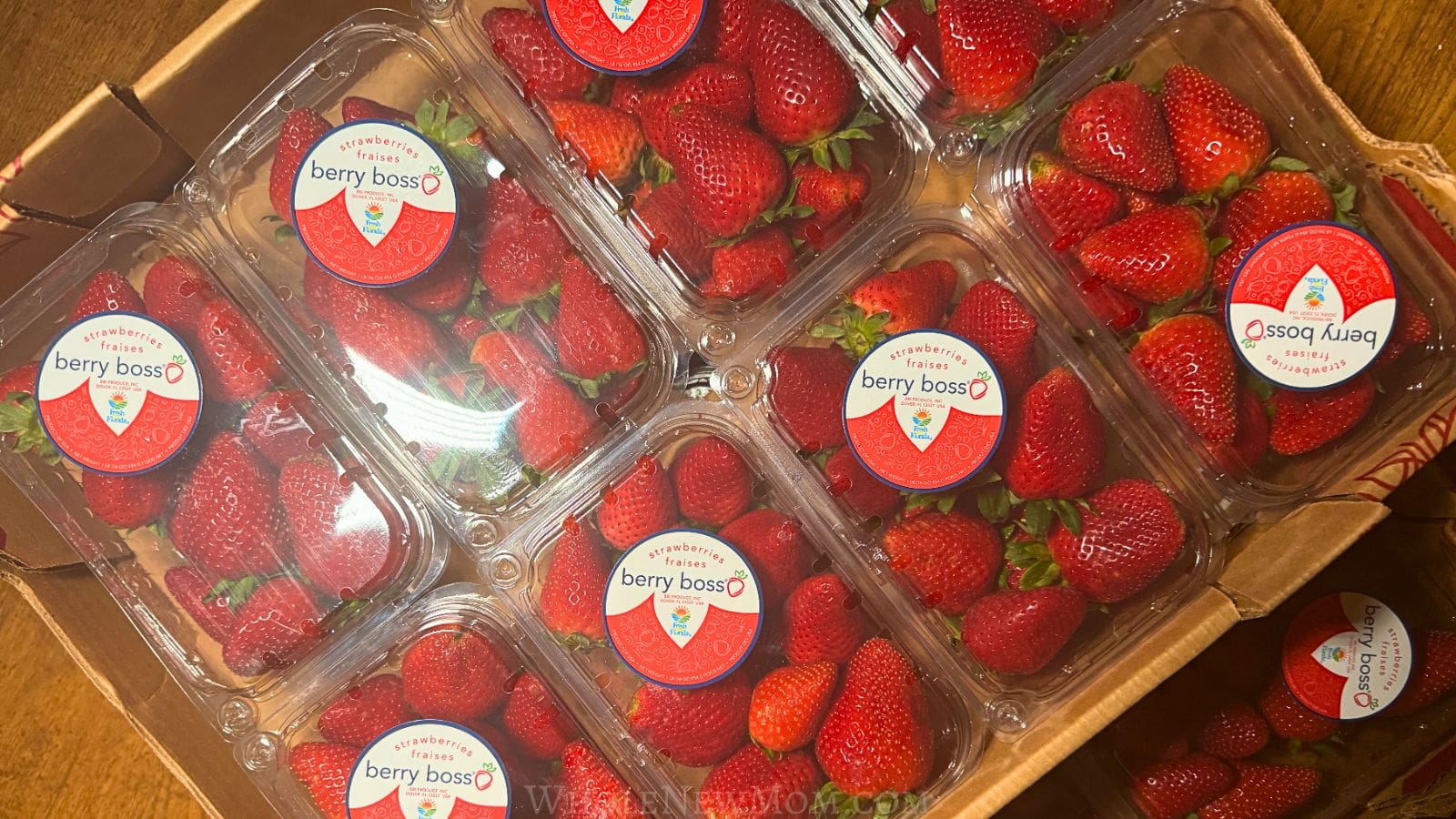
That experience made me realize how easy it is to misunderstand labeling or marketing language, especially when buying outside of a typical grocery setting. I hadn’t double-checked the details, and I ended up with something very different than what I thought I was getting.
I’ve run into similar confusion when shopping in stores as well. For example, I once saw conventional cranberries deeply discounted (97 cents for 12 ounces) compared to organic ($2.64 for 8 ounces). I bought one bag of conventional because some information online that led me to believe that there might not be that much of an issue with buying conventional. However I reached out to the company directly before going back to buy more to stock up.
The response I received sounded positive, but after researching further, I found concerning information about how conventional cranberries are typically produced…
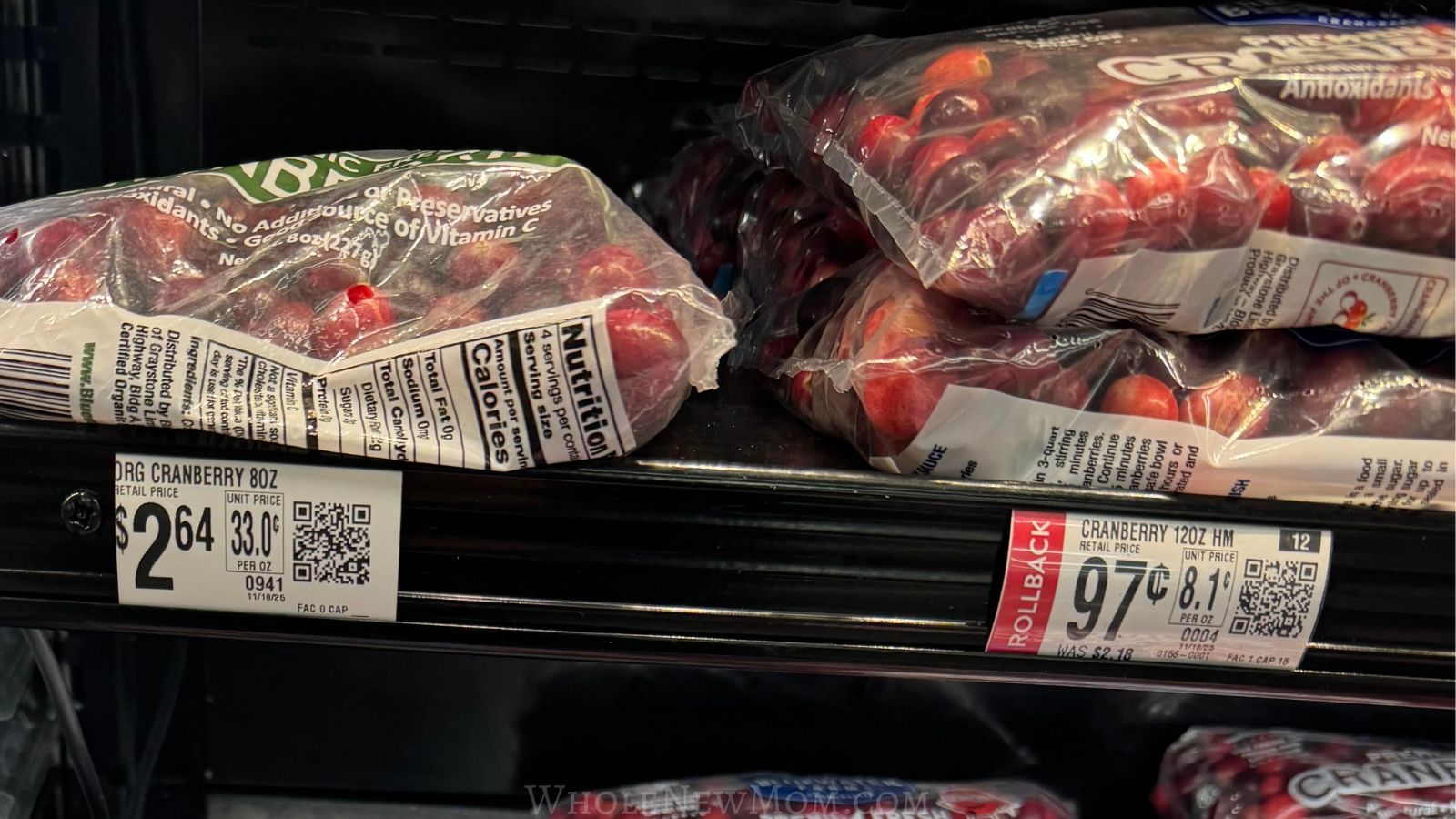
Pesticide use in cranberry bogs almost always is a heavy pollutant of surrounding areas. I reached back out to the company with more questions, but didn’t hear back. After that, I decided not to purchase any more—even though the price was incredibly tempting.
What I Took Away From This
- Labels and descriptions aren’t always as clear as they seem
- It’s worth double-checking when something matters to you
- When in doubt, choosing organic (or skipping the purchase) can provide more peace of mind
Experiences like these are a big part of why I personally choose organic strawberries whenever possible.
Conclusion
Strawberries and pesticides are topics that very much need to be addressed.
No wonder there are so many cases of auto-immune disease, autism, cancer, thyroid disease, and more going on today. When I was growing up, it was pretty much unheard of, especially with children, but these days, it’s becoming commonplace.
With all of these chemicals barraging our bodies and the toxic buildup that ensues, what else would anyone expect to happen? I’m not saying that pesticides are the only thing going on here, but we need to address the burden our bodies are under and eating fewer pesticides is one way to do that.
This information about strawberries and pesticides is enough to make your head spin, but let’s keep our heads on straight. Let’s plow ahead, deciding how to make healthy decisions for ourselves and our families.
What Can You Do to Avoid Pesticides on Strawberries?
- Buy organic strawberries whenever possible
- Wash strawberries really well.
- Consider a produce wash or at least baking soda to address what you can.
Have you been eating organic or conventional strawberries?
After reading this, do you plan to change?
Your link to the ozone machine is outdated. It’s currently unavailable.
Thanks, Amy! I just updated the link with what’s actually a better option.
Non of us are getting out of here alive we have been being poisoned by processed foods , pesticides that have been banned in third world countries are still allowed to be used here
Yes for sure we will all die – but I get your point and I too am upset about the info re: third world countries compared to the US. It’s not right.
Absolutely but why why is there so much sh*t in our foods this is bullsh*t where is the FDA ?? Paid off (edited by blog owner)
It makes you wonder about buying strawberry PLANTS. Even if you buy plants that are organic, did, at some point, those seeds (via another plant) come from plants that were sprayed at any time in their “life”?
I have wondered this about buying chickens or fertile eggs to hatch. If ANY of the ‘parents’ or ‘grandparents’ of the eggs were raised on toxic non organic feeds, that is in their DNA, and will be passed down to the eggs…probably in reduced numbers the longer they are fed organic food, but still. Hmmmmm….?
It’s a conundrum for sure. Eating bee products is a concern as well due to glyphosate contamination.
I try to always buy organic, especially ones listed on the “dirty dozen’. My problem is, you can’t find organic in fruit powders or freeze dried versions. I have extremely limited space in my freezers and, although have purchased a few small ones, have often lost all the contents to power outages or other problems several times. Now, with the dangerous spray they are using on all produce, INCLUDING the toxic one on organic, Apeel, I am striving to get my own garden going and never buy anything again. what I can’t grow, I just won’t eat. Guess there is an upside to being old….fewer years to eat ‘crap’. LOL
I’d love to live near you and work on the garden together. I’m not great at it!
Did not know that so many pesticides were used. However i use the 3to 1 water and vinegar method.
It’s craziness. Did you check out the baking soda method b/c it’s proven to work. Take care!
I have 2 GreenStalk Towers with strawberry plants in them both. The only place I can keep them is on my porch. Will
The mosquito misting system hurt my strawberries? Making them unsafe to eat? The research I’ve done shows pyrethrins, permethrins & piperonyl butoxide (used in the system we have) are non-toxic to humans & pets, but I still don’t believe it. I think I’ll turn off my system until strawberry production is over. Just in case. Your thoughts or knowledge on this subject would be greatly appreciated.
Hi Cindy! I didn’t look at the other 2, but pyretrhin is associated w/ increased mortality related to cardiovascular issues. I think it’s best to find another way to control mosquitos, is possible. https://jamanetwork.com/journals/jamainternalmedicine/fullarticle/2757789
I run them under cold water while cutting all imperfections off with a knife. I might try the baking soda bath to see if it makes a difference.
Hi Norma. It’s proven to make a difference so glad you are going to do it! There’s a link to a really good produce wash listed at the bottom of the post. The photos I’ve seen of it working show that it’s quite effective.